Christmas, and signs of things to come

Christmas is coming, and the story we retell each year reminds us of God’s great plans for our world. It’s the story of angels, shepherds, and wise men, all drawn to the manger by a love so great it touches every corner of creation.

Let’s take a closer look at the characters in this story and what their presence tells us about the child born that night. In Korean culture, there’s a tradition called doljabi, celebrated on a child’s first birthday. During this ceremony, objects are placed in front of the baby, and whichever one the baby chooses is seen as a hint of who they might become. A pencil could mean a scholar, a stethoscope a doctor, and so on. It’s a fun, symbolic way of imagining a child’s future.
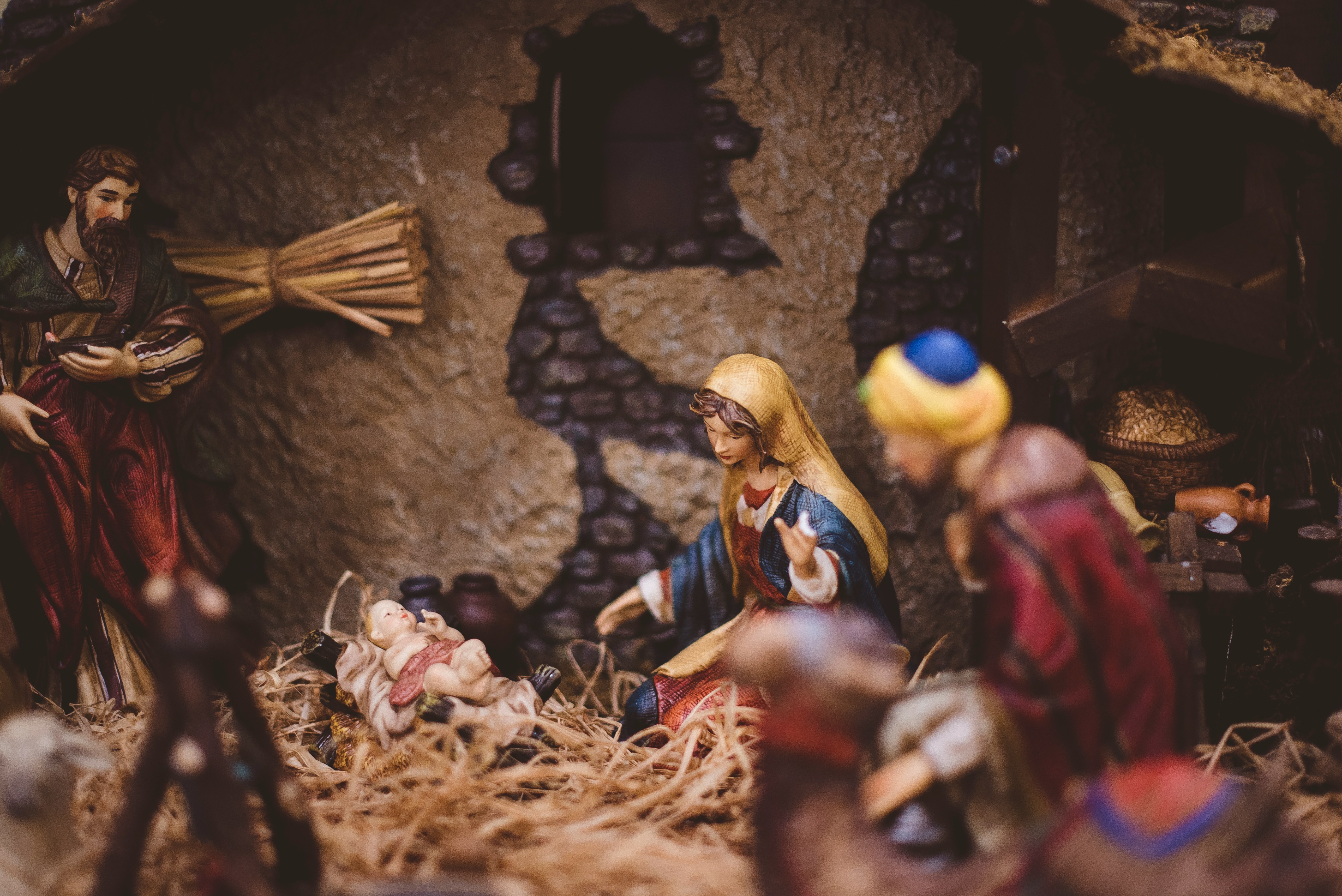
At Jesus’ birth, there’s something like a divine doljabi happening—not with objects, but with people. God chooses shepherds, wise men, and angels to gather around the manger, and their presence offers signs of who Jesus is and what His life will mean.

The angels were the first to announce His birth. They are not just heavenly beings but royal messengers, sent directly from God’s throne room. Their presence signifies that this event is not just important for earth but is celebrated in heaven itself. They remind us that Jesus is not only the Messiah but also the King of Kings, sent from heaven to bring peace to earth.

Then there are the shepherds. In the eyes of the world, they were nobodies—simple, unpolished, and overlooked. Yet they were the first to receive the good news. This is no accident. God chose shepherds because their presence points to who Jesus will become. He is the Good Shepherd, the one who will care for His people with humility and love. Throughout Israel’s history, shepherds like David and Moses were chosen by God for great purposes, and Jesus continues that tradition, coming to lead His people with a shepherd’s heart.

Finally, later in the story, we see the wise men. These were learned men from faraway lands, outsiders in every way, yet they were drawn to worship Jesus. They symbolize that Jesus is the source of all wisdom and the one who calls people from every nation to come and know Him. Their gifts of gold, frankincense, and myrrh reflect His kingship, His priestly role, and His eventual sacrifice.

Each group—angels, shepherds, and wise men—represents a piece of who Jesus is. He is the King of Heaven, the Shepherd of His people, and the Wisdom for the world. God’s choice of these witnesses reminds us that this story is for everyone. The highest heavens and the humblest fields all find their place in His plan.

This Christmas, remember that you are part of this story, too. God invites each of us, no matter where we stand, to approach the manger and discover what He has in store for us. Like the shepherds, we are called into His care. Like the wise men, we are invited to seek Him with all our hearts. And like the angels, we are given the joy of celebrating and sharing the good news.

May this season fill us with light, joy, and a deep sense of belonging in the story of Jesus.
On Political Violence

This is what I told my church this morning:

You all know that yesterday there was an assassination attempt on a former President of the United States. This is a tragedy for our country, both for the loss of life of an innocent spectator in the crowd, but also for the turmoil it both stems from and creates in our culture.

There is no place for violence like this in American society. It serves no purpose and does no good. It’s evil. Violence of any kind is evil, and this prominent display of it simply spreads fear and anger in a culture desperately in need of peace.

I began this year with a preaching series about living a life of dedication to Jesus and talked about how important it was for us to live a life of faith. I said several times that I anticipated that this would be a hard year, particularly given the political climate. I then began a teaching series about the Sermon on the Mount, the ethical teachings of Jesus. This wasn’t just an idle curiosity; I anticipated that this year we would need to be reminded of the kind of lives that followers of Jesus are called to.

In the Sermon on the Mount, Jesus tells us that not only is it the Law of God that we should not murder, but we should not even hold onto anger towards someone, not even call them a fool. He told us that the old law was an eye for an eye and a tooth for a tooth, but his teaching was that we should love our enemies and pray for those who persecute us. If someone slaps you on one cheek, turn to them the other as well. If someone sues you for your coat, give them your shirt. If someone forces you to walk one mile, walk two with them (Mt. 5). He concludes his ethical teachings by saying, “Do to others what you would have them do to you, this sums up the Law and the Prophets” (Mt. 7).

Followers of Jesus are bound by duty to do what Jesus says.

When others respond with hatred, we respond with love.

When others try to stir up anger and anxiety, we preach peace.

When others respond with blame, we respond with grace.

We debate because truth matters, but we don’t demonize. It would be wrong for followers of Jesus at this moment in our society to stoke the flames of anger and revenge. This is a time to agree that we would all be better if we sorted through our disagreements and differences in worldviews with a fundamental commitment to the fact that God made us all, God loves us all, and God seeks to redeem us all.

We are united in our humanity; let’s unite in a commitment to peace. Amen.

Jim Miller, Real Life Church of LA

Available today: Jesus Is Not King

My new book, Jesus Is Not King, has been released.

The premise of the book is that Christians for 2000 years have been trying to put Jesus in a position that he rejected. They tried to make him king by force (John 6) to depose Herod and expel Rome. But Jesus was not trying to be a king governing with earthly power and military might. His goal was to win hearts.

In an election year, many Christian voters have been lulled into the belief that if only they can vote someone into power who will represent their moral views, they will be freed from the hard work of ministry and discipleship. The mess of the 2024 political scene is proof that we’ve gotten it wrong.

In this book, I propose an alternative role for the church in modern politics – to reclaim the prophetic voice that is more loyal to truth than to party, more committed to righteousness than power. Jesus is the King of Kings, but it might not be the king we

An Artful Connection

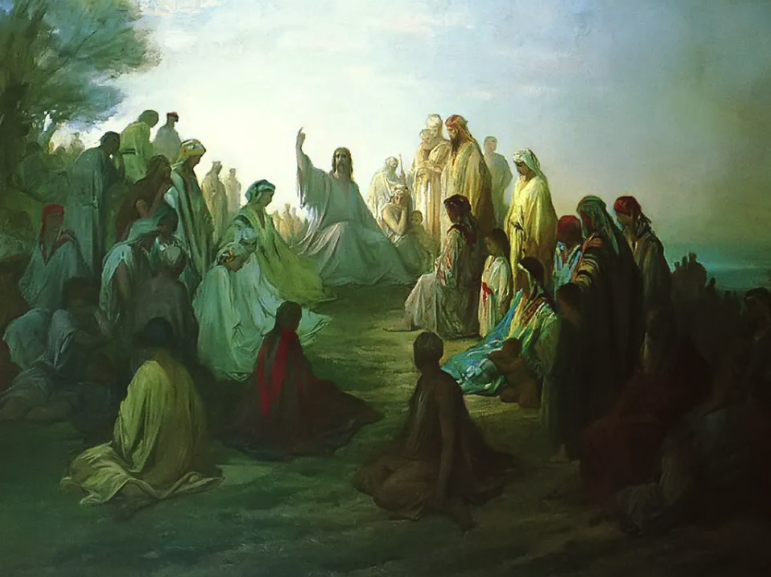
Looking at Gustave Dore’s “Jesus Preaching on the Mountain” (1865), an oil painting of Jesus giving the Sermon on the Mount, and it suddenly occurs to me I know what Dore was thinking about. The image is of Jesus in front of a crowd, index finger on his right hand extended heavenward.

Take a close look at the posture of Jesus:

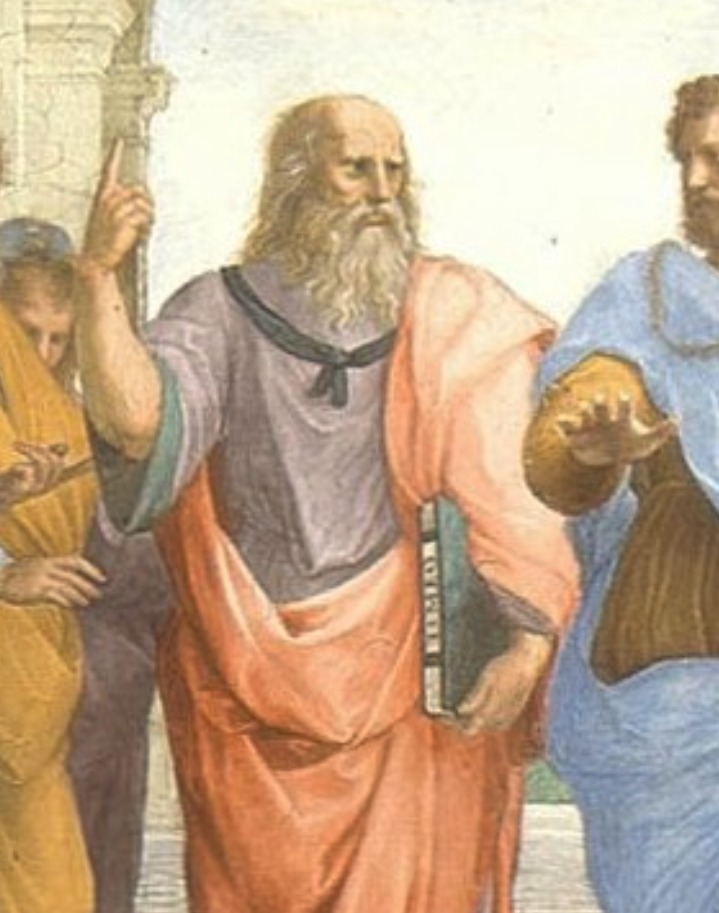
Now tell me if that doesn’t bear a striking resemblance to this guy:

That’s the Greek philosopher Plato as he appears in Raphael’s “School of Athens” (1511). Plato is holding a copy of his own dialogue, the Timaeus, a distinctly theological work in which Plato writes that the order and the structure of the universe are the product of a creative and intentional mind of a craftsman. It is a work that early Christians globbed onto as a philosophical precursor to revealed faith and proof that they had the answers the world needed.

Now pan back and look at the whole of the “School of Athens,” and compare the structure of the painting to that of Dore’s work.

The paintings are both horizontally bisected by the heads of the main character(s) and the crowd around them. The crowds line both sides of the central figures attentively, while others sprawl on the ground up ahead of them.

I think Dore borrowed the composition of his painting. However, it wasn’t for simple pragmatism nor merely allusion or homage. He’s telling us something philosophically.

Plato, who lived 400 years before Jesus, speculated about the nature of the universe and its Creator. He deduced that there were universal truths or principles grounded in a unifying source of the universe. Dore, a lifelong Christian who created a celebrated illustrated Bible finds the conclusion to Plato’s ponderings in the person of Jesus. Jesus speaks of a heavenly Father who was incarnate in Jesus himself, the ultimate revelation of the mysteries at which the philosophers could only wonder.

Good message for us! Should we have the sense that there is an order-making, intelligent mind that brought the beauty of the universe to be, we might consider that Jesus knew exactly who it is that we are looking for. And in the Sermon on the Mount, Jesus tells us what the world, guided by this Creator, should look like.

Why Satan doesn’t get a say

A man has been charged with a hate crime for destroying a Satanic statue put on display in a state Capitol. The display was erected as a provocation by the Satanic Temple of Iowa, a largely political and performative group aiming to curb religious influence in America. It was not intended as a religious display, as the group does not actually claim to worship Satan. The man who ripped it down, Michael Cassidy, had been charged with a misdemeanor, but the enhancement raises it to a felony.

As a UC-Berkeley-educated, post-Enlightenment, Constitutionally-committed, classically-Lockean, free-speech-loving Pastor, I want to briefly defend this man’s actions and argue that any American, Christian or not, should do the same thing. I would happily tear down a statue to Satan erected in my own city, although, knowing my neighbors, I would have to take a number and wait in line.

FROM THE BIBLE

The idea of desecrating idols to false gods is praised in the Scriptures more than a few times. God commands his people to rid their land of idols (Deuteronomy 12:1-3). Josiah was remembered for being a great reforming king for tearing down the idols (2 Kings 23:24), as were other leaders (Judges 6:25, 2 Kings 18:4, 2 Chronicles 15:8). The prohibitions of idols is the second of the ten commandments.

But that was in a civil theocracy, not a liberal democracy. So per the first amendment, freedom of religion and speech are protected, and by the state laws of Iowa, a religiously motivated act of this kind is a “hate crime.” So how could anyone defend Cassidy’s action? Would we want people tearing down statues of Jesus? Would we want the State of Iowa to simply ban all religious imagery, including the manger scene at Christmas?

THE LIMITS OF FREEDOM

By virtue of labeling certain kinds of speech “hate speech,” we’ve already acknowledged that there are limits on freedom of expression. You can’t yell “fire!” in a crowded theater, nor walk around naked in public as a form of self-expression, nor commit defamation, slander, libel, threats, incitement, nor a host of other prohibitions. We all believe that, given common sense, there’s a line somewhere.

And believe it or not, the line has moved.

John Locke, in his Letter Concerning Toleration, argued that people should be free to choose their own religious doctrines without coercion by the State. However, he does not extend religious toleration to atheists, because they could not be trusted to hold to contractual commitments founded in theological obligations. That’s where he set the line. We’ve moved it. Statues of Satan are attempting to move it again. I’m simply trying to hold the line.

WHERE FREEDOM COMES FROM

Locke believed that we should have freedom of religion and freedom of expression because in a state of nature, humanity is free and equal, because God created us that way. His primary inspirations were the Bible, from which he quotes profusely, and Luther’s Protestant theology, which had already thrown off the hierarchy of the Catholic Church. Locke’s writings became the bedrock of American political ideology, as Jefferson follows him in declaring that there are certain rights endowed by our Creator. The ideological foundation of the freedoms enshrined in our Constitution is a God who makes people free. Without that theology, democracy is simply an option whose alternatives might be a well-run monarchy or a financially thriving tyranny. Values have to come from somewhere, and when Americans forget where we got freedom, we will lose it.

An explicit attack on theism in the name of freedom is actually a covert attack on freedom itself, and if we want to protect freedom, we have to recognize freedom-undermining wolves that climb in the pen posing as freedom-promoting sheep.

CONCLUSION

So, if you want God to bless your land, honor your God by desecrating the would-be mockery of outright idolatry, and whether or not you believe in Him, better thank him for making you free.

And if, in the end, you can criminalize someone for removing an ideologically motivated statue in the name of protecting free expression, we need to go back and arrest the government employees a couple of years ago who removed the statue of Thomas Jefferson from New York City Hall. He’s kind of the one who wrote down all those freedoms you like so much.

  * * * * *

Look for my upcoming book, Jesus Is Not King, for more about the relationship between Church and State and its limits.

We can do it this time!

I remember teaching my daughter how to ride a bike. She wobbled up and down the cul-de-sac as I ran close behind, holding onto the back of the seat. When she was ready, I let go. The first time we did it, the ride ended in a crash and tears. But she got back up and tried again.

I ran beside her calling, “We can do it this time!”

As I prepare my little church for 2024, an election year, a year fraught with the potential for conflict, I find myself running alongside the church calling, “We can do it this time!”

We didn’t do great in 2020, when most everyone caved in to anger and anxiety, conspiracy and mutiny. Some people responded with grace and charity, but not most of us. The church honestly has not done great for several decades, in which people who call themselves followers of Jesus have joined in secular mud-slinging and turning a blind eye to the sins of their own parties and candidates.

But I think we can do it this time!

I’m spending time reading the words of Jesus captured in Matthew 5-7, the Sermon on the Mount. His teachings are powerfully counter-intuitive and counter-cultural. I am envisioning a people who are “Sermon on the Mount Christians,” Christians who behave as though these teachings were the only thing they ever heard Jesus say. Can you imagine a Church in which people refuse to call other people fools, refuse to cheat on their spouses, refuse to break promises, and refuse to get revenge? I can imagine it, but I realize there is a group of people out there who can’t – the secular public who has watched the Church fail at these things through all of recent memory.

What if, this year, we pledge to be a people of grace in seasons where win-lose decisions threaten to divide our country and our culture? What if, in 2024, we tried to be Sermon on the Mount Christians?

***

Stay tuned for my new book, “Jesus Is Not King,” a Christian look at political engagement.

Gods and Politicians

Not too many years ago, one of the primary condenders for the presidential election was a Mormon, today one is a Hindu, and there are elected officials who, presumably, could run for highest office and who are Muslims. The Hindu candidate has said repeatedly that it matters that there is a God, and he recently tweeted, “We share a common creed.” The problem I have with the ecclesiastical melting pot is that whether you look at this in terms of philosophy of religion, history, ethics, or sociology, we’re not talking about the same God, and that really matters.

This comes as a counter-intuitive shock to the average Joe who assumes all religions go roughly in the same category, the way apples, bananas, and apricots are all in the same row of the grocery store. Pick your favorite flavor; they all serve a related nutritional purpose. But no one who actively practices a faith and knows a good deal about alternate faiths thinks this way. Similar does not mean the same.

It’s like this. Two people might compare notes about their childhood experiences. One says, “When I was a kid, there was this guy in the house who was always there, and we called him ‘Dad.'”

“My house too!” her friend responds. “We had a guy like that and we called him ‘Dad.’ Maybe it was the same guy?”

“Well,” says the first, “my dad provided for me and wore out-of-date clothing and thought his jokes were all funny.”

“Mine too! We must be talking about the same guy! Isn’t that amazing? We have the same dad!”

“Well,” the first one continues, “my dad taught me that when someone does something wrong to you, you should love them anyway.”

“Oh,” says the second, a little bit mystified. “My dad told me that when someone does something wrong to you, you should punch them in the nose.”

Similar doesn’t mean the same. This also applies in matters of faith. Multiple faiths may talk about a God who created the world, who dictates principles for living, and who will be our judge in the end. But that doesn’t mean a shared identity; that only proves similarity. If one God tells you to love your enemies and another one tells you to get revenge, you are talking about different personalities, different “parents,” different gods.

Average Joe in the produce aisle may still not care about this. He’s going to pick his favorite fruit and leave you alone when you pick yours. Likewise, he’s going to care very little about the fruit preference of the person we elect president of the United States. The rub here is that gods dictate ethical norms the way parents set rules in the home. Not all gods have the same personality, and consequently, they do not share the same set of ethical principles.

Christianity is a faith that teaches the ultimate dignity and worth of every individual, regardless of their level of accomplishment, their intelligence, their moral uprightness, their able-bodiedness, and any other category into which we want to parse them. Jesus loves us all. America still enjoys the residue of a culture largely influenced by the teachings of Jesus. If you have a heart-to-heart conversation with someone who has been simmering in Confucian ideology, you find that there are sticking points at which you simply don’t share a common worldview, particularly as it concerns ethics. I invited a friend who was new to America to serve at a homeless ministry some years ago. They had never seen one before. They asked with incredulity, “You give all these groceries away for free?” They had been taught that if you gave your things away, there might come a time where you would not have enough for yourself, and you would starve. Those who have truly imbibed the values of Jesus believe that we should give to all who ask, that God can rain bread down from the sky, that we who sacrifice will receive much more in this life, and in the life to come, eternity.

In fact, it was on the basis of theology that the founders in America crafted some of the ethical mores which they prescribed. When Thomas Jefferson argued that there were unalienable rights bestowed by a Creator, he was borrowing from the British philosopher John Locke. Locke had argued with extensive citation from the Bible for the freedom of religious practice and liberty for the people. There is a direct line from the teachings of Jesus to Locke to Jefferson, and thus to the governing principles of America. In fact, one of the harshest critics of American independence from the monarchy was another British philosopher named Jeremy Bentham. Bentham was an atheist. He refered to the rights of dignity and freedom of each individual as “nonsense on stilts.” The nonsense was the idea that indivuals deserved freedom, and the stilts was the theology upon which such values were based. As an atheist, he believed only in doing what is best for the greatest number of people; sometimes the minority had to be overruled or ignored.

So put in place a leader who believes in a territorial god who advocates violent self-defense and ultimate conquest and you have the makings of a dictatorship. Put in place a leader who believes that the ultimate goal of humanity is to lose one’s identity to be subsumed into something universal, and you have the makings of something more negligent. Put in place a leader who really believes in Jesus, and you should have the makings of a nation which upholds the belief that every human being is of ultimate worth, that our country should do what’s best for everyone in the world so much as is possible. Gods create ethical systems. The objects of worship our elected leaders revere are not inconsequential.

Of course, if history is any indicator, we can rest assured that a generally blasé approach to faith and a hypocritical approach to ethics is all we will ever get from our politicians, so we needn’t worry too much nor get our hopes up. God is going to be a distant Creator who bestows only loosely prescribed unalienable rights, and nothing more. When it comes to the religious beliefs of our leaders, you say tomato, I say tomato.

From my forthcoming book, Jesus Is Not King.

Christian Voters and Shifting Sands

There are three hypodermic shifts that are going on in the American circulatory system as we enter this next election season. On the surface, it’s the same story as always. We do this every four years. There are primarily two parties every time. The issues they are debating are unlikely to be any different than four years ago, and only moderately different than forty years ago. The rhetoric hasn’t changed much.

But under the skin, there are three philosophical shifts that have gone on in the ethical decision making of Christian voters, a bloc that became noteworthy in the late 70s, grew in influence until the first decade of the 20th century, and seem to be on the wane since. My sense is most Christians haven’t noticed, though the shifts are of tectonic importance.

  1. A shift from character to consequences. If you watch the debate between Jimmy Carter and Ronald Reagan in 1980, you watch two civil, gracious candidates disagree over the substance of issues facing voters. They were both, I think I can assert, Christian men, though neither faultless. Carter was a devout Baptist who wore his faith on his sleeve. Reagan had led a prayer at the end of his acceptance speech at the RNC. Both had been Sunday school teachers. Their faith claims appealed to Christian voters. Today, however, the devout Christian marks the ballot with one hand and pinches her nose with the other. There is a recognized undercurrent among religious voters that you have to put up with whomever your party puts forward, because while they not be a person of character, at least they will deliver the final outcome on whatever social issues are most important to the voter. We’ve moved from a “character counts” voter to an “end justifies the means” voter. We’ve switched from virtue ethics to consequentialism. Carter was elected as a moral correction to the Watergate mess. Reagan spoke openly about ending racism, fighting Roe v. Wade, and even of “maintaining one’s virtue.” I don’t hear voters looking for character this cycle, and when one candidate happens to try to make such an appeal, we rarely believe them anymore. My problem with this is that it is not characteristic of the ethics of Jesus. Jesus would never say that the end justifies the means.
  2. A shift from favoring one to disfavoring the other. This may not entirely be a shift, so much as a recurrent pattern in national sentiments, but we’re definitely at the bottom of this cycle. There is very little general enthusiasm among devout Christians for any potential candidates this year, as there was mixed to little enthusiasm four years ago and eight years ago. We’ve become far to comfortable with the “lesser of two evils” being the only option. This is one area in which we are truly bipartisan – I don’t hear a lot of eagerness for one’s own party from the Christian who votes on either side. And after a third election like this, it increasingly feels like a trend and a norm rather than an off year. Again, what bothers me is that you will not find Jesus ever commending the lesser of two evils, and I’m not sure we’ve noticed that we’ve slipped away from the ethics of Jesus in our political thinking.
  3. A shift from public civility to public shame. Again, the Reagan/Carter debate is such a contrast to the mud-slinging, name-calling, slandering oration that has become not only acceptable but desired by an American audience. Jerry Springer aired from 1991-2018, and there may be more causation than correlation between what he made acceptable and what we now accept. Facebook launched in 2004, Twitter in 2006. Our ability to have immediate, uninhibited access to an often anonymous field of public debate (or just outright slugfest) is probably also a catalyst. But wherever it comes from, the fact that an audience of Christian voters not only witnesses this incivility but is now being shaped by it and willingly participates in it is a horrendous judgment on the moral fiber of American Christians. I just don’t hear a lot of Christ coming out of a lot of Christians, at least the loudest ones.

I’m cognizant of all of this as we face a second round of debates among the Republican candidates this week. I’ll be looking for how much or little attention the candidates give to matters of faith as an indication of how much they think it means to the voting public. I’m watching the ethical demeanor of the debate and to what degree candidates will openly contradict their own previous statements and hurl nasty insults at their rivals. Mostly, I’ll be looking for character. Whether we ask the President to be one or not, they serve as a moral exemplar for our children, and we are tacitly informing our children how important morals are every time we elect one.

Feeling Right About Being Wrong

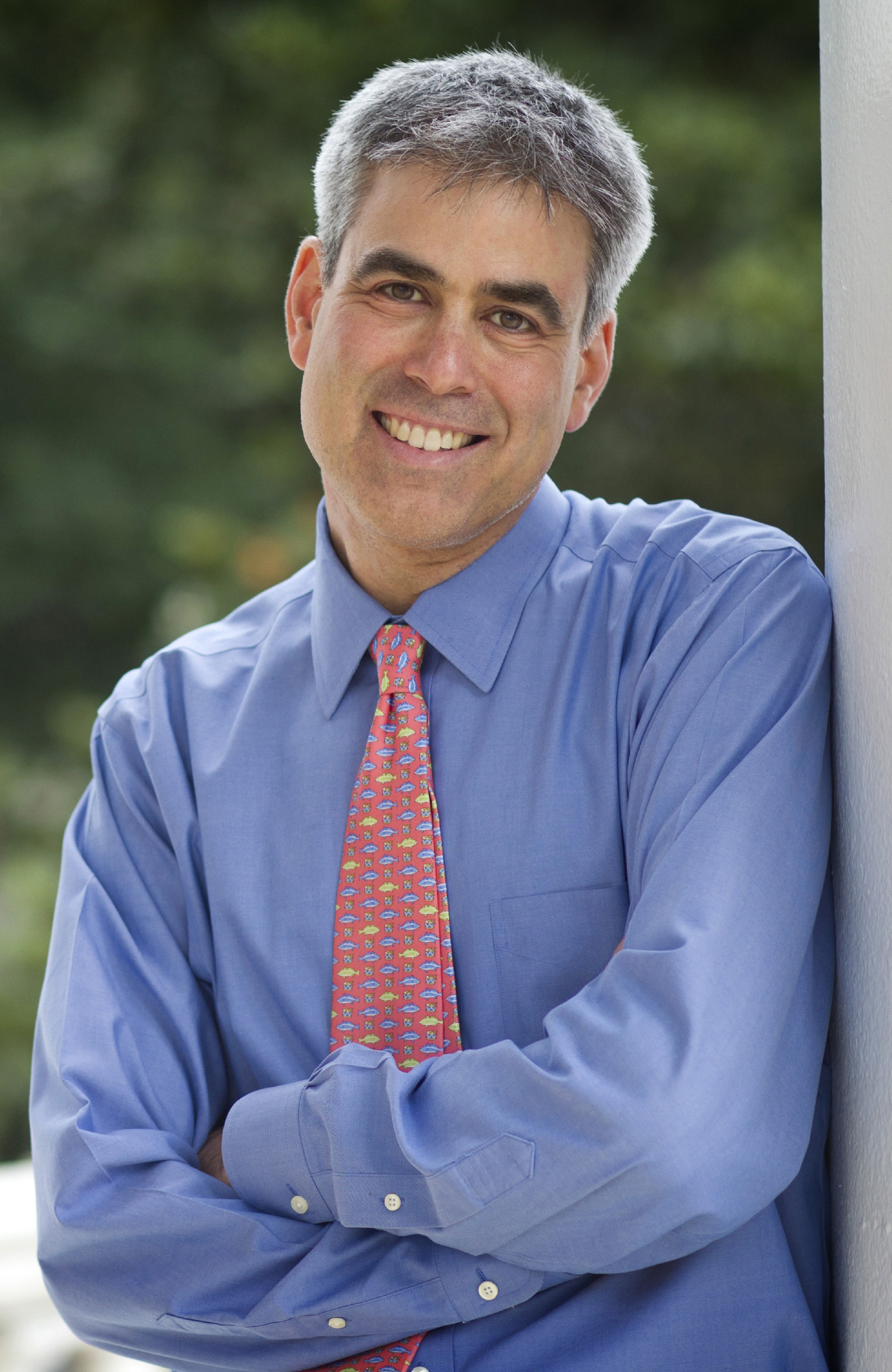
Psychologist Jonathan Haidt likes to play a trick on crowds. He’ll ask an audience, “What does it feel like to be wrong?”

“Embarrassing,” someone will answer.

“Frustrating!”

“Confusing!”

“No,” Haidt will correct them. “You’re describing what it feels like to find out that you’re wrong. What I asked was ‘What does it feel like to be wrong?'” And the correct answer is – it feels exactly like being right.

When we are wrong, before we are aware that we are wrong, we assume we have things figured out, that we see reality for what it is, that our minds are clear and our heads are screwed on straight. The only way to discover that we have gotten off course is through dialogue and interaction with people who see the world differently than we do, with the humility to admit that we still have things to learn.

When we surround ourselves with people who only see the world in the same way that we do, we insulate our wrongness. We are surrounding ourselves with people who are wrong in the same way that we are, which puts us further from the opportunity to discover the truth. There is now a wall of wrong supporters standing between us and veracity.

A refrain that is being chanted by conservative Christians in America today is that truth is under attack from deceivers who will profit from the mass distribution of lies. After all, there is a war on Christmas, a propaganda machine being run by medical elites, and a secret cabal of blood-drinking pedophiles in the highest levels of government. One news network has even had to pay three quarters of a billion dollars for knowingly propagating false information. To this worldview, truth is like a delicate flower at risk of a malicious cultural lawnmower.

But is that true of truth?

In my experience, truth is less like a flower than a weed. It’s persistent, it crops up after you think you’ve removed it, it not only upturns dirt, but it can crack concrete, and there’s always another generation of it waiting to replace the last. Perhaps truth is more infectious than its would-be defenders suppose.

At one point, humanity tried to crucify embodied truth, and that only lasted for three days.

Philosopher John Locke in his 1689 Letter Concerning Toleration wrote, “The toleration of those that differ from others in matters of religion is so agreeable to the Gospel of Jesus Christ, and to the genuine reason of mankind, that it seems monstrous for men to be so blind as not to perceive the necessity and advantage of it in so clear a light.” Locke’s work became foundational to modern democracy, especially American democracy, and particularly his biblically defended case for religious toleration and free speech. If the First Amendment had footnotes, they would all reference Locke’s writings. I would argue that as we campaign to cancel our competitors, we are taking the Constitution out of the hands of those who inspired and wrote it.

So rather than the winner-take-all polarization towards which contemporary American political culture (and consequently religious culture) is barrelling, we might want to pause to consider that we may need a diversity of opinions to keep us learning, that civil society may require humility more than conquest, and that, in the end, it may turn out that our enemies were partly right.