Endowed By Our Creator

I’m remembering today that there are certain unalienable rights endowed by our Creator. I’m not sure how much people realize that without that endowment, the rights come from nowhere, have no firm foundation, and are ultimately at the whim of whomever has the most power.

Without a Creator, we are particles bouncing around in a senseless universe, mocked by our own consciences which make us look for meaning where there is none. We are highly evolved puddles of primordial ooze, and though we may have lots of neat features, like speech and ingenuity, we have never been anything more than ooze. And to the ooze we shall return. I hope we think this one through to its logical conclusion: ooze doesn’t have rights. It’s just ooze.

If we are simply highly evolved mud puddles, we get no guaranteed freedom, no right to life, no ultimate value to life, and nothing that moderates those in power. In the twilight of the gods, there is only the uberman. If there is no God in charge, authority shifts to whomever takes charge.

If, on Independence Day, we even for a moment catch a hint of the combination of nostalgia and loyalty that we know as patriotism, if for even a moment we realize that not everyone in our world shares a measure of our freedom, I hope we realize that it’s because we’re not particles. It’s because someone made us valuable, and he died to set us free.

With whomever you gather around the dinner table or picnic blanket tonight, hold hands and give thanks.

An Apology for Bullying

I remember being bullied.  It happened a few times in my childhood, and in particular in middle school.  Perhaps it didn’t happen as many times as I think it did, but maybe the few that I can remember were so severe that they overshadowed a lot of those years.

There was an experience I remember for which I still feel guilty.  It happened at that moment at which you see the bullying shift in the direction of someone else, and you feel safe or relieved because it isn’t you this time.  Some bullying happens when the person who is simply glad not to be the victim on this go around joins in the taunting.  I joined in bullying someone else, and I need to say I’m sorry.

There was someone I helped to pick on, because it meant the blame wasn’t on me.  Someone specific.  She didn’t deserve it.  She had faults, which everyone could see, things that she did to make herself awkward and inappropriate.  But she didn’t deserve what we said about her.  Who knows what was going on behind the scenes to make her the mess that she was, but we shouldn’t have made it worse by taunting her.  And I need to apologize.

She is the Church.  And there have been countless times that I have stood in front of a crowd and derided what I called “institutional religion,” because I knew other people would cheer me for saying it.  I bullied her, because I knew for a moment it would put me in the “in” crowd, that no one would make fun of me for being a priest while I was busy picking on the Church.  I even thought it would make people pay attention to what I had to say, because I was picking on someone that they liked to pick on.

She took the ridicule silently.  She stood there like a would-be King in the hands of sadistic Roman centurions on Good Friday.  She kept up her silent work of reforming character, inspiring the broken, converting the lost, and feeding the poor, while I made fun of her, while I capitalized on her failures and easy vulnerabilities.

It’s taken me half my life to actually realize what she is up to, what she means to accomplish.  If there is yet to be redemption in American society, if we are to find value, if we are to dig through the sludge of materialism and vanity to find a bedrock of meaning and humility, it’s going to come through the work of the Church.  I’m so sorry for picking on something which, I now believe, in the mind of God, is such a beautiful dream of what we might be.  Perhaps she has endured the way I have treated her specifically because she realized what she could make of me.  Like He did.

Trying Church

I watch my five year old refuse menu items, one after another, because he’s never tried them before.  And when you finally get one into his mouth, whether by choo-choo or airplane, threat or bribe, he often asks for more.  He’s had five homemade waffles today, after some suspicion this morning when they did not come from a box in the freezer.

There’s just a second, as his palate communicates with his brain, when his eyes light up.  And I suspect he doesn’t see that my eyes are lighting up with a satisfied “I told you so.”

More people should try church.  It’s not what you think it is.  I watch the cheap, two-dimensional caricatures on TV of obvious hypocrisy and clicheic religiosity.  Those are at best the freeze-dried, boxed version of the real thing, if there’s any truth to them at all.  Then I go to church. 

At Glenkirk this year, we’ve taken in over five dozen members, who know they aren’t joining a country club and who have taken this step as sincerely as a soldier reciting the Pledge or a bride saying her vows.  Or again, recently someone confided that they had taken charitable giving more seriously than they ever have before, without pressure, because they felt like giving.  Or again, our community watched a preschool that we built on our own church patio set down on its final destination in a dirt field in South Africa a couple of weeks ago, our sweat for their education.  This isn’t what’s on TV.

Last week at Glenkirk, I baptized the twelfth adult this year. I’ve watched tears join the water streaming down their temples, because they are making commitments as sure as a runaway coming home.  Last week I presided at a sun-bathed wedding in which a young couple took sincere vows before God, which they carefully and intentionally articulated to Him.  There was no show and no façade.  These were open hearts before a receptive God.  There were no two-dimensional characters and no ulterior motives.

The next day my wife and I celebrated my own fifteenth wedding anniversary.  As we did so, I remembered the vows we had made.  The promises made in faith before the Creator deserve better than caricature.  They weren’t made for show or rote tradition.  We meant them.  And we still do.

So I’m afraid there are a lot of people as stubborn as a five year old shaking their heads at a church they haven’t tried, thinking that it’s going to taste remarkably different than it does.  And I pray that one day I will get to see their eyes light up.

Minutes in a Day

ImageWith each birthday, we have the sense of time flying by.  Time, of course, doesn’t change gears, and if you watch the second hand, you’ll see it’s rather slow.  But it’s like the tortoise, and while we rush ahead and then, overconfident, take a nap, it passes us by.

I think we’re shocked at those moments where our children are tall or our faces are wrinkled or we get an invitation to a reunion for a specific reason.  The profound is made up of little increments of the mundane.  Over time, you realize you’ve passed through the profound and not noticed it, because there were no trumpets playing as you did.  You make a lunch, you drive to school, you say ‘I love you,’ you ask how the day was, you tuck them in, and a moment later you’ve raised a child.  The profound is made up of series of things that don’t look all that profound.

I guess I’m particularly aware of this as a Pastor.  I’m always telling people to make sure they do things which they can easily brush aside as unnecessary.  But this is what’s going to happen.  Perhaps you go to church, or perhaps you go to the beach.  Perhaps you tithe, or perhaps you keep it.  Perhaps you teach your kids the Bible, or tell a friend about Jesus, or take part in a mission project.  Either way, it all has the appearance of being mundane, and being optional.  And then one day you stand in front of the throne of God, and there was your spiritual life.

Life is a little bit sneaky, in that it’s more than a sum of its parts.  So off to the day to make the most of the parts.

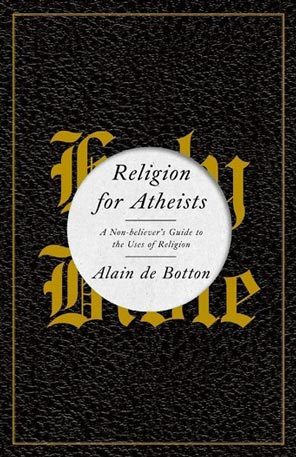
Book Review: Religion For Atheists, by Alain de Botton

First of all, I love De Botton as an author. He’s an artist who turns a keyboard into a palette. However, I hated this book.

I don’t hate it for the reasons a Christian should hate a book called “Religion For Atheists,” in which an atheist claims to be able to go mining through Christian tradition to pluck out the pearls and leave the heavenly gates behind. I hate it because he didn’t write it well, and he didn’t think about what he was saying.

The first infraction is the worst, because, having read De Botton’s The Architecture of Happiness, I know how good he is. He can turn phrases with the best of the classics of Western literature. He’s better than Oscar Wilde and could at least stand outside Albert Camus’ door. But he didn’t do it in Religion For Atheists, which feels rushed and sloppy. Be clear: it’s not sarcastic and insulting. It’s amateur.

Secondly, and perhaps he’s less guilty in this case because he’s more of a literary artist than a philosopher, the book is a collection of intellectual fluff. He proposes a secular Agape meal held at a restaurant (instead of the Eucharist) in which interaction is mandatory, because this will cure racism and prejudice. He wants to hold onto Original Sin because he believes it will make everyone feel better about themselves. He thinks universities should offer classes on marriage and preparing for death to take the place of religious instruction.

What he misses is that when you take out the foundation, you take out the rationale. In reference to apologizing on the Day of Atonement, he says, “We are not satisfying ourselves, we are obeying the rules.” What rulebook is the atheist using? What objective moral grounds are there for saying we should or shouldn’t have done anything? Why is there innate moral value to honesty if we all turn back into dirt anyway?

All of this, and here’s the worst part, he says is “obvious,” because “of course” people know that religion is false. Fortunately, he leaves us the sufficient material for psychoanalysis, remembering a time when his father demeaned his eight year old sister until she cried for entertaining a hope in God. De Botton is still a kid afraid of his atheist dad, who, instead of using reason, seemed to capitalize on patronization. De Botton is a more subtle version, but again rather than reasoning, all he does here is patronize.

De Botton is Nietzsche without the distemper. But why? Nietzsche thought the uberman, the genius who subsumed morality under power, was an “obvious” and “of course” too, and Nietzsche was right. This whole group therapy fantasy is completely unfeasible, because it’s moral obligation without Judgment Day. It’s an optimistic humanism that has historically proven a failure over and over again. And in De Botton’s case, it’s just a forlorn admittance that he desires things that only faith can provide.

So in the end, I hope he writes something else. The only religious tradition that Religion For Atheists deserves is last rites.

The Opening In Orlando


The Fellowship of Presbyterians hosted the constitutional convention of the new Evangelical Covenant Order of Presbyterians this week in Orlando. This was a gathering of over 2100 people from over 500 churches in the PC(USA) who were largely disaffected by years of decline, toxic conflict, and wandering theology. The result is functionally a new denomination, though in dubbing it an “Order,” the creators have in mind to signify that an institutional past is being replaced by a more fluid, mission-oriented future.

There are two things worth noting about the gathering. The first is pragmatic. It’s a new organization that dozens if not hundreds of evangelical churches are going to transfer into. It has the practical building blocks in place or on the way: a theological core, a polity, a medical plan and a retirement benefits plan, and so forth. People with good minds have applied themselves to creating an administrative structure. I hardly need to recap what’s already online here.

But secondly, and more importantly, is not what you can put on paper. It’s what it felt like to be there. It’s the reality that this is the historical milieu in which we find ourselves. Orlando had the feeling of a launch, an initiative, an innovation, a new thing. We can read a few paragraphs in a history book about colonists gathering to constitute a country or the old days when a group of excited believers founded a now long-established church which we attend. Those historical readings can remain little more than academic. Orlando let us know what it feels like, and for many of us, that was a first. It was after John Ortberg preached about the passion for meaningful churches that reach a lost world for Jesus that the congregation of thousands sang “Amazing Grace,” and the power of the moment put a tear in my eye. This is what it feels like to be there at that moment.

John Crosby rightly predicted that the process would be “messy.” It’s almost a cute word to describe the exuberant adrenaline rush that comes with such passionate new direction. It’s messy because new ideas are bursting out all over the place. People who are passionate for mission, for meaningful theology, and for a church that is tied together by relationships rather than paperwork all united behind this cause. It felt like we were given permission to imagine. It was, in a word, fun.

Of course underlying this is all the anxiety that comes with tectonic change, but the feeling I got from most everyone I talked to was that tectonic change is unavoidable, and proactive change is better than that alternatives. The reality is that a denomination that declines for 45 years with no vision for change is dying, and freedom to pursue new initiatives is better than death by status quo.

So again, I’ll close this post like I closed the last one: let’s bless it and look for new life.

The Meaning of Minnesota

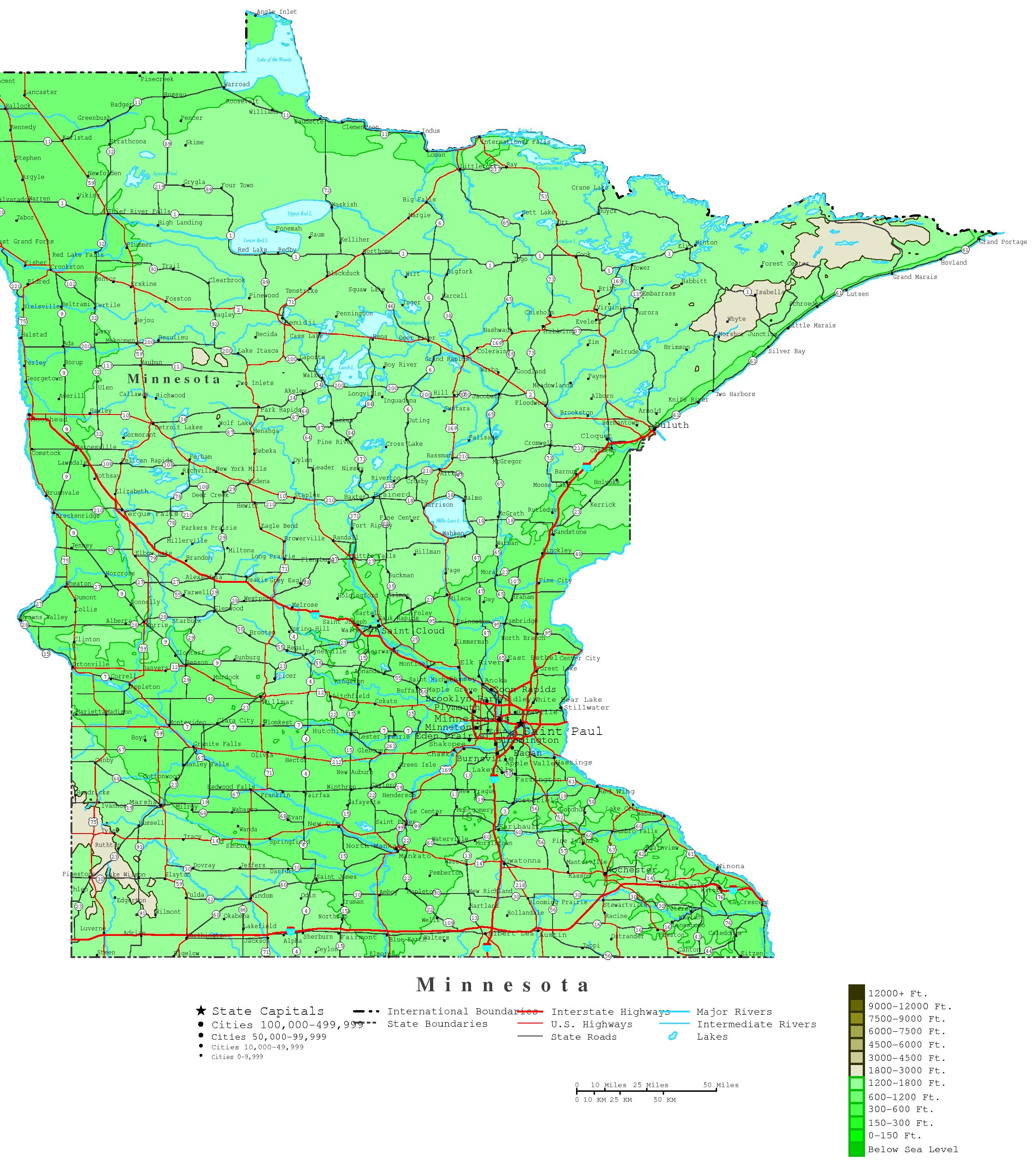
This is a blog for those interested in the future of the Presbyterian Church (USA). Again, though denominational issues aren’t my favorite subject, I would be remiss not to offer an update. I’ve just returned from a huge gathering of Pastors and Elders in Minnesota who were planning the future of the denomination. Here’s what I take away.

I have to say the gathering of The Fellowship in Minneapolis (#mn2011) is the best Presbyterian conference I’ve been to in fourteen years of ordained ministry. Specifically because it both generated an upbeat atmosphere and because it did something practical.
• It was well attended, with around 2000 people. To put that in perspective, that’s bigger than the gathering of delegates, advisory delegates, and staff to the General Assembly of the Presbyterian Church.
• People were excited to be there and clearly having fun reconnecting with old friends. There was a lot of laughter.
• The worship experience was outstanding.
• The message was direct and had concrete action plans that people could get behind. There was a clear next step when it was over.
• The demographics were surprising. Maybe a quarter or more of the crowd was under 45. There was a significant contingent of young adults, giving it a feel of being a voice of the future of the church.

You have to realize that this is all the more powerful because it is so ironic. What company or enterprise has a huge, nation-wide meeting in which people spend tens of thousands of dollars getting together to talk about the fact that the company is failing. No one does that. That’s outrageous. And that very conference was uplifting, exciting, forward-looking, and hopeful. Nothing about that makes sense. Must be a God thing.

What was most impressive was what the gathering accomplished. The gathering is now a united movement of Presbyterians who will form a New Reformed Body (NRB) for churches who are tired of the failure, incompetency, and conflict of the PC(USA). This body will be ready by a January meeting (in Orlando) to formally accept churches into it. The NRB will include:
1. Churches that will formally ask to be dismissed from the PC(USA) and join the NRB with their property. In so doing, they will most likely also leave the Board of Pensions. In the NRB, congregations own their own property.
2. Churches that will establish a union membership in both the NRB and the PC(USA), making them members of two bodies.
3. Churches that will establish an affiliate membership in the NRB. This might be best for churches for whom deeper commitment might create internal or external conflict.

This is a smart structure on a number of levels.

First, in acknowledging that denominations are dead, it’s an act of living into a new structure which will function differently than a denomination. What exactly that will look like is as yet uncharted territory, meaning the pioneers will most likely get to define it as they go. Bureaucrats will look for paperwork and policies to explain this change, but this is really too innovative to fit into pre-existing boxes.

Second, in allowing for concrete movements with a concrete timeline, it offers an alternative to death-by-status-quo on the one hand or transfer to not altogether appealing denominations on the other. It should calm some of the panic that congregations are feeling.

Third, it’s actually an act of affirming those elements of our tradition which we value while admitting that it’s time for a game-changer. Churches leaving for other denominations, even Presbyterian denominations, have sometimes left a wake of resentment. This at least might be a way of saying that the desire is not so much to leave as to avoid changing the moral and theological positions many of us believe cannot be changed. It’s sort of (oddly) an act of radically staying in place by changing everything.

It may be time to acknowledge that this is a moment like the one that Paul and Barnabas came to, where, for the good of the whole Church, they had to do ministry in different directions. There’s a certain grace to allowing each body to function without persistent threat of conflict and a poor witness to the world. There’s no gain by forced maintenance of the status quo, because, again, the status quo has been 45 years of declining membership and financial hemorrhaging. Change will come fairly soon anyway as systems are no longer able to keep their doors open. We’ve witnessed the closing of SFTS in So. Cal., there are presbyteries switching from full-time to part-time executive presbyters, there have been regular layoffs at the national offices, and there have been budget cuts at every level of the denomination. An optimistic move forward is far better than the alternatives.

So let’s bless it and look for new life.

I Don’t Know About Agnostics

A guy comes to Jesus with a son who is ill saying he can’t heal him. Jesus actually scolds the man. It isn’t very nice. Jesus says, “You unbelieving generation.”

But I kind of like what Jesus is actually doing.

Our tendency is not to admit that we choose not to trust God, but rather insist that we don’t have enough information to decide whether or not to trust God. It’s a bit disingenuous. We like to claim to be agnostic, from the Greek prefix a-, meaning “against” or “without,” and gnosis, which means “knowledge.” What Jesus accuses us of being is apistos, which is “without belief.”

When we claim to be agnostic, we are hedging our bets. We are imagining that there will be some grand trial at the gates of heaven at which the Lord will say, “Why didn’t you believe and obey?” And we will say, “Well you didn’t really give me enough information upon which to make a reasoned decision.” And the Lord will say, “Oh, yeah. My bad.”

See, that trial isn’t going to happen, just fyi.

Because the burden of belief isn’t on God, who has already done enough. The burden of belief is on us, who have sufficient reason to believe.

Honestly, a-gnosis in the Information Age? Learn to Google.

In the end, I just don’t believe that there is such a thing as an agnostic. I don’t have enough information upon which to decide whether or not there are agnostics. I don’t think agnosticism is a viable position, at least not for very long. Here’s why.

In his “On the Heavens,” Aristotle suggests that no human being could stand between food and drink and die of both thirst and starvation, due to the fact that he could not decide which drive was stronger. Jean Buridan picked up the illustration in the modern age and suggested that it was impossible for a mule trapped equidistant from two equally delicious bails of hay to starve to death. The agnostic is in the same place. The agnostic stands perfectly balanced between on the one hand the promise that he was created intentionally, that his life has purpose, that one day he will stand before his maker and give and account of his life, and on the other hand the idea that he is completely free in an empty, accidental universe. I just don’t think you can stand there for very long. The needs and desires of the human heart are far too strong for that.

We live in a broken world in which we lose our children to death and to bad decisions, we lose our marriages, we lose our jobs, we struggle for meaning and purpose. In the end, you’re not going to stay perfectly undecided on something as big as whether or not your life has meaning. You’re either going to live like God is really there, or you’re going to live as though he’s not. The mere fact that we do or do not behave morally proves that we are not agnostic.

So hover in between as long as you can, if you so desire, but sooner or later, we all decide.

If you want to follow our conversation about how we know the story of Jesus is true, you can listen to the sermon series here.

Baptism

Dear Sonoma,
Today I baptized you. For you it was exciting, because you were the center of attention, and there was a party in your honor afterwards. You understood what it meant and affirmed a core creed that I would want to hear from someone who follows Jesus. But I think having all eyes on you sealed it for you.

I don’t know that you will understand what it meant for me for a long time.

For just a moment I was every parent. Every parent wants to hope away the bad off of their children as easy as a bath. We want to hope away all that might adversely happen to you and all the adversity you might cause. In the back of my mind, I have some rationalized understanding of a God who uses pain, suffering, and even death for redemption, but there’s a part of my heart that would gladly stand between you and all that. I can talk about your character, but I’m mobilized by your safety. I’m not defending this; only confessing.

I realize of course, that when I pray, “Deliver us from evil,” my mind goes to shadowed alleyways in which evil lurks, the kind of evil that would hurt my daughter. But Jesus preempted that line with “Lead us not into temptation,” because the dark alleyways he was concerned with are the ones within us.

So like every parent, I wish I could wash all of the shadows away. Baptism doesn’t do that. But as a symbol, it’s a physical manifestation of that hope. I hope that those parts of my own daughter that would lead her astray might die and something else would grow in its place, submerged and arisen. The only way that can really happen is if I put you in His hands. And that is why, when we stood side by side with our friends at the pool and prayed, I had trouble catching my breath. That was a moment for me in which I had to surrender you to Jesus, knowing that only he can do some of the things that every father would want to do.

Then we tiptoe into the cold water together on an overcast June day. Also particular to fatherhood, I tell you that it isn’t cold at all, and then you put your foot in and roll your eyes at me. We wade out long enough to acclimate. You are smiling and present to the moment. I’m lost somewhere. I start to say the words and have to swallow to get them out. You disappear for a second.

I wonder if in the moment of incarnation the Father had trouble catching his breath because of all that he hoped for his Son and for all of his children. I wonder if he knows the feeling of wanting to do it quick to keep from crying.

Then you are up again, smiling. Everyone applauds and I exhale.

At the house there are friends and cake and more attention, all of which suit you well. One of your observations later in the day, after everyone leaves, apparently unrelated, is, “Two of my favorite words that begin with ‘F’ are ‘famous’ and ‘fabulous.'” Sure enough, that was today.

Now you are baptized, and again I feel the sense for why we call God “Father.” We share in the feelings of the one who made us, who died for us and who rose, who watches us be born in a world in which we die, and who has given us a way to rise.

Our little reenactments are pale shadows of the real thing, only impressions that are meant to touch our hearts with a sense of it. But in those moments we get a feel for God. Our rites are like a child invading a father’s wardrobe and dressing up like him in oversized clothes that we will one day grow into. I hope that in these younger years you dress like Jesus and then grow into him.

Two of my favorite words that begins with ‘F’ are “Father” and “faithful.”

Love,
Papa

“So in Christ Jesus you are all children of God through faith, for all of you who were baptized into Christ have clothed yourselves with Christ.” Galatians 3


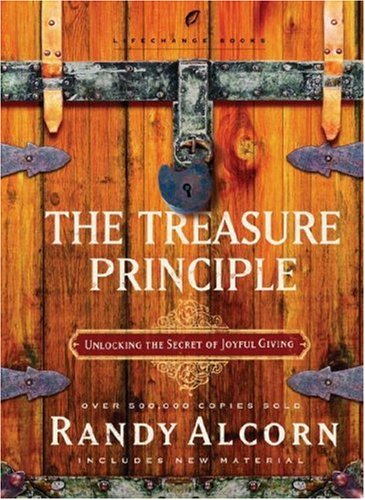
The Treasure Principle: A Book Review

When I saw the “over a million copies sold” branded on the front cover, I figured this would be a shallow, health and wealth guide to getting rich in God’s name. I was pleasantly mistaken. It’s not a sophisticated work, but I can see why it’s selling. It’s a thoughtful and energetic attempt to reframe the way most American Christians see their money and belongings. It’s goal is to help us to let go a bit and give a bit more, and I think it’s succeeding.

The great part of Alcorn’s work is that he walks us through his own experiences, both of giving and of losing money without meaning to. His fascinating personal story includes moments at which he could have lost everything and the successful course he charted into becoming a radical giver.

I’m going to guess that the primary customers of this book have been pastors and non-profit managers (who, if they’re wise, have given out this book by the boxful). But the reality is that any Christian who knows that they aren’t particularly generous will find an encouraging challenge to give that emphasizes rationale rather than playing upon guilt.

I didn’t expect to say this when I started the book, but I’d recommend it. I received this book for free from WaterBrook Multnomah Publishing Group for this review. And honestly, they’ve been sending me some great books.