Mary’s Song

The Christmas season is here, and with it comes a chance to slow down, reflect, and prepare our hearts for the story of Jesus’ birth. Luke 1:39-56 gives us a unique glimpse into a moment of joy, humility, and faith shared between Mary and Elizabeth—two women whose lives were forever changed by God’s plan.

Family and Faith

Mary and Elizabeth were family—relatives connected not just by blood but by faith. Mary, a young woman likely in her teens, was newly engaged to Joseph, a humble carpenter. Elizabeth, much older and married to Zechariah the priest, was miraculously expecting a child after years of waiting. Their sons would be Jesus and John the Baptist—second cousins who would change the world.

Picture the scene: two women, one old and one young, both bearing miraculous children, meeting in a quiet hill country home. It’s a moment of shared joy and holy anticipation—a glimpse of what it means to find camaraderie in the midst of life’s biggest transitions.

Parenting Camaraderie

It reminds me of the camaraderie parents often find in each other.

I’ve seen this kind of connection myself. When our daughter was born, my wife joined a stroller exercise group at the mall. It wasn’t just about fitness—it was about finding community. They supported one another, swapped advice, and cheered each other on.

In our own church, we’ve celebrated over a dozen babies born this year. We’ve even had Sundays with 18 infants in one service! It should remind us of the importance of community—whether you’re expecting, raising children, or navigating any big life change. We need each other.

Mary’s Song: A Song of Humility and Hope

A first century listener would have immediately recognized this as reflective of the Psalms. It has their cadence and rhythm, their vocabulary and their theology.

The allusions would have been so familiar that anyone would have recognized them, as surely as you would recognize what I am alluding to if I rewrote the dialogue this way:

Elizabeth: I’m very nervous about what’s coming.

Mother Mary: Let it be, Elizabeth, let it be. I’m whispering words of wisdom, let it be.

Elizabeth: I get it. But you know, I’m a material girl living in a material world.

Mary: Well, don’t stop believing. Just hold on to that feeling.

Elizabeth: Ok. If you take my hand, we’ll make it, I swear. Whoa, we’re living on a prayer.

You would immediately recognize what I’m alluding to if you know anything about American pop music. You might think, “Hey, this guy isn’t that funny, we should try a different church next week,” but at least you would understand what I was referring to.

In Luke 1:46-56, Mary responds to Elizabeth’s blessing with what’s often called the Magnificat. Her words echo the words and theology of the Psalms, praising God for His faithfulness and celebrating His power to lift up the humble.

Mary says:

  • “My soul glorifies the Lord…for he has been mindful of the humble state of his servant.”
  • “He has brought down rulers from their thrones but has lifted up the humble.”

Humility is the thread that runs through Mary’s song, her story, and God’s plan. Bethlehem—a small, unremarkable town—became the birthplace of the Savior. Mary and Joseph, ordinary people, were chosen to play extraordinary roles. God consistently works through the humble, flipping the world’s expectations upside down.

The Gift of Humility

Humility isn’t something the world often rewards. We chase status, success, and recognition. But God shows us a different path.

I remember a woman in my church who embodied this so well. She was a mom who volunteered to babysit for our family when our kids were little. Over time, I learned she’d gone to an Ivy League school, studied law, and was a financial genius. Yet she never boasted about her accomplishments. Her humility wasn’t just refreshing—it was Christlike.

Humility is fertile soil where God plants His seeds of grace. It’s the incubator for a character that reflects Him.

I remember serving on a mission trip in Mexico. We stayed at a campsite with hundreds of other teenagers from youth groups around the country. At one point, I asked how they managed the large site. They told us that the pastors from the local churches would come in during the day while we were building houses, and they would clean our porta-potties for us. Invisible, uncelebrated, and absolutely faithful.

Practical Ways to Practice Humility This Christmas

As we prepare to welcome Jesus into our hearts this season, Jesus-followers can take a cue from Mary and embrace humility. Here are some simple ways to cultivate it this week:

  • Let someone else go first—in a conversation, in line, or on the road.
  • Celebrate someone else’s successes without mentioning your own.
  • Practice saying, “I don’t know,” or “I could’ve done that better.”
  • Apologize when you’d rather not.
  • Give away time, money, or love—especially to someone who doesn’t deserve it.

God’s Promises for the Humble

Mary’s story reminds us that humility opens the door for God to work in our lives. In her song, she celebrates what God does for the humble:

  • “He will lift up the humble.”
  • “He will fill the hungry with good things.”
  • “He will be mindful of His servant.”

When we step into a humble posture, we’re right where God wants us. It’s there, in the quiet and unassuming places, that His greatest miracles unfold. So, this Christmas, let’s not be afraid to embrace humility. After all, the Savior of the world came to us not in power or grandeur but in the humblest of circumstances—a baby, born in a manger, in a small town called Bethlehem.
Christmas, and guests you wouldn’t expect

What’s a Magi?

We sing about “We Three Kings” around this time of year, but that’s not really who we’re talking about. The word used in Matthew 2 is magoi, which doesn’t mean kings at all. It’s the root of our word “magician,” but in the ancient world, it referred to people who studied the mysteries of the universe—early scientists, stargazers, astrologers. If we wanted the most accurate translation for today, it might be astrologers (but good luck convincing a Bible translation committee to slip that one into the Christmas story!).

Here’s what we know about the Magi:

  • They weren’t kings.
  • There weren’t necessarily just three of them (three gifts, sure, but if you’re wise, you’d go in on a gift like gold with a buddy, right? Orthodox traditions say they were 12).
  • They probably weren’t hanging around the manger. Herod’s reaction—ordering all boys under two to be killed—suggests their visit came later.

So, no crowns, no camels, and maybe not even any wise men (sorry, nativity sets). Did I ruin your Christmas? I promise I’m getting to the good part.

A Journey from the East: The Zoroastrian Connection

The Magi likely came from Persia, a land east of Judea. There, a faith called Zoroastrianism was widespread, and the Magi may have been its priests. In fact, magoi only appears in the ancient religious texts of the Zoroastrians. Here’s where it gets interesting. Zoroastrians believed in:

  • One God who created the universe
  • A battle between good and evil, order and chaos
  • A coming redeemer (the Saoshyant) born to a young woman in a miraculous way
  • A final triumph of good, resurrection of the righteous, and a remade world

Their beliefs sound an awful lot like parts of Christian theology. And before the Jews recognized Jesus as Messiah, before he performed miracles or rose from the dead, these foreign astrologers packed up their treasures and followed a star to worship him. My problem is not with their doctrine. My problem is that their names aren’t Matthew, Mark, Luke, or John.

God’s Love Goes Beyond Our Expectations

This story challenges the way we think about faith. It challenges our assumptions about who “gets it right” and how people find Jesus. The Magi didn’t have Scripture or Sunday school. They weren’t Jewish, and they didn’t know the stories of the prophets. But they were looking for wisdom—and their pursuit of truth led them to Jesus.

God spoke to them in a way they could understand: a star. That’s not how it’s supposed to work. People are supposed to read the Bible, hear good arguments, and then come to church with us, potato salad in hand. But the story of Christmas tells us that God’s love is bigger than our formulas, our strategies, or our control. God meets people right where they are—even in foreign lands and unfamiliar faiths.

A Christmas Challenge: Be a Witness, Not a Debater

Maybe this Christmas you’ll sit down with friends or family who don’t share your faith. Maybe they look at Christianity as something foreign. Take a lesson from the Magi—and from Jesus himself. God’s love is patient, kind, and full of grace. Instead of arguments and corrections, tell your story. Share how you’ve seen Jesus at work in your life. Pray for them, and trust that God loves them even more than you do.

Our world feels more divided than ever. We’re quick to draw lines and build walls, but Christmas reminds us that God came to break down those barriers. The God who told Israel to love the foreigners in their land still calls us to do the same.

God is Still Calling People Home

A Christian minister once told the story of a Muslim taxi driver who turned around to him and said, “I had a dream that I would meet a Christian who would tell me about Jesus. Tell me about Jesus.” That’s not how we think it’s supposed to work, but God is still speaking in dreams, through stars, and in ways that surprise us. The Magi remind us that God’s love reaches further than we imagine. It’s like God loves us before we get everything right.

This Christmas, I need the story of the Magi. They remind me that the pursuit of truth leads us to Jesus, that God meets us in unexpected ways, and that his love is for everyone—no matter how far away they seem.

So, as we gather around tables with family, as we worship together on Christmas Eve, let’s remember the star that led the Magi to the source of all wisdom, love, and life.

Jesus is still calling. And he is worth the journey.

Christmas, and signs of things to come

Christmas is coming, and the story we retell each year reminds us of God’s great plans for our world. It’s the story of angels, shepherds, and wise men, all drawn to the manger by a love so great it touches every corner of creation.

Let’s take a closer look at the characters in this story and what their presence tells us about the child born that night. In Korean culture, there’s a tradition called doljabi, celebrated on a child’s first birthday. During this ceremony, objects are placed in front of the baby, and whichever one the baby chooses is seen as a hint of who they might become. A pencil could mean a scholar, a stethoscope a doctor, and so on. It’s a fun, symbolic way of imagining a child’s future.

At Jesus’ birth, there’s something like a divine doljabi happening—not with objects, but with people. God chooses shepherds, wise men, and angels to gather around the manger, and their presence offers signs of who Jesus is and what His life will mean.

The angels were the first to announce His birth. They are not just heavenly beings but royal messengers, sent directly from God’s throne room. Their presence signifies that this event is not just important for earth but is celebrated in heaven itself. They remind us that Jesus is not only the Messiah but also the King of Kings, sent from heaven to bring peace to earth.

Then there are the shepherds. In the eyes of the world, they were nobodies—simple, unpolished, and overlooked. Yet they were the first to receive the good news. This is no accident. God chose shepherds because their presence points to who Jesus will become. He is the Good Shepherd, the one who will care for His people with humility and love. Throughout Israel’s history, shepherds like David and Moses were chosen by God for great purposes, and Jesus continues that tradition, coming to lead His people with a shepherd’s heart.

Finally, later in the story, we see the wise men. These were learned men from faraway lands, outsiders in every way, yet they were drawn to worship Jesus. They symbolize that Jesus is the source of all wisdom and the one who calls people from every nation to come and know Him. Their gifts of gold, frankincense, and myrrh reflect His kingship, His priestly role, and His eventual sacrifice.

Each group—angels, shepherds, and wise men—represents a piece of who Jesus is. He is the King of Heaven, the Shepherd of His people, and the Wisdom for the world. God’s choice of these witnesses reminds us that this story is for everyone. The highest heavens and the humblest fields all find their place in His plan.

This Christmas, remember that you are part of this story, too. God invites each of us, no matter where we stand, to approach the manger and discover what He has in store for us. Like the shepherds, we are called into His care. Like the wise men, we are invited to seek Him with all our hearts. And like the angels, we are given the joy of celebrating and sharing the good news.

May this season fill us with light, joy, and a deep sense of belonging in the story of Jesus.

A Christmas Miracle

xmas.jpg

Well, this one is beyond explanation.

A family from the Real Life Church family contacted our Children’s Minister, Staci, to tell her that their house had been robbed.  The thieves got away with some cash that the family had set aside to send their kids to Winter Camp with the church.

Of course the church was ready to jump in and cover the costs for these two kids anyway, but the family told Staci to save the money.  The church might have to buy a new building this year – save the money for that.

This sweet family was about to sacrifice their kids’ opportunity to go to camp so that the church could continue in its mission.

What they didn’t know was that earlier the same day I had received a call from another member of the congregation who told me, “God is telling me to pay for a couple of kids to go to camp, in case anyone can’t afford it.”  The same day the house was robbed, even before it was robbed.

So of course, the kids are going to camp.

Now a skeptic might suggest that if God was behind this, he could have just stopped the robbery, right?  But think about that.  The family isn’t losing out on anything – they’re still going to camp, and not only that, they also know that God is watching out for them.  The donors aren’t out anything – they already wanted to give the gift.  Now on top of that, they know how special their gift is.  Even the thieves are not at a loss – they walked away with the cash, and, God willing, they are a step closer to finding out that money and theft will not lead to happiness.  If God had stopped all this from happening, we wouldn’t have this story to tell, and we wouldn’t have a deep sense of God’s hand in our lives.

So this is our Christmas miracle this year, and it’s my Christmas miracle, because what pastors want to see, more than beautiful services and shining smiles, is the powerful hand of God intervening in the world.  That is, after all, the story of Christmas.

#RLLA

A Very Messy Christmas


CB.jpg

We like to wish each other a merry Christmas.  If we wanted to be real with each other, we would probably wish one another a messy Christmas, because to do so is more true to the biblical narrative and more true to the state of our lives.  Merry Christmess.  It would relieve the recipient of the burden of meeting the Norman Rockwell expectations  for family life in this season, achieving the proper level of Hallmark sentimentality, and imitating the magazine cover home decor.  Most of us would rather undo the top button of our jeans and watch football with the curtains closed.

The Christmas holiday is messy; let’s be honest.

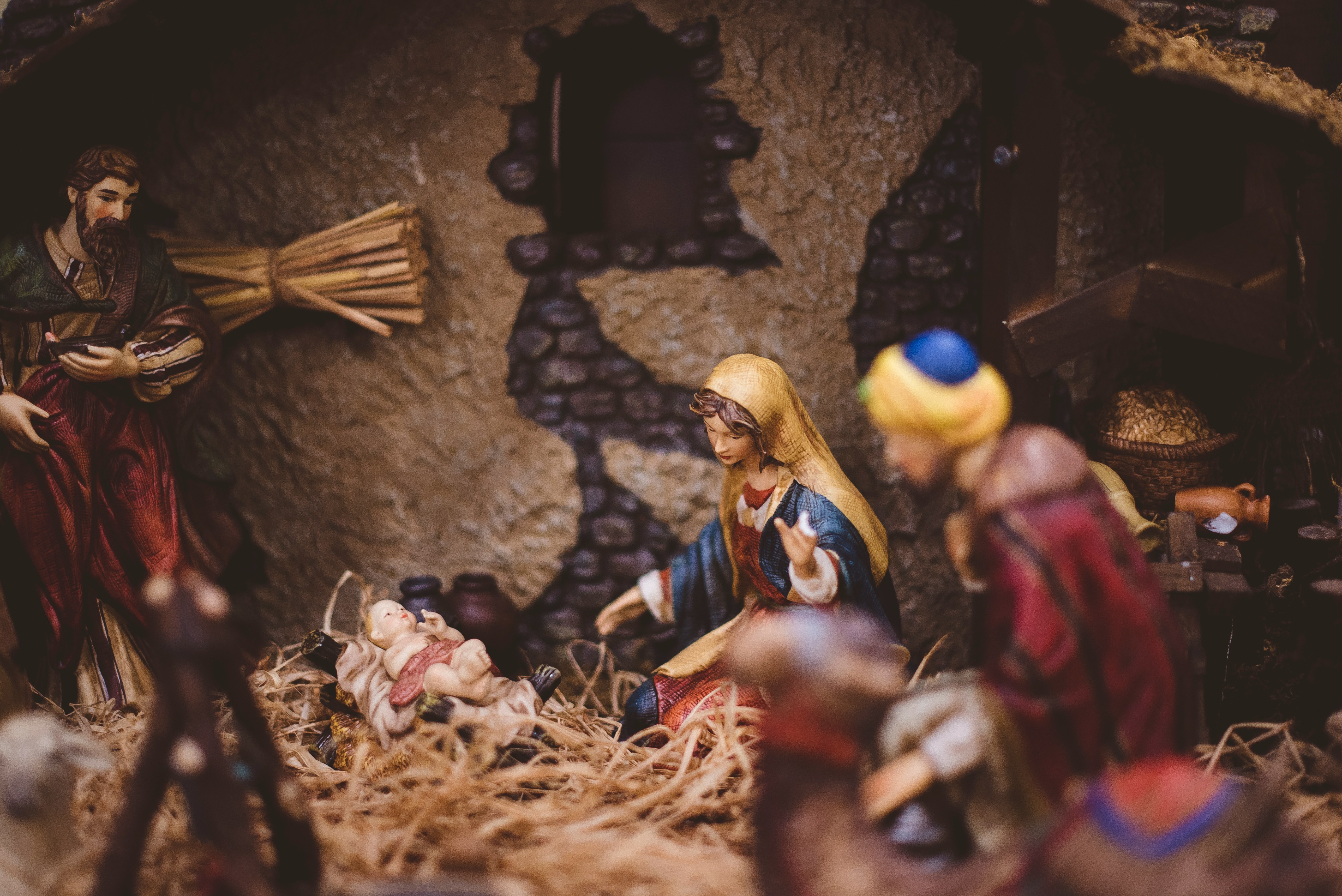
The manger scenes on our front lawns are dishonest.  The wise men, who have just concluded an international journey on foot, are well-pressed and do not need a shower.  The shepherds, who are day-laborers, whom Aristotle referred to as the “most lazy” of all laborers, have the well-groomed gaiety of a barbershop quartet about to break out in song.  The baby, who was just born in a windy barn without medical assistance, well, “no crying he makes.” And Mary, who was not long ago threatened with divorce in light of premarital pregnancy, and Joseph, who finds himself in a generally unwanted arranged marriage, have on their faces the serene tranquility of a Buddha statue I saw in my neighbor’s garden.

Meanwhile, the houses behind our manger scenes are full of people who, by all accounts, are completely unworthy to approach such an immaculate gathering.

Christmas is messy.  The first one was messy, and the meaning behind it is messy.  God steps down into the mud and filth of the earth to join the species that had staged a rebellion against the Creator in the hopes of winning some converts back to the original side where, outrageously, they will be welcomed to return.  Christmas isn’t about a neat and tidy self-presentation.  It’s about being loved by the God who knows our mess so well that he joined it.

logo.jpgWhat if, rather than painting on our faces the rouge of artificial merriness, we settle for the messiness?  What if we accept one another’s messiness with grace? Christmas is not a time for appearances, it is a time for the authentic embrace of true humanity.  More than any other time, this season, we ought to love and accept those whose lives are a mess.

Xmas and Christmas: A Lost Chapter from Herodotus

Xmasa Christmas essay by C.S. Lewis

And beyond this there lies in the ocean, turned towards the west and north, the island of Niatirb which Hecataeus indeed declares to be the same size and shape as Sicily, but it is larger, though in calling it triangular a man would not miss the mark. It is densely inhabited by men who wear clothes not very different from the other barbarians who occupy the north western parts of Europe though they do not agree with them in language. These islanders, surpassing all the men of whom we know in patience and endurance, use the following customs.

In the middle of winter when fogs and rains most abound they have a great festival which they call Exmas and for fifty days they prepare for it in the fashion I shall describe. First of all, every citizen is obliged to send to each of his friends and relations a square piece of hard paper stamped with a picture, which in their speech is called an Exmas-card. But the pictures represent birds sitting on branches, or trees with a dark green prickly leaf, or else men in such garments as the Niatirbians believe that their ancestors wore two hundred years ago riding in coaches such as their ancestors used, or houses with snow on their roofs. And the Niatirbians are unwilling to say what these pictures have to do with the festival; guarding (as I suppose) some sacred mystery. And because all men must send these cards the marketplace is filled with the crowd of those buying them, so that there is great labour and weariness.

But having bought as many as they suppose to be sufficient, they return to their houses and find there the like cards which others have sent to them. And when they find cards from any to whom they also have sent cards, they throw them away and give thanks to the gods that this labour at least is over for another year. But when they find cards from any to whom they have not sent, then they beat their breasts and wail and utter curses against the sender; and, having sufficiently lamented their misfortune, they put on their boots again and go out into the fog and rain and buy a card for him also. And let this account suffice about Exmas-cards.

They also send gifts to one another, suffering the same things about the gifts as about the cards, or even worse. For every citizen has to guess the value of the gift which every friend will send to him so that he may send one of equal value, whether he can afford it or not. And they buy as gifts for one another such things as no man ever bought for himself. For the sellers, understanding the custom, put forth all kinds of trumpery, and whatever, being useless and ridiculous, they have been unable to sell throughout the year they now sell as an Exmas gift. And though the Niatirbians profess themselves to lack sufficient necessary things, such as metal, leather, wood and paper, yet an incredible quantity of these things is wasted every year, being made into the gifts.

But during these fifty days the oldest, poorest, and most miserable of the citizens put on false beards and red robes and walk about the market-place; being disguised (in my opinion) as Cronos. And the sellers of gifts no less than the purchaser’s become pale and weary, because of the crowds and the fog, so that any man who came into a Niatirbian city at this season would think some great public calamity had fallen on Niatirb. This fifty days of preparation is called in their barbarian speech the Exmas Rush.

But when the day of the festival comes, then most of the citizens, being exhausted with the Rush, lie in bed till noon. But in the evening they eat five times as much supper as on other days and, crowning themselves with crowns of paper, they become intoxicated. And on the day after Exmas they are very grave, being internally disordered by the supper and the drinking and reckoning how much they have spent on gifts and on the wine. For wine is so dear among the Niatirbians that a man must swallow the worth of a talent before he is well intoxicated.

Such, then, are their customs about the Exmas. But the few among the Niatirbians have also a festival, separate and to themselves, called Crissmas, which is on the same day as Exmas. And those who keep Crissmas, doing the opposite to the majority of the Niatirbians, rise early on that day with shining faces and go before sunrise to certain temples where they partake of a sacred feast. And in most of the temples they set out images of a fair woman with a new-born Child on her knees and certain animals and shepherds adoring the Child. (The reason of these images is given in a certain sacred story which I know but do not repeat.)

But I myself conversed with a priest in one of these temples and asked him why they kept Crissmas on the same day as Exmas; for it appeared to me inconvenient. But the priest replied, “It is not lawful, O stranger, for us to change the date of Chrissmas, but would that Zeus would put it into the minds of the Niatirbians to keep Exmas at some other time or not to keep it at all. For Exmas and the Rush distract the minds even of the few from sacred things. And we indeed are glad that men should make merry at Crissmas; but in Exmas there is no merriment left.” And when I asked him why they endured the Rush, he replied, “It is, O Stranger, a racket”; using (as I suppose) the words of some oracle and speaking unintelligibly to me (for a racket is an instrument which the barbarians use in a game called tennis).

But what Hecataeus says, that Exmas and Crissmas are the same, is not credible. For first, the pictures which are stamped on the Exmas-cards have nothing to do with the sacred story which the priests tell about Crissmas. And secondly, the most part of the Niatirbians, not believing the religion of the few, nevertheless send the gifts and cards and participate in the Rush and drink, wearing paper caps. But it is not likely that men, even being barbarians, should suffer so many and great things in honour of a god they do not believe in. And now, enough about Niatirb.

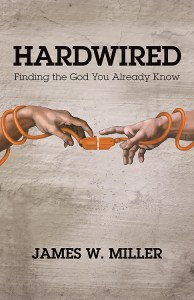
hardwired cover


Check out my book!  —>

Family

The fourth thing I want my kids to know this Christmas is actually one they will not consciously notice, though it undergirds everything they do.

A psychologist friend once told me that the way your family shapes your identity is like a potter shaping a ball of clay and then leaving it in the sun to dry.  Before it is completely dry, you can still leave fingerprints on it, but it’s hard to do much with the original shape.  Our families are that early potter that do most of the shaping of personality, habits, and drive.

As we gather for dinner at my in-laws house this year on Christmas day, I will go with my usual reservations.  They are a family that has a lot to say, and I generally hide quietly in the corner through most of our gatherings.  I will have had a couple of aspirin in advance.  I love my extended family, but you’re talking about dropping someone with the personality of a librarian into a fiesta.

But I wouldn’t miss it for the world.

And I want my kids to know that the nuclear family: dad, mom, and the kids, is an essential building block of all society that must be preserved.  I want them invested in the idea of family universally and the experience of their family particularly.  We continue to cheapen family in America by making marriage inessential and child-bearing optional.  First we assimilated divorce and then cohabitation.  Now there are flippant voices calling for the mainstreaming of adultery and serious voices reshaping marriage altogether.  Deconstructionists are trying to tell us that this is inevitable and only fair.

What we’re doing is messing up the best chance the potter has.

So kids, pay attention to how your grandparents act and what your aunties say and how the cousins are the same and different from one another.  They are some of the most sure access you will have to self-understanding.  And be sure when the day comes that you are making Christmas plans of your own with family members we have not yet met – family is essential.

Jesus, et. al.

This is the third thing I want my kids to know for Christmas.  As you grow up, you’re going to hear that out there in the world there is a pantheon of gods.  There is the god who revealed himself to Joseph Smith on some strangely misplaced golden tablets.  Another god whispered in Muhammed’s ear and led him to be a king.  There was a string of god who ruled the sea, the sky, and the elements in the ancient world, and many of the same kind by different names that still dominate the landscape of worship in India.

We are a race of polytheists.  Christmas is just the birth of another god.

But here’s the thing.  Christianity is not like other religions.  Religions historically come of certain stripes.  There are those that help humanity escape from reality, and those that help humanity define the forces that move reality.  Most of them empowered someone to be in charge of things.  Christianity is not like other religions.  In the story of this god, he becomes man in the name of love for a lost humanity.  He endures the indignity of humility so as to restore us to a relationship that we called off.

As a result, no one gets put in charge.  The forces that move reality are just a mystery and wonder as they always were.  And Christians are called to do anything but escape reality – we worship the God who joined the real world.

Rather than writing Christianity off as just another religious fiction, realize that all of these religions are attempted guesses that play on the human hardwiring that makes us go looking for our Creator.

Rather than writing Christianity off as an undeservedly elitist belief system that aims to dominate other worldviews, realize that it’s claim to authority only comes from the action of a humble God who spoke into history.

And rather than giving up on God in a world where specters and shadows of God abound, don’t give up your pursuit of him until you’ve found the real thing.  I suspect you’ll find it in a manger.