
Mary’s Song

The Christmas season is here, and with it comes a chance to slow down, reflect, and prepare our hearts for the story of Jesus’ birth. Luke 1:39-56 gives us a unique glimpse into a moment of joy, humility, and faith shared between Mary and Elizabeth—two women whose lives were forever changed by God’s plan.

Family and Faith

Mary and Elizabeth were family—relatives connected not just by blood but by faith. Mary, a young woman likely in her teens, was newly engaged to Joseph, a humble carpenter. Elizabeth, much older and married to Zechariah the priest, was miraculously expecting a child after years of waiting. Their sons would be Jesus and John the Baptist—second cousins who would change the world.

Picture the scene: two women, one old and one young, both bearing miraculous children, meeting in a quiet hill country home. It’s a moment of shared joy and holy anticipation—a glimpse of what it means to find camaraderie in the midst of life’s biggest transitions.

Parenting Camaraderie

It reminds me of the camaraderie parents often find in each other.

I’ve seen this kind of connection myself. When our daughter was born, my wife joined a stroller exercise group at the mall. It wasn’t just about fitness—it was about finding community. They supported one another, swapped advice, and cheered each other on.

In our own church, we’ve celebrated over a dozen babies born this year. We’ve even had Sundays with 18 infants in one service! It should remind us of the importance of community—whether you’re expecting, raising children, or navigating any big life change. We need each other.

Mary’s Song: A Song of Humility and Hope

A first century listener would have immediately recognized this as reflective of the Psalms. It has their cadence and rhythm, their vocabulary and their theology.

The allusions would have been so familiar that anyone would have recognized them, as surely as you would recognize what I am alluding to if I rewrote the dialogue this way:

Elizabeth: I’m very nervous about what’s coming.

Mother Mary: Let it be, Elizabeth, let it be. I’m whispering words of wisdom, let it be.

Elizabeth: I get it. But you know, I’m a material girl living in a material world.

Mary: Well, don’t stop believing. Just hold on to that feeling.

Elizabeth: Ok. If you take my hand, we’ll make it, I swear. Whoa, we’re living on a prayer.

You would immediately recognize what I’m alluding to if you know anything about American pop music. You might think, “Hey, this guy isn’t that funny, we should try a different church next week,” but at least you would understand what I was referring to.

In Luke 1:46-56, Mary responds to Elizabeth’s blessing with what’s often called the Magnificat. Her words echo the words and theology of the Psalms, praising God for His faithfulness and celebrating His power to lift up the humble.

Mary says:

  • “My soul glorifies the Lord…for he has been mindful of the humble state of his servant.”
  • “He has brought down rulers from their thrones but has lifted up the humble.”

Humility is the thread that runs through Mary’s song, her story, and God’s plan. Bethlehem—a small, unremarkable town—became the birthplace of the Savior. Mary and Joseph, ordinary people, were chosen to play extraordinary roles. God consistently works through the humble, flipping the world’s expectations upside down.

The Gift of Humility

Humility isn’t something the world often rewards. We chase status, success, and recognition. But God shows us a different path.

I remember a woman in my church who embodied this so well. She was a mom who volunteered to babysit for our family when our kids were little. Over time, I learned she’d gone to an Ivy League school, studied law, and was a financial genius. Yet she never boasted about her accomplishments. Her humility wasn’t just refreshing—it was Christlike.

Humility is fertile soil where God plants His seeds of grace. It’s the incubator for a character that reflects Him.

I remember serving on a mission trip in Mexico. We stayed at a campsite with hundreds of other teenagers from youth groups around the country. At one point, I asked how they managed the large site. They told us that the pastors from the local churches would come in during the day while we were building houses, and they would clean our porta-potties for us. Invisible, uncelebrated, and absolutely faithful.

Practical Ways to Practice Humility This Christmas

As we prepare to welcome Jesus into our hearts this season, Jesus-followers can take a cue from Mary and embrace humility. Here are some simple ways to cultivate it this week:

  • Let someone else go first—in a conversation, in line, or on the road.
  • Celebrate someone else’s successes without mentioning your own.
  • Practice saying, “I don’t know,” or “I could’ve done that better.”
  • Apologize when you’d rather not.
  • Give away time, money, or love—especially to someone who doesn’t deserve it.

God’s Promises for the Humble

Mary’s story reminds us that humility opens the door for God to work in our lives. In her song, she celebrates what God does for the humble:

  • “He will lift up the humble.”
  • “He will fill the hungry with good things.”
  • “He will be mindful of His servant.”

When we step into a humble posture, we’re right where God wants us. It’s there, in the quiet and unassuming places, that His greatest miracles unfold. So, this Christmas, let’s not be afraid to embrace humility. After all, the Savior of the world came to us not in power or grandeur but in the humblest of circumstances—a baby, born in a manger, in a small town called Bethlehem.
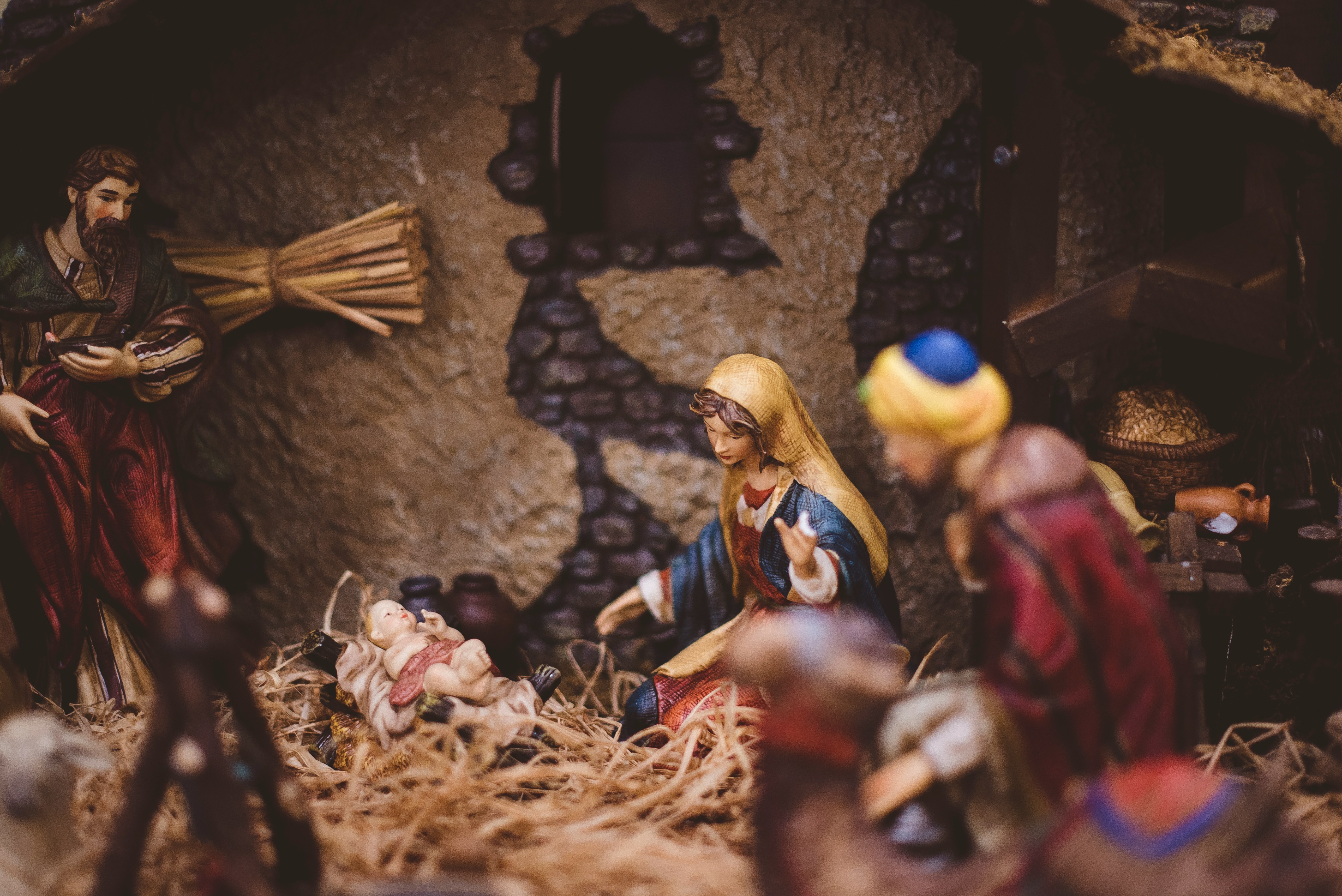
Christmas, and guests you wouldn’t expect

What’s a Magi?

We sing about “We Three Kings” around this time of year, but that’s not really who we’re talking about. The word used in Matthew 2 is magoi, which doesn’t mean kings at all. It’s the root of our word “magician,” but in the ancient world, it referred to people who studied the mysteries of the universe—early scientists, stargazers, astrologers. If we wanted the most accurate translation for today, it might be astrologers (but good luck convincing a Bible translation committee to slip that one into the Christmas story!).

Here’s what we know about the Magi:

  • They weren’t kings.
  • There weren’t necessarily just three of them (three gifts, sure, but if you’re wise, you’d go in on a gift like gold with a buddy, right? Orthodox traditions say they were 12).
  • They probably weren’t hanging around the manger. Herod’s reaction—ordering all boys under two to be killed—suggests their visit came later.

So, no crowns, no camels, and maybe not even any wise men (sorry, nativity sets). Did I ruin your Christmas? I promise I’m getting to the good part.

A Journey from the East: The Zoroastrian Connection

The Magi likely came from Persia, a land east of Judea. There, a faith called Zoroastrianism was widespread, and the Magi may have been its priests. In fact, magoi only appears in the ancient religious texts of the Zoroastrians. Here’s where it gets interesting. Zoroastrians believed in:

  • One God who created the universe
  • A battle between good and evil, order and chaos
  • A coming redeemer (the Saoshyant) born to a young woman in a miraculous way
  • A final triumph of good, resurrection of the righteous, and a remade world

Their beliefs sound an awful lot like parts of Christian theology. And before the Jews recognized Jesus as Messiah, before he performed miracles or rose from the dead, these foreign astrologers packed up their treasures and followed a star to worship him. My problem is not with their doctrine. My problem is that their names aren’t Matthew, Mark, Luke, or John.

God’s Love Goes Beyond Our Expectations

This story challenges the way we think about faith. It challenges our assumptions about who “gets it right” and how people find Jesus. The Magi didn’t have Scripture or Sunday school. They weren’t Jewish, and they didn’t know the stories of the prophets. But they were looking for wisdom—and their pursuit of truth led them to Jesus.

God spoke to them in a way they could understand: a star. That’s not how it’s supposed to work. People are supposed to read the Bible, hear good arguments, and then come to church with us, potato salad in hand. But the story of Christmas tells us that God’s love is bigger than our formulas, our strategies, or our control. God meets people right where they are—even in foreign lands and unfamiliar faiths.

A Christmas Challenge: Be a Witness, Not a Debater

Maybe this Christmas you’ll sit down with friends or family who don’t share your faith. Maybe they look at Christianity as something foreign. Take a lesson from the Magi—and from Jesus himself. God’s love is patient, kind, and full of grace. Instead of arguments and corrections, tell your story. Share how you’ve seen Jesus at work in your life. Pray for them, and trust that God loves them even more than you do.

Our world feels more divided than ever. We’re quick to draw lines and build walls, but Christmas reminds us that God came to break down those barriers. The God who told Israel to love the foreigners in their land still calls us to do the same.

God is Still Calling People Home

A Christian minister once told the story of a Muslim taxi driver who turned around to him and said, “I had a dream that I would meet a Christian who would tell me about Jesus. Tell me about Jesus.” That’s not how we think it’s supposed to work, but God is still speaking in dreams, through stars, and in ways that surprise us. The Magi remind us that God’s love reaches further than we imagine. It’s like God loves us before we get everything right.

This Christmas, I need the story of the Magi. They remind me that the pursuit of truth leads us to Jesus, that God meets us in unexpected ways, and that his love is for everyone—no matter how far away they seem.

So, as we gather around tables with family, as we worship together on Christmas Eve, let’s remember the star that led the Magi to the source of all wisdom, love, and life.

Jesus is still calling. And he is worth the journey.

Christmas, and signs of things to come

Christmas is coming, and the story we retell each year reminds us of God’s great plans for our world. It’s the story of angels, shepherds, and wise men, all drawn to the manger by a love so great it touches every corner of creation.

Let’s take a closer look at the characters in this story and what their presence tells us about the child born that night. In Korean culture, there’s a tradition called doljabi, celebrated on a child’s first birthday. During this ceremony, objects are placed in front of the baby, and whichever one the baby chooses is seen as a hint of who they might become. A pencil could mean a scholar, a stethoscope a doctor, and so on. It’s a fun, symbolic way of imagining a child’s future.

At Jesus’ birth, there’s something like a divine doljabi happening—not with objects, but with people. God chooses shepherds, wise men, and angels to gather around the manger, and their presence offers signs of who Jesus is and what His life will mean.

The angels were the first to announce His birth. They are not just heavenly beings but royal messengers, sent directly from God’s throne room. Their presence signifies that this event is not just important for earth but is celebrated in heaven itself. They remind us that Jesus is not only the Messiah but also the King of Kings, sent from heaven to bring peace to earth.

Then there are the shepherds. In the eyes of the world, they were nobodies—simple, unpolished, and overlooked. Yet they were the first to receive the good news. This is no accident. God chose shepherds because their presence points to who Jesus will become. He is the Good Shepherd, the one who will care for His people with humility and love. Throughout Israel’s history, shepherds like David and Moses were chosen by God for great purposes, and Jesus continues that tradition, coming to lead His people with a shepherd’s heart.

Finally, later in the story, we see the wise men. These were learned men from faraway lands, outsiders in every way, yet they were drawn to worship Jesus. They symbolize that Jesus is the source of all wisdom and the one who calls people from every nation to come and know Him. Their gifts of gold, frankincense, and myrrh reflect His kingship, His priestly role, and His eventual sacrifice.

Each group—angels, shepherds, and wise men—represents a piece of who Jesus is. He is the King of Heaven, the Shepherd of His people, and the Wisdom for the world. God’s choice of these witnesses reminds us that this story is for everyone. The highest heavens and the humblest fields all find their place in His plan.

This Christmas, remember that you are part of this story, too. God invites each of us, no matter where we stand, to approach the manger and discover what He has in store for us. Like the shepherds, we are called into His care. Like the wise men, we are invited to seek Him with all our hearts. And like the angels, we are given the joy of celebrating and sharing the good news.

May this season fill us with light, joy, and a deep sense of belonging in the story of Jesus.