

When I’m seeking to discern what God is calling me to, there are a few biblically-based signs that tell me really clearly that I’m on the right path. For anyone who is searching for a job, praying over a move, or considering a significant change, these are worth reviewing.
The places to which we are called usually involve these six factors.
- Joy: Calling brings you joy. Jesus said that he promises us abundant life. The guy who turned water into wine at a wedding isn’t amassing an army of the miserable. (John 2:1-12, John 10:10)
- Service: While calling brings us joy, it’s something that we do to make the world a better place, and specifically to love other people. This ensures that the joy calling brings us is not merely selfishness, and that we don’t gain the world only to lose our souls. (Mt. 16:24-27)
- Gifting: Calling uses the gifts that God has given us. Some people are made to be teachers, some to be administrators, some to heal and some to help. Calling employs exactly that mix of tools that we carry in our belts. It shows us that we were made for a purpose and that we serve a valuable role in the world. (1 Cor. 12, Rom. 12, Eph. 4)
- Inadequacy: Despite the fact that we may be gifted for calling, a true calling from God is always bigger than we could handle on our own. God told Gideon to whittle down his army to the point that it was unwise to enter into battle, and that inadequacy served to prevent Gideon from taking credit when he actually won. (Jdg. 7)
- Confirmation: The community around you, the people who know you best, ought to confirm that you’re on the right path. Our friends sometimes know us better than we know ourselves. To forge ahead when everyone around us tells us we’re on the wrong path is foolhardy. It’s exactly like dating. When friends tell someone that she’s dating the wrong guy, the friends are always right. She may say, “You just don’t know him like I do. He told me that when he plays video games all day, he’s only thinking of me.” But the friends can see the situation objectively, and if the friends say, “no,” the friends know what they’re talking about. (Gal. 2:1-3)
- Commitment: Nonetheless, calling is that thing you’re going to do no matter what. Even if no one around you confirmed it, it’s that thing you can’t live without doing. There is a church denomination that used to ask its pastoral candidates one final question before they could be ordained. After batteries of tests, exams, theological essays, and psychological interviews, the last question each candidate was asked was, “If we told you we wouldn’t ordain you, what would you do?” There was only one acceptable answer, and every candidate was expected to say the same thing in a sort of litany. “I’ll preach it anyway,” was the correct response. Calling is like that. I’ll do it no matter what. (Gal. 1:11-17)
So those are the six criteria I use to evaluate whether or not I’m on the right path as I pursue my calling. As you can see, they exist in three pairs, and each of the two members of each pair stand in tension with one another: joy but service, gifts but inadequacy, confirmation but commitment. It’s in exactly that tension that calling seems to balance. I’ve encouraged a lot of people to pray over these six things when they make decisions. I’d encourage you to as well, or share it with a friend who is making big decisions.
2019, Six Signs of Calling, James W. Miller


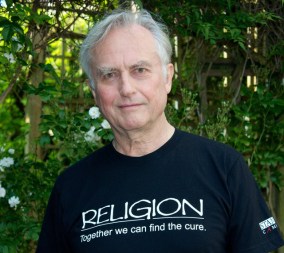 the God of the Bible as “the most malevolent bully in all of fiction” and he calls religion “a kind of mental illness.” He says God is “about as likely as the tooth fairy.” Anyone who has been to a secular American university knows that these types of taunt are taken up wholesale by the average sophomore, and Christian students are often mocked into a defensive silence.
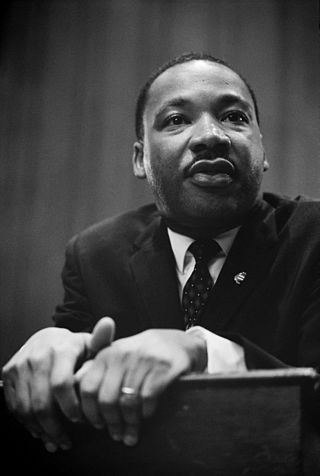 I can now answer the question. The experience of being White in America is comfortable apathy. It’s not necessarily malice or stereotyping. It’s the mere disregard for the fact that you are benefiting from a system which disadvantages others. The sense of nonchalance in the face of the struggle of a minority, the passive negligence of the other who must work against tougher odds, is the modern face of racism. We may not have separate bathrooms, but we still have separate possibilities.





 Hardwired