Why Satan doesn’t get a say

A man has been charged with a hate crime for destroying a Satanic statue put on display in a state Capitol. The display was erected as a provocation by the Satanic Temple of Iowa, a largely political and performative group aiming to curb religious influence in America. It was not intended as a religious display, as the group does not actually claim to worship Satan. The man who ripped it down, Michael Cassidy, had been charged with a misdemeanor, but the enhancement raises it to a felony.

As a UC-Berkeley-educated, post-Enlightenment, Constitutionally-committed, classically-Lockean, free-speech-loving Pastor, I want to briefly defend this man’s actions and argue that any American, Christian or not, should do the same thing. I would happily tear down a statue to Satan erected in my own city, although, knowing my neighbors, I would have to take a number and wait in line.

FROM THE BIBLE

The idea of desecrating idols to false gods is praised in the Scriptures more than a few times. God commands his people to rid their land of idols (Deuteronomy 12:1-3). Josiah was remembered for being a great reforming king for tearing down the idols (2 Kings 23:24), as were other leaders (Judges 6:25, 2 Kings 18:4, 2 Chronicles 15:8). The prohibitions of idols is the second of the ten commandments.

But that was in a civil theocracy, not a liberal democracy. So per the first amendment, freedom of religion and speech are protected, and by the state laws of Iowa, a religiously motivated act of this kind is a “hate crime.” So how could anyone defend Cassidy’s action? Would we want people tearing down statues of Jesus? Would we want the State of Iowa to simply ban all religious imagery, including the manger scene at Christmas?

THE LIMITS OF FREEDOM

By virtue of labeling certain kinds of speech “hate speech,” we’ve already acknowledged that there are limits on freedom of expression. You can’t yell “fire!” in a crowded theater, nor walk around naked in public as a form of self-expression, nor commit defamation, slander, libel, threats, incitement, nor a host of other prohibitions. We all believe that, given common sense, there’s a line somewhere.

And believe it or not, the line has moved.

John Locke, in his Letter Concerning Toleration, argued that people should be free to choose their own religious doctrines without coercion by the State. However, he does not extend religious toleration to atheists, because they could not be trusted to hold to contractual commitments founded in theological obligations. That’s where he set the line. We’ve moved it. Statues of Satan are attempting to move it again. I’m simply trying to hold the line.

WHERE FREEDOM COMES FROM

Locke believed that we should have freedom of religion and freedom of expression because in a state of nature, humanity is free and equal, because God created us that way. His primary inspirations were the Bible, from which he quotes profusely, and Luther’s Protestant theology, which had already thrown off the hierarchy of the Catholic Church. Locke’s writings became the bedrock of American political ideology, as Jefferson follows him in declaring that there are certain rights endowed by our Creator. The ideological foundation of the freedoms enshrined in our Constitution is a God who makes people free. Without that theology, democracy is simply an option whose alternatives might be a well-run monarchy or a financially thriving tyranny. Values have to come from somewhere, and when Americans forget where we got freedom, we will lose it.

An explicit attack on theism in the name of freedom is actually a covert attack on freedom itself, and if we want to protect freedom, we have to recognize freedom-undermining wolves that climb in the pen posing as freedom-promoting sheep.

CONCLUSION

So, if you want God to bless your land, honor your God by desecrating the would-be mockery of outright idolatry, and whether or not you believe in Him, better thank him for making you free.

And if, in the end, you can criminalize someone for removing an ideologically motivated statue in the name of protecting free expression, we need to go back and arrest the government employees a couple of years ago who removed the statue of Thomas Jefferson from New York City Hall. He’s kind of the one who wrote down all those freedoms you like so much.

  * * * * *

Look for my upcoming book, Jesus Is Not King, for more about the relationship between Church and State and its limits.
We can do it this time!

I remember teaching my daughter how to ride a bike. She wobbled up and down the cul-de-sac as I ran close behind, holding onto the back of the seat. When she was ready, I let go. The first time we did it, the ride ended in a crash and tears. But she got back up and tried again.

I ran beside her calling, “We can do it this time!”

As I prepare my little church for 2024, an election year, a year fraught with the potential for conflict, I find myself running alongside the church calling, “We can do it this time!”

We didn’t do great in 2020, when most everyone caved in to anger and anxiety, conspiracy and mutiny. Some people responded with grace and charity, but not most of us. The church honestly has not done great for several decades, in which people who call themselves followers of Jesus have joined in secular mud-slinging and turning a blind eye to the sins of their own parties and candidates.

But I think we can do it this time!

I’m spending time reading the words of Jesus captured in Matthew 5-7, the Sermon on the Mount. His teachings are powerfully counter-intuitive and counter-cultural. I am envisioning a people who are “Sermon on the Mount Christians,” Christians who behave as though these teachings were the only thing they ever heard Jesus say. Can you imagine a Church in which people refuse to call other people fools, refuse to cheat on their spouses, refuse to break promises, and refuse to get revenge? I can imagine it, but I realize there is a group of people out there who can’t – the secular public who has watched the Church fail at these things through all of recent memory.

What if, this year, we pledge to be a people of grace in seasons where win-lose decisions threaten to divide our country and our culture? What if, in 2024, we tried to be Sermon on the Mount Christians?

***

Stay tuned for my new book, “Jesus Is Not King,” a Christian look at political engagement.

Truth and Conspiracy in “The Sound of Freedom” movie

The movie “The Sound of Freedom” is an action thriller, borderline horror, film that depicts the nature of child sex trafficking based on the story of real life hero, Special Agent Tim Ballard of Homeland Security. Ballard was responsible for freeing over 100 children who had been trafficked and bringing dozens of traffickers to justice. The movie released on July 4, 2023, and it immediately prompted controversy while garnering high reviews (currently on Rotten Tomatoes, 75% from 24 critics and 100% from over 5,000 movie goers), and a hefty profit (up to $40 million currently after a $15 million budget). Here’s my take on the movie and the swirl of controversy around it.

The movie review

It’s a powerful, disturbing film. It’s not for families to watch, and honestly, it will be difficult for adults who have experienced trauma. For those who do go, it presents a gripping, suspenseful, meaningful story of hope and justice. Jim Caviezel, who plays the lead, does a decent job, more animated than his portrayal of Jesus in “The Passion,” but not by much. The script does run slow and predictable at points, but as a film, it delivers exactly what it promises. It is not a preachy film, and the religiosity is subtle and understated. Ballard is a Christian, but we don’t get much more than a single quote from the Bible, and another character who compellingly tells his story of a mystical conversion. It’s not your run-of-the-mill Kirk Cameron and Kevin Sorbo team up against the liberals who have brought on the apocalypse kind of Christian film. I recommend seeing it, with the aforementioned caveat.

The controversy

Now the conspiracies here are several layers thick.

  1. Jim Caviezel is a QAnon conspiracist. This is simply true. I’ve heard him in interviews retell the adrenochrome conspiracy, which is absolutely pseudo-scientific nonsense. It’s the worst kind of science fiction, the QAnon crowd has definitely bought in, and you are gullible if you do too. This isn’t to say that Caviezel isn’t a good actor, or that he doesn’t star in good movies, or that this isn’t a good movie. It isn’t to say that this movie forwards the adrenochrome conspiracy – it doesn’t even allude to it. This is simply to say exactly what I am saying – Jim Caviezel believes in nonsense.
  2. Immediately, a couple of outlets, the Guardian and Rolling Stone among them, pounced on Caviezel’s offstage commentary and accused the film of forwarding these conspiracies. To be specific, they act as though the movie is the Trojan horse for transporting QAnon conspiracies, despite the fact that the movie includes none of it. The little Trojan warriors are all inside Jim Caviezel’s head. The Guardian’s author is anonymous (let’s call her GAnon). She’s obviously given to a few crazed conspiracy theories of her own, and desperately wants to find one here, as though the QAnon people got together and wrote a movie script as sort of a gateway into their world. Because there is not actually any conspiracy theory in the film, she seems committed to the idea that where there is no smoke, there must be a very well-hidden fire. Those versed in modern media will simply see these two publications for the ideological rags that they are and move on.
  3. Now here’s where the social media frenzy begins. Conservative outlets, including those trying to promote the film, and of course Fox News, and about a million people on Twitter, pounced on the negative reviews and announced that Hollywood was trying to stop the film from being seen! Maybe there really is a trafficking ring made up of liberal Hollywood elites who don’t want the truth to get out! I don’t in any way think most of these outlets really believe this (except Mel Gibson – he really believes it); rather, I think the fastest way to promote your movie (or book) is to announce that some ideological group is trying to suppress (or burn) it. Jim Caviezel (who, I want to be very clear, believes in nonsense) has said that major distributors passed on the films. There are rumors that Netflix, Disney, and Amazon all rejected it, but none of that has been confirmed by Netflix, Disney, or Amazon yet. Nonetheless, pay attention – the conservative outlets are counting on public outrage to boost ticket sales and film viewership. They do this because they are aware of the swirl of QAnon theories about liberal elites, child trafficking, and adrenochrome, and even if they know those theories are far-flung, they also know there is a grassroots gathering of conservatives who have rallied around them. And there’s an election next year.
  4. That works. People really will go and see it because of all the media outrage. And then they’re going to find out that it’s actually a pretty good movie, which accounts for the perhaps slightly over-inflated 100% in viewer reviews. Some mainstream and not at all Christian outlets like Variety have also given it good reviews, because, in fact, it’s not a bad movie. Five stars.

In the end, I hope the movie does raise awareness of and opposition to the trafficking industry, I hope audiences are inspired by the conspiracy-free film, and I hope that maybe in the future Jim Caviezel stays in his lane.

The Panic of the Faithful

You know what will really convince the world that Jesus is the good and loving Lord of all creation? It would be if all of his children absolutely go insane whenever there is a public crisis and then lead the way in running, hiding, blaming others, and over-reacting.

About Coronavirus

Here are three things Christians ought to be thinking about as the world reacts to aspreading sickness.

1. Don’t go crazy.

Every year in the US alone, the flu kills on average 30,000 people. In the 2018-19

Virus.jpg

flu season, it killed 61,000. The coronavirus has killed 3,000 in the world, out of 7.7 billion. It is admittedly stronger than the flu, but it is not the medical version of a nuclear bomb. The stock market is spiraling, organizations are cancelling conferences and gatherings, and Japan and Italy have temporarily closed their schools. Whereas the mass of humanity is led by animal instincts, Christians are bearers of the Spirit of God and ought to swim against the current, not get swept up in it. We have not been given a Spirit of timidity, but of power, of love, and of self-discipline. The Christian response is not, “Where can I hide?”, it’s “God is bigger than this.”

2. Ask the right questions.

The first questions I hear as a pastor is whether or not churches are safe places to gather and whether we should all stay home. At least we should receive the eucharist through a doubly-secured air-lock, and the Pastor can stand behind that thick plexiglass like the bank teller. The first question that the Spirit would have Christians ask would be, “If it gets bad, how will we help?” Danger is the opportunity for the Christian to demonstrate faith, not fear. Crisis is the opportunity for the Christian to demonstrate compassion, not cowardice. First questions first – no matter what the state of the world, followers of Jesus don’t run and hide.

3. Be wise.

Coronavirus-response is not going to be the modern, bio-chemical equivalent of snake-handling. Everyone should practice good hygiene – wash your hands, sneeze on your elbow, and don’t go to school if you’re sick, even if there’s a math test. These rules should apply during the ordinary flu season, and not just because it kills 30,000 Americans a year, but because it’s gross when you sneeze on your hand and then hold it out saying, “Nice sermon today, Pastor.” Thank you for that.

Life of the Mind 2: 4 Solutions

In a previous post, I described how education and study can actually be a form of worship, a pursuit of God through the admiration of his work. The modern American Church, however, has let the mental life fall by the wayside in exchange for out-of-context Bible quoting, political ranting, and Instagram platitudes. I suggested four things will change this embarrassing situation.

thought-catalog-o0Qqw21-0NI-unsplash.jpg

First, Christians on the whole need to repudiate the religiously-driven conflict between academic work and faith, between Athens and Jerusalem, especially when it comes to the sciences. With humility and common sense, everyone ought to acknowledge that reading the Bible does not qualify one to comment on the finer points of microbiology. One isn’t, by virtue of being an expert in the holy texts, an expert in everything else to boot. Scientific discoveries of all stripes ought to make Christians ask, “Have we perhaps read the biblical texts wrongly?” rather than moving to close the lens on Galileo’s telescope.

Second, the individual Christian is responsible for cultivating her own mental life. For all of the hours lost in this generation to pot, porn, and video games, we owe the Maker of Life repentance. Teen-agers didn’t invent the vices they consume; we’ve handed those down to them. We live in the information age, and all one need do is pick a topic of interest or a person worth emulating and pursue it with curiosity. If books aren’t your favored vehicle for learning, listen to podcasts, watch debates, or work through online classes, all for free.

Third, let kids ask questions. I had horrible religious influences in my childhood who told me, wrongly, “Sometimes you need to stop doubting and just believe.” Ceasing questions to believe doesn’t lead you to Jesus. Ceasing the pursuit of truth doesn’t lead you to the one who said, “I am the truth.” And churches need to be places that are known for encouraging the intellectual curiosity of children.

Fourth, keep the Sabbath. The loss of this discipline has wrought destruction in Western civilization that is devastating while it is undocumented. A day of peace and reflection was not too much for the creator of the universe, I’m not sure how it’s too much for us. Keeping the Sabbath is the way to acknowledge that God can do more in six days than we can do in seven. So take a day to be at peace, reflect, think, and pray. Whatever the link between neurons and the soul, both of them are nourished by the Sabbath.

“I am not absent-minded. It is the presence of mind that makes me unaware of everything else.” – GK Chesterton

A Mess of Metaphors

SundayU.png


First published in Sunday U Magazine.

Most church conflict is not about worship styles, theological affiliations, or carpet color.  Most church fights are about metaphors.

Everyone has an operating metaphor for what the church is supposed to be.  Some think it should be a cruise ship, where the staff offer stellar customer service and glittering performances.  Some expect it to be a classroom, whose primary purpose is to instill a hearty theology in the minds of the students.  More than a few want a circle of wagons that keep them safe from the evils of post-Christian culture.  Some just want a punch clock that they use at Christmas and Easter to check in.  Whatever the preferred analogy, most people have one, and that frames all of their expectations for the church.  Nothing is more disorienting than a new pastor who comes to town with a fresh, vision-inspiring metaphor that isn’t the one the last pastor preached.

One of the biggest conflicts in churches in the 20th century came when….

Read the rest here.


The Honduran Exodus

honduras-flag.gifThere is a migrant train of over 7000 people walking north towards the southern border of the US right now, Honduran refugees fleeing a context of poverty and violence.  It’s an exodus.

What’s walking towards America is more than that.  An awakening and an ethical decision is approaching. 

Americans have long thought of ourselves as the world’s good guys, using force to back up democracy and justice.  We are the ones who landed on the beach at Normandy.  Our first President couldn’t lie about chopping down a cherry tree.  We stand for Jesus and family.  Now that we’re the richest country in the world, it’s assumed that God has materially rewarded our spiritual and moral goodness like a parent reinforcing a well-behaved child with treats.

A 2007 report showed Honduras to be over 80% Christian.  They’re praying as they come.

American Christians have for a long time voted for candidates who claimed to be Christian, or, at least, promised to support Christian values.  Voters have rarely paused to consider the fact that that set of values has never been defined for them.  “Christian values,” in public discourse, seems to include freedom of religion (especially its expression in schools), a general opposition to abortion, and opposition to gay marriage.  They may include some nebulous affirmations like “Love thy neighbor,” but there is a sizable omission when it comes to Jesus’ very clear teachings about money and the poor.  In the American suburbs, these are generally add-ons for the specially motivated.

“Christian values” in America don’t especially exclude values which seem to be at odds with the teachings of Jesus and the early church, like xenophobia and nationalism.  Someone who is in an adulterous relationship would generally be seen as out of keeping in American churches, but someone who spends their money frivolously, doesn’t donate to charity, and doesn’t care what happens to the poor in other nations does not stand out.

What’s walking towards American Christians is a reality check.  Jesus isn’t as obsessed with sex as we are; he is far more obsessed with the poor and the outcast.  The package of values American Christians have accepted needs to be unpacked, separated, cleaned up and lightened up.  Some of it needs to be thrown away.  Self-identified evangelicals are overdue to face their baptized love of money and apathy for the oppressed. 

What’s going to be ironic about the American Christian response to the Honduran exodus is that we have an Exodus in our own Scripture, and consequently in the DNA of our faith.  God was on the side of the wanderers fleeing oppression for the sake of a land of freedom in that Exodus.  “I am the Lord your God, who brought you out of Egypt, out of the land of slavery” (Ex. 20:2). What do you think Honduran Christians hear when they read that?  Probably the same thing the first European immigrants to the US were hearing when they read the same scriptures – that is, the ancestors of a lot of Americans.

So, before the story takes over the headlines and the blogosphere, a word to Christian America: remember Jericho.

Morality for Atheists

There is a longstanding debate about how atheists are moral.  It shouldn’t be an argument about whether or not atheists are moral, because of course, many atheists follow moral principles to which they are committed.  But there is a standing debate as to why.  As an atheist, you weren’t created for a purpose and you won’t be evaluated in the end.

12657829_963585900401513_4734572524383960592_oThis week, it was revealed that “celebrity atheist” Lawrence Krauss has been accused of sexual misconduct by students.  Krauss was a physics professor who has just resigned.  Of course we can point to any number of clergy and Christian leaders who have done the same if not that which is more shocking.
The issue though is not a matter of whether or not anyone can offend.  The question is whether or not anyone can offend consistently with their own worldview.  A Christian, by definition, is bound to the teachings of Christ, who condemns the exploitation of the vulnerable.  An atheist, conversely, commits herself to a worldview and ethic by choice rather than necessity.  The values to which she commits herself are self-selected and do not answer to an ultimate purpose or judgement.  So an atheist can consistently say that life has no value, whereas a Christian cannot.  An atheist can consistently say that one can establish relations of power with one’s peers in such a way that one’s peers are marginalized, whereas a Christian cannot.

Christians who violate the moral norms of Jesus’ teachings are failures.  The question is whether or not atheists who violate mainstream moral norms are actually failing at anything at all.

Religion is stupid and evil

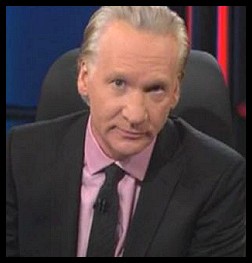
BillMaher_directI don’t know if you heard Jimmy Kimmel’s interview of Bill Maher the other day (I didn’t), but Bill was apparently sweating out the threat that Islamic jihadists now pose to people who mock them (aka Bill Maher).  And he said, “There are no great religions.  They’re all stupid and evil.”

I don’t normally take offense at comedians who are paid to offend.  You know what you’re getting into when you listen to them.  And I generally don’t listen to Maher, because I generally don’t find him funny.  But that comment stuck with me, because he’s actually rallying the hordes against the innocent.

I went to church the other night.  There were 200 homeless people sleeping at my church.  We fix them three meals a day, run a clothing boutique, offer free showers and haircuts.  They’re here for three weeks in January when it’s coldest outside, and then on to another church, such that they can be under a roof from December through March.  We’re not short on volunteers, so I usually just sit and talk with people who are having dinner.  One woman needed help finding a Narcotics Anonymous program, which we host at our church, so I helped her find it.  One woman was looking for a Bible, so I pulled one out of our pews for her.  Generally I just listen to their stories.  And as the 200 or so shuffled off to bed, I heard someone saying to me, of me, “You’re stupid and evil.”

I went to a congregational meeting on Sunday.  We just approved a new budget.  This year we raised our giving overseas by $30,000.  There’s a program in India that uses English literacy training to give people marketable job skills.  They’re helping people climb out of poverty by starting with reading.  And in the midst of that, they introduce whoever will listen to the guy who taught us to love people on the other side of the ocean.  Religious people in America usually give more to charity than their non-religious peers; we again have raised our giving.  And as we pour tens of thousand dollars of our charity into people we’ll never meet, someone tells me that I’m stupid and evil.

Last year we made a donation of about the same amount to an orphanage in Haiti that had lost a building to the earthquake.  We paid for the whole thing.  And the guy living in Haiti at the orphanage leading the build – he’s one of our church members who has moved there to live among and help the poor.  I gather that he’s stupid and evil as well.

But I can read the history of Christianity and so-called Christians as well as everyone else, and I see in my predecessors what is functionally just the same behaviors you see outside the church. And part of me has to agree – yes, religion, and religious people, are stupid and evil.  We always have been.  Just like everyone else.  Atheistic regimes killed 100,000,000 people in the 20th century.  Religious people haven’t done any better with power, just not worse.

But here’s the deal – Jesus wasn’t stupid, and he wasn’t evil.  If I have to come to grips with my own stupidity and the darkness within my own heart, I start groping around for someone to bail me out.  The only person I have ever known who without question has earned the right is Jesus.  He isn’t stupid or evil, and only blind stupidity or fiery hatred would make anyone say otherwise.  I’ll admit it – I’m stupid and evil.  I need a savior.  But he’s actually worthy of the title.

So the bottom line is that the common thread between stupid and evil religious people and stupid and evil secular people is not religion, it’s humanity.  And rather than casting stones at we who have called out to a savior for help, in a century where persecution of Christians is at a historical high, you might just as well have the humility to admit that you need a savior too.