Dreams for Driscoll

It’s now public news that Pastor Mark Driscoll, of the megachurch Mars Hill of Seattle, has resigned.  This comes after a string of inflammatory controversies.  Love keeps no record of wrongs, but Google sure does, so it doesn’t take long to find out that Driscoll was accused of:

  • bullying staff members, who ended up picketing outside of his church
  • using church funds to artificially purchase and inflate sales of his book
  • talking about women in pejorative ways, and
  • using a pseudonymous online account to post profane rants.

After a six week hiatus amidst mounting calls for his dismissal, he’s resigned.

Screen Shot 2014-10-16 at 8.22.53 AMThis now awakens in me a longing to see a story of redemption written here at the end.  The 43 year old church leader still has a lifetime to rewrite the narrative.  I’m reminded of the story of St. Nicholas of Smyrna who, apparently, after slapping another theologian with whom he disagreed, spent the rest of his life doing penitent acts of charity which would eventually form the basis of the stories of our St. Nick.  I’d like to see Driscoll’s turn into a story of resurrection.  So if I had the pen of the divine narrator, this is how I would write it….

Driscoll fades from public view saying little more than that he’s taking a sabbatical with his family. They sell the million dollar house.  His wife begins working as a school teacher, an irony that is not lost on Warren Throckmorton and the last couple of commentators who are following the story, given how militantly opposed Driscoll was to women providing for their families.  The story goes dark for about a year.

Then a photographer catches a shot of Driscoll.  It goes up in the Christian media for a day.  People tweet it.  He’s in San Francisco, and the picture shows him behind a counter, wearing an apron, smiling and serving a meal at a homeless provider.  The picture is fuzzy and no one can get the straight story on whether or not it was him.  He doesn’t show up there again.  Some time passes.  Again there’s a report that Driscoll is working in an AIDS clinic doing bedside visitation with the dying in San Francisco.  Rumors mount.  Driscoll allows one interview, just saying that he is trying to do God’s will and wants to remain private.  Behind the scenes there is a circle of young adults that he’s mentoring in the inner city.  They’re a private band dedicated to spiritual depth and loving the poor.  Driscoll lives an alternative life of a kind of Mother Theresa in the shadows.  He does not seek audiences.  He contracts no speaking gigs.  He doesn’t write…for a while.  Then, a few years later, he releases an autobiography.  It’s a confession.  And it talks with psychological depth and self-awarenesses about the forces that once drove him and the forces that drive him now.  He becomes a Henri Nouwenesque kind of spiritual mentor, and suddenly every large-church pastor in the world seeks Driscoll out.  They want to talk about their failures and their fears, their conflicts and their depression.  He receives them all warmly and never says a word to the journalists about what he’s doing.

Driscoll lives into old age a redeemed man and a true pastor.  He becomes a legend that people talk about with reverence.  The stories of his younger years fade and are eclipsed by the saint that he has become.  Now Driscoll is what every pastor should be – a living manifestation of the Sermon on the Mount.  He is someone who hides in the shadow of the cross and lives as a subplot to a story that is greater than his own.

Just saying, if I were writing a good story, this is how I would want it to go.

Christians, Ebola, and the Beginnings of Revival

koreanchurchRegarding the origins of the Great Revival in Korea at the turn of the 20th century, during a massive outbreak of cholera, a historian writes:

“At the same time an epidemic of cholera in Seoul brought reports of the indefatigable toil of the Christian missionaries for the sick and dying there, how they performed duties from which the bravest Koreans often shrank, exposing themselves without stint, and saving hundreds of lives.  ‘All these recoveries made no little stir in the city.  Proclamations were posted on the walls telling the people there was no need for them to die when they might go to the Christian hospitals and live.  People who watched the missionaries working over the sick night after night reportedly said to each other, “How these foreigners love us!  Would we do as much for one of our own kin as they do for strangers?”

When Horace Underwood was seen hurrying along the road in the twilight, some of the Koreans remarked, “There goes the Jesus man: he works all day and all night with the sick without resting.”

“Why does he do it?” said another.

“Because he loves us,” was the reply.'”

-Palmer, Korea and Christianity, 1967, citing Moffett, The Christians of Korea, 1962.

Mentoring as Memory Making

father_child_fishingI can remember my grandmother showing me how to bait a hook, and my grandfather teaching me how to distinguish the tension in the line that is caused by a river’s current from the pull of a snagged trout.  I don’t mean I remember the idea.  I mean I can see in my head some clear pictures of them teaching me – of a silver fish in the bottom of a gray bucket, of a yellow kernel of corn in my hand next to the hook, of Granddad smoking his pipe on the bank.  That was almost 40 years ago.  40 years ago, I had thousands of experiences each day, but that one I can still picture.

I can remember my youth pastor teaching me how to read the Bible.  We were having a Bible study in a dusty upper room of a church, back when churches still had libraries, and we sat on the floor in a circle, and he showed me how to think through the biblical text.  We were reading Isaiah.  The carpet was green.  I can see us sitting there.

I can remember a leader in my college ministry at church teaching me how to articulate a rational defense of the Christian faith. We sat in the basement of his house watching VHS tapes of William Lane Craig debating other scholars.  We would pause the tape to debate the points that he made, and also to talk about our girlfriends and our desired careers and the news.  I can remember the very intense look my friend would get when he mulled over philosophical questions.  He’s now a philosophy professor who teaches at the same school as Craig.  I picked up a book in a theological library the other day because I saw my friend had written one of the chapters, and he had written about a subject I remember us arguing about one night.

Mentoring is not the act of an expert passing on a field of expertise.  It’s the moment that someone who is passionate about one of their interests stops to show why it matters to someone else.  What matters in that transaction is not that someone with a professional certification educates someone else.  What matters is that a memory is made when two hearts and minds gather around a topic of a similar interest.

Imagine what would happen if everyone who is passionate about Jesus took just a moment this week to talk with someone else about what Jesus has done for their marriage, their morals, the meaning of their lives, their parenting, their friendships, their prayer life, or their inner peace.  Imagine if all they did was share a question they wondered about concerning Jesus so that two people could wonder it together.  Mentoring is making memories that Jesus can use for the rest of someone’s life, and everyone who follows Jesus ought to be a mentor.

This week can pass by forgotten, or it can live on in someone’s memories for the next 40 years.

How old is the Bible?

Did you ever wonder whether the Bible was written close to the events it describes or much later?  I’ve heard people dismiss the Bible as a later, legendary account composed many generations after the life of Jesus.  The manuscript evidence gives us a hint.

The oldest piece of a manuscript that we have is a tiny little piece of paper that’s only about 3″ long and 2″ wide, which is now in a museum in England.  It has text from John’s gospel on the front and on the back, and scholars who study ancient manuscripts say that the handwriting dates to between 100 and 150 AD.  This piece was found in Egypt, which suggests an earlier original, allowing time for the story to have travelled over 400 miles.200px-P52_verso

However, Ignatius Theophorus of Antioch, who lived from around 35AD – 117AD, wrote seven letters in which he quotes from at least 17 of the 27 New Testament letters, suggesting that they were in circulation even earlier, in the first century.  Clement of Rome, who died in 99AD, left behind a letter which quotes or refers to at least 9 letters of the New Testament, making their first century authorship undeniable.  These include a quote from Jesus, making the gospel stories unquestionably first century.  An early Christian document called the Didache, which scholars date to the end of the first century or beginning of the second, refers to Jesus’ teachings in the gospels, particularly Matthew.

Credible scholars now date the New Testament entirely to the first century.  Since the date of Jesus’ death falls in the 30s, that means the whole of the New Testament was written within 60 years of his death, which means during the lifetime of his contemporaries.

Those who try to push the dates later must do so by controverting the obvious historical testimonies of both the biblical accounts and non-biblical witnesses.  Their agenda-laden activism does little to confuse the open-minded and clear-sighted, but it tends to empower those who are looking for loopholes and who don’t want to do real research.  The story of Jesus cannot be discredited as a later legend scripted by people of another generation.  It was written in his day by people who knew him and his disciples.

It Only Takes One

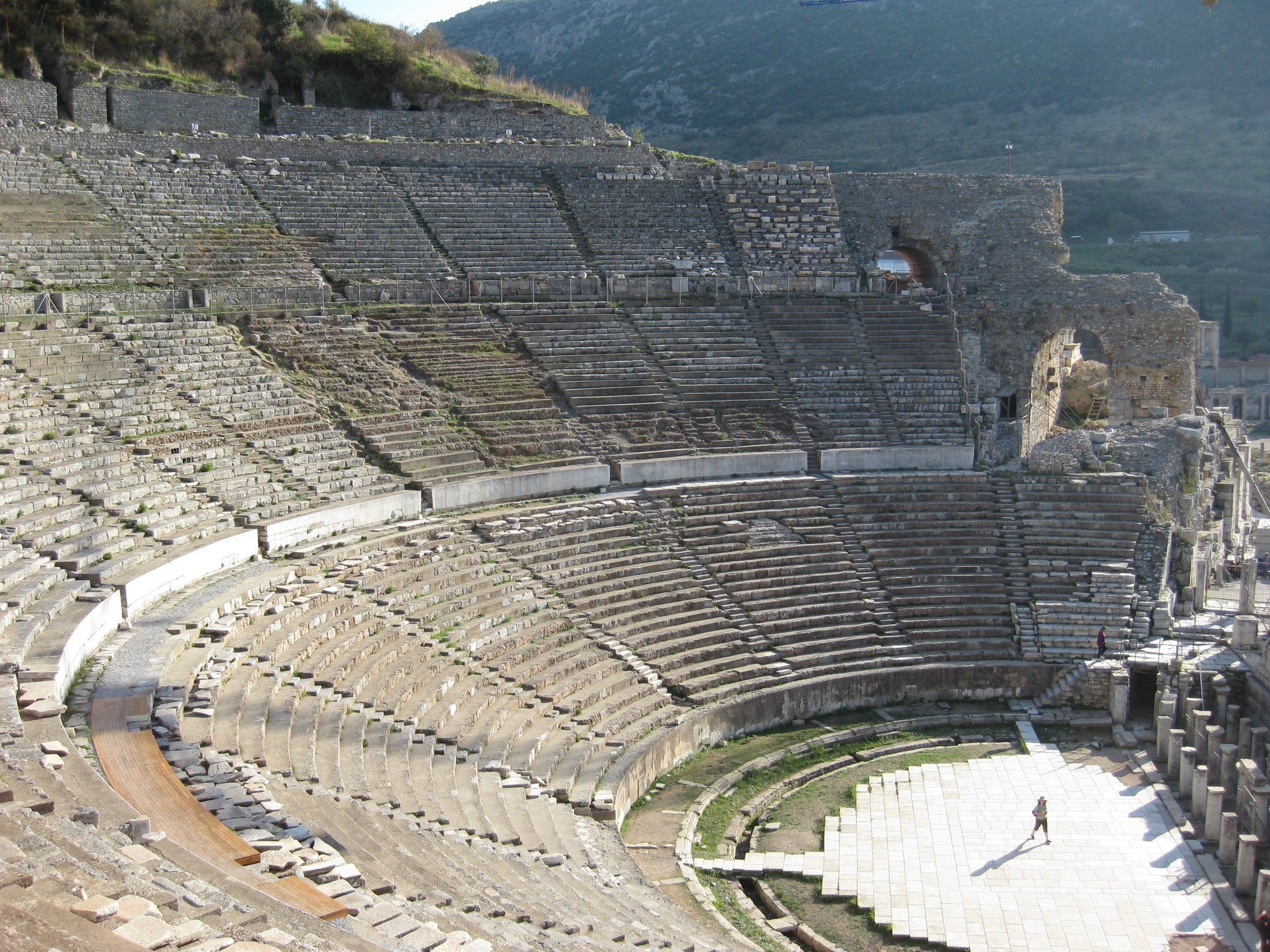
If I could study any of the biblical cities, I’d study Ephesus. I’d study it because it was a burgeoning, multi-ethnic, religiously diverse metropolis. I’d study it because it’s the best preserved of the ancient cities, having been vacated by a majority of the population after a wicked bout of malaria. And I’d study it because, through it, a couple of Christians changed the world. 

Imagine that if you decided to teach the faith to one person, you would create out of your city a hub of Christian teaching, writing, and thinking for the next hundred years. Imagine that if you decided to teach the faith to one person, one day people would talk about your city the way they talk about Salt Lake City – you know, “it’s ok to visit, but there sure are a lot of Mormons there.” Substitute “Christians” – that’s what a single mentoring relationship can do.

Ephesus
The theater in Ephesus, where Paul preached (Acts 19)

At Ephesus, Paul went and preached, staying 3 years and beginning a church. He appointed Elders and empowered saints. Then he left. But while he was there, he mentored Timothy, his “son” in the faith, to whom he passed on the best of what he knew.

John, the disciple of Jesus, settle there and became a pastor. He led the church, continuing to pass the faith on. We know of just a few names of individuals who moved from rural and distant parts to the big city, and that changed the city.

Ephesus became one of the centers of the Christian church in the centuries to come. By the 5th century, when the Roman Emperor wanted to call together a council of the bishops of the church, he called them to Ephesus.

It’s not inconceivable that any American city could have such a legacy. It only took one or two people gathering, engaging, loving, and teaching. Anyone can do that, in any city. Why can’t it be your city? Why can’t it be mine?

Three, Two, One

A snow-capped couple used to sit next to me in a café, clucking away with each other and passing friends. The first time I noticed them, I was trying to read Athanasius’ “On the Incarnation,” but couldn’t pay attention. I was privately amused at the way they loved each other, giggling as they finished each other’s sentences and offering to get up one for another, because at their age, it was too much of a commitment for them both to stand up.

I was conscious of my eavesdropping, but not of the effect they were having on me. They became part of the aesthetic of the café – the warm, sun-filled widows, the robust, walnut-toned coffee, and the happy old couple as familiar as the furniture. They were always there.

Until one day I saw her alone. When I stopped to ask, I withered to hear of his passing. She was thereafter different than she had been before, as was the café.

cloverThat couple for me is a better metaphor for the Trinitarian God than most of the go-to illustrations. St. Patrick notably used the three leaf clover to explain the Trinity to the pagan Irish, but his metaphor was flawed, because if you pull a leaf off of it, you still have a deformed clover, but a clover nonetheless. A widow is something fundamentally different than a spouse. One does not merely lose a spouse, one loses spousehood. When we love and are beloved, to lose love changes our identity.

Imagine the Trinity not as a mechanical philosophical concept requiring technical definitions of “substance” and “nature,” but rather a being who is so infused with and exuding love that the Father, Son, and Spirit are giddy at finishing each other’s sentences, that within the nature of the one God is a love so overwhelming that it must be reciprocated. Trinity is love immune the frailties of human love. It’s love made perfect, love like the first time a baby laughs, love like a wedding, love like a hero dying to save someone else. Imagine a love so urgent it can’t resist exposing itself to the risk of betrayal and brutality. It will pay the cost if only to love one more. Imagine a kind of love that promises a day when inseparable lovers are reunited, because that’s how a good story is supposed to end.

A friend of mine who is a missionary in a Muslim country tells me that she sometimes tells Muslims that there is “love if,” “love because,” and “love despite” – you can love someone if they will do something for you, because they have done something for you, or despite anything that they do for you. She has been told more than once by the people to whom she ministers that “love despite” isn’t real.

Imagine love despite. That’s a better description of Trinity that most of our metaphors.

Cathedrals and Haunted Houses

sailI’ve spent a fair amount of time decrying the decline of the Church in America, particularly so much as it is a consequence of a lazy Christianity that just assumed lost neighbors would find their way to church without any effort from the converted. But if you asked me if I was afraid if the Church in the world was going to pass away, I would have to admit I’m not afraid of that at all. My reason for that confidence is not a strident declaration about the gates of hell never prevailing. It’s far more amusing than that.

It’s because we live in a haunted house.

By house, I mean the planet Earth, and by haunted, I mean haunted. The free-wheeling secularist cannot suppress the cathartic tears at sunset and at the symphony. She can’t muster up a plausible grounding for all of the passionate ethical positions for which she tirades and votes and argues. She will never sufficiently suppress nor rewrite a history that is filled with church-going grandmothers who find her life a shame. And to be honest, one out of every ten people I talk to has actually seen a ghost. The world is haunted, or to use Charles Taylor’s more pleasant term, enchanted. The hard-nosed laboratory researcher who claims to have dissected away the enchantment doesn’t come off as a genius. He comes off as one in denial, like a captain who keeps insisting the leak isn’t that bad.

I’m happy to say there will always be a Church, because the world will always be haunted. The intrusiveness of its ghosts can be dodged by denial no more than a bee sting can be avoided by closing your eyes. They will keep poking us. My worries for the Church in America have far less to do with anything about metaphysical reality and far more to do with the fact that my son and my daughter will likely marry and raise kids in this generation, and they will be surrounded by blind captains sailing sinking ships.

Don’t Become A Pastor Until….

Don’t become a pastor until….

…you’ve invited someone who doesn’t believe in Jesus to believe in Jesus.  That’s what pastors are for.  If you don’t do it in your daily life now, you’re not going to be better at it when some seminary or denomination says you’re ready to.

…you pray and worship when no one is listening.

…you can pray and worship without telling everyone you did.

…your knowledge of the Bible is as thorough as your questions about it.  The questions shouldn’t come from what you don’t know; they should come from what you do know.

…you’ve given up the dream of getting rich.  We print “In God We Trust” on the back of his leading competitor.

…you’ve given up the dream of being famous.  There should be a pretty distinct difference between a sermon and a selfie.

…you’ve given up the dream of being attractive.  If the dream comes true, you’re likely to embarrass the ministry.  If it doesn’t come true, but you keep hoping, you’re going to look ridiculous.preacher

…you’ve realized your wedding vows are more important than your ordination vows.

…you could competently do ministry without a formal theological education.  And once you don’t need it – go get it.

…you’ve learned how and when to say “I could be wrong” and “I’m sorry.”

…you can name the places that you’re broken with no more shame than if you were describing what you like about a painting.  Brokenness is something we need to accept about ourselves so that we can deal honestly with the problems it creates, rather than trying to hide it from everyone else until the problems become public.

…you have a stronger passion for releasing other people’s gifts than releasing your own.

…God’s call to ministry is louder than your desire to do ministry and other people’s affirmation of your ministry.

That said, I don’t know that I would have become a pastor 17 years ago if I was following my own list.

To the Power of One

I found an interesting piece of trivia about the church at which I pastor, Glenkirk Church. Apparently, back in 1965, the church was meeting in a little chapel at another location, and the day came when the congregation had grown too large for the little chapel. The pastor at that time named the need to build a bigger sanctuary on that lot. Apparently the congregation was divided on this. I wasn’t there, so I can only guess how the conversations went.

“It’s too expensive! Why would we spend so much money on ourselves?”

“Why do we need to grow anymore? The church is fine the way it is!”

I know these kinds of questions came up, because as it was told to me by one of the old-timers who remembers, “It passed by one vote.”

One vote!

Just one person enough to move that congregation forward. I don’t know who that person was (or technically, who that 51% was), but I owe a debt of thanks. Without them, we wouldn’t be here. The church wouldn’t have grown. It wouldn’t have gone through a later move to an even larger campus on which it could keep growing. Children wouldn’t have received Christian education. People wouldn’t have been sent into full time missions. Countless people would not have become Christians at Glenkirk. Hundreds of thousands of dollars would not have been spent on missions with the poor.

To that one person who voted “yes” – thank you so much!

Because of you, there are three children of Glenkirk who are now in full time ministry in Muslim countries. There is one who is a youth pastor on an island in the Atlantic. There is one family who became Christians at Glenkirk and are now rebuilding an orphanage in Haiti that fell down in the 2010 earthquake. One is a chaplain at Fuller Seminary. Without you, my two children, along with many others, wouldn’t have been baptized at Glenkirk. And now each week, we gather as a family, young and old, to sing to a good God, as we have since that 1965 vote.

Thank you so much! Without you, I wouldn’t pass each week through the shadow of this cross and remember the One who said “yes” to God’s call for the sake of we who would come after him. Whoever you are – well done!


The Glenkirk Cross
The Glenkirk Cross (Photo courtesy of S. Vance)

Jesus Definitely Wasn’t Married

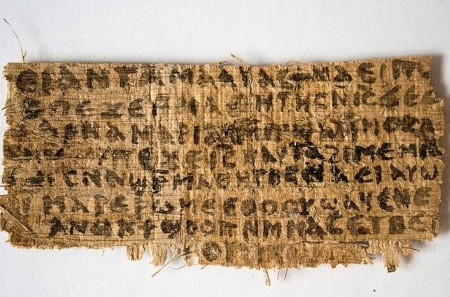
WifeAn ancient fragment was first publicized to the modern world in September of 2012 which features the words, “Jesus said to them my wife….” This created a frenzy of speculation about the possibility that Jesus was married.  I am absolutely sure he was not.  I can also say that, as an evangelical Protestant, it really doesn’t matter to me theologically whether or not he was.  (For my celibate brothers and sisters in the Catholic Church’s leadership, I could see how there would be more concern.)  But though his marital status doesn’t matter, it’s absolutely critical that everyone know he was single.  Here’s why.

Time magazine reports this week that the document is not a forgery, but actually dates back to the “ancient” world (whenever that began and ended).  The Harvard Theological Review reports (vol. 107, issue 2) that the document may date from somewhere around 741AD, some 700 years after Jesus’ life, give or take.  This seems to be making the news despite the fact that his marital status has no theological bearing.  What matters is the critical thinking skills of a modern society which swallows feeble ideas whole.  It makes a sad statement about our gullibility, and it leads to implications that shouldn’t be drawn.  Specifically:

1.  700 years later is a stretch in terms of reliability.  This would be roughly the equivalent of us finding a document dating from 1983 claiming that St. Francis was married.  It’s a little hard to be convinced.

2.  There is not multiple attestation, and no subsequent confirmation.  One fragment, and a late one at that, shouldn’t merit serious consideration.

3.  Marriage was the norm for Jewish men in Jesus’ day.  It would not have been scandalous for him to have been married, and thus there would have been no need to keep it secret if it were in fact the case.  It also isn’t odd that he was single, as even the Apostle Paul encouraged singleness, using himself as an example (1 Cor. 7).

4.  The gospel writers include some really embarrassing stories about Jesus’ life (baptized though sinless, fighting with the religious leaders who should have endorsed him, rejected by eye witnesses, mocked, cursed to hang on a tree – Deut. 21:23, strange post-resurrection sightings that weren’t immediately recognizable).  They really don’t hold back on provocative and incriminating details.  The idea that there was a wife-hiding conspiracy doesn’t jibe with the nature of the gospels.

5.  Luke claims to be doing research on Jesus’ life in the first generation, and a marriage would have been an impossible oversight.

Here’s why the fragment matters.  It opens up the implication to casual modern listeners that the history of Jesus has always been mistaken, and that there are secrets about him left untold, making the biblical story appear to be an official front masking the true story.  And this is the real damage done by the publicity of this document and by the gnostic writings generally.  The Bible is the real thing.  Its story is so scandalous and conspiratorial that it doesn’t need a scandal to make it juicy.  There was no great cover-up in its writing or compilation that changed the meaning of Jesus’ life.  There aren’t parts of it that are waiting to be discovered in order to complete our picture of Jesus.  We know of him what we need to know to believe in him and to live faithfully in his name.  Whatever else the Bible is, it’s good enough.  No new discovery is going to change the power it still has call people from death to life.

So for the record, he wasn’t married, and if we are clear-headed thinkers, it ought to take more than a never before heard of scrap of paper written 700 years later to make us think the biblical authors just forgot that detail.