A Philosophy Lecture

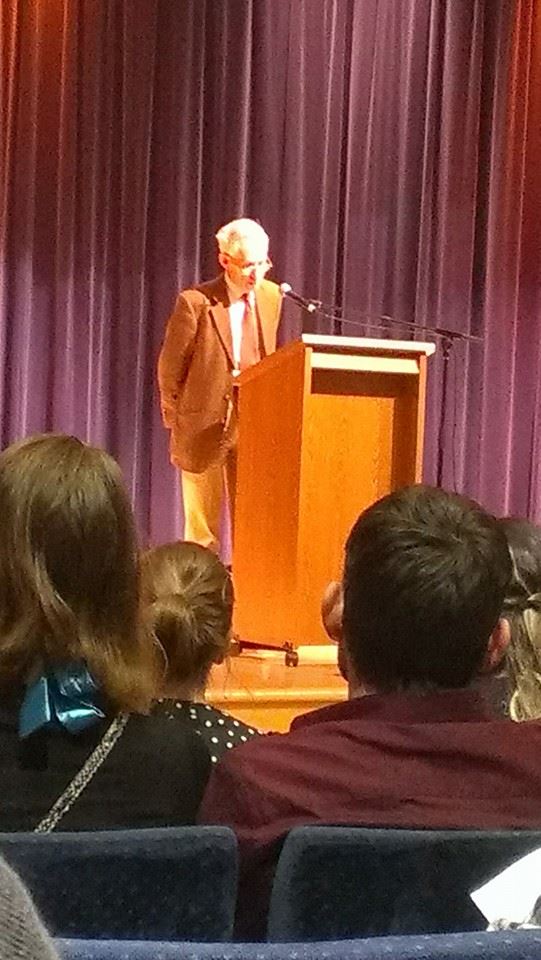
ImageSo I was sitting and listening to Richard Swinburne, the Oxford professor who is perhaps the leading voice in philosophy of religion among Christians worldwide, and I was getting knots in my stomach.  I didn’t want to stand up and ask questions, because I felt like a kindergartner who had wandered into a class on nuclear physics.  But something just wasn’t sitting right with me.

Swinburne believes that morals exist, regardless of the existence of God.  God clarifies morality, and sometimes makes obligatory things that are only neutral otherwise, but morality is just a real thing that everyone knows about.

So when the nice man stood there waiting for questions, and the glazed-over undergraduates with limited experience in philosophy had nothing to say, I felt worse for him than I did about myself, and I went to the microphone.

“If there are logically necessary moral principles,” I began, “then how do you respond to the sweepingly popular atheism in the West that uses those morals to critique the canonical God, who does things like telling Abraham to kill Isaac?” To be honest, there were probably a lot of “ums” and “uhs” in there too.

What Swinburne did next was dumfounding.  He said that the early church used an analogical reading of Scripture to make the difficult texts jibe with Christian morality.  For instance, he said, citing Psalm 137, the early church took the “children of Babylon” to be our evil desires, and the “rock” against which they were to be bashed was of course Jesus.  So some texts don’t have to be interpreted literally.

So there was my answer – difficult passages of Scripture can be written off with flowery and virtually nonsensical interpretations.

That interaction brought me back for his second lecture the next night.  I wasn’t disappointed.  He talked about how it’s beneficial to be governed by Christian moral principles, like the fact that men should be the decision-makers in their marriages and homosexuals shouldn’t marry.

So I hopped up to the microphone again.  “If we believe that passages that don’t jibe with Christian morality can be interpreted analogically,” he nodded as I spoke, “and you’ve said that humanity seems to be progressing morally over time through a process of reflective equilibrium, why can’t we analogically interpret the passages that now run counter to increasingly widespread thinking in the modern Church?”

His answer was a long one, which wove its way through the correct way to analogically read Scripture to the process of canonization to Augustine to the nature of modern ethical thinking.  I’m not quite sure what the conclusion was.

But here’s the deal – on those places where I agree with Swinburne, I come to my views based on a literal reading of Scripture.  Analogically divorcing the God of the Scripture from moral principles that seem more intuitively appealing is just going to create a false, albeit nice, God.  It’s an idol of intuition.  And it’s going to be impossible to hold onto rigid, literal biblical principles on human sexuality while writing off a God who doesn’t behave the way we want him to.

Morality is determined and dictated by the God who can command Abraham to sacrifice his son.  He can tell us who to marry and who not to.  Morals cannot fundamentally exist without God, because morality is, and only is, what God makes it.  The minute we try to soften that God with flowery interpretations of Scripture, we lose God all together.  Without God, we are highly evolved puddles of primordial ooze, and morality is a joke.

Then again, admittedly, I’m not qualified to challenge a mind like Swinburne, and an hour’s lecture with brief Q&A isn’t sufficient to plumb a man’s thoughts.

Certainly Agnostic

Image

Posted on the Christian Apologetics Alliance

When I offer an apologetics seminar that I call “Know Why You Believe,” I find that the skeptical attendees have a preferred label for themselves.  “So I’m an agnostic,” says the first person to raise his hand, and that is the preface to his question.  A few others nod their heads eagerly.

I’m not sure if I believe him or not.  But I’ve finally come up with a good, brief answer….

Read the rest here.

Fire and Water

Image


You’ll hear a couple of phrases floating around ECO circles. One is that you care about what you measure. If we are paying attention to something enough to document how it’s going, we probably care pretty deeply about where it ends up. Secondly, you’ll hear us say that our goal is to baptize more than we bury. I was at an ECO conference where a friend of mine said that from the stage, and one of my staff turned to me and whispered, “Does that mean we should just outsource the funerals?” While my staff is as creative as they are clever, I’m not sure that was the point.

Read the rest here.

Changing My Mind on Darwin

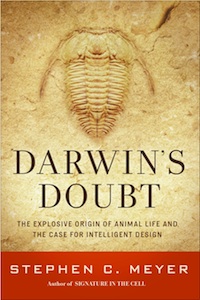
ImageSo I’ve changed my mind about Darwinism.  I guess I have to tell you where my mind was to tell you where it now is.

I’ve never invested much study in evolution because I was neither threatened by it theologically nor enchanted by it philosophically.  The biology teachers taught it to me.  I can explain it.  As a follower of Jesus, I can see a viable explanation for how God could do it that way.  I’m also not overly confident that science is fueled by objective curiosity rather than passionate self-interest and ideology, money and power.  Science is motivated reasoning on its best days.

When I listen to militant Christians talk about Darwinism, it’s pretty clear they aren’t scientists, don’t know what they’re talking about, and aren’t even open-minded enough to think about the subject.  When I listen to militant Darwinists, it’s pretty clear that they aren’t scientists, don’t know what they’re talking about, and aren’t even open-minded enough to think about the subject.  I guess there are just so many fundamentalists in this debate on both sides, I’ve stayed away from it entirely.  I read a few books about it years ago and felt like there were a few intelligent people arguing for and against, surrounded by a cacophony of lunatics.

I’ve just read Stephen Meyer’s Darwin’s Doubt.  Meyer is a Cambridge PhD in philosophy of science.  He hangs out with the Intelligent Design people.  His writing is fluid, detailed, and reasonable.  He seems to know what he’s talking about.

The book makes the case for the fact that the fossil record doesn’t support Darwinism.  The sudden appearance of new phyla without sufficient time for the mutation and selection process to work is simply unaccounted for by the rocks.

The problem is that when Meyer says things like, “the Precambrian fossil record simply does not document the gradual emergence of the crucial distinguishing characteristics of the Cambrian animals,” how on earth should I know if he’s right?  I don’t have time to immerse myself in paleontology.  I’ll never be an expert.  I just have four hundred pages of articulate, self-assured, well-documented evidence for Meyer’s case.

So here’s how I find my way into a conversation on subjects that are not my primary field of study.  I read the reviews that are antagonistic to the source and just look at the logic that’s employed.  I find that this often gives me the best read on a work.  If the critics are sincere, the reviews are usually precise.

The New Yorker’s review began with a genetic fallacy, presented arguments that Meyer had refuted without mentioning that Meyer had addressed them, and then deferred to another blogger for the scientific content of the review.  It then called Meyer “absurd,” which, given how shoddy the review actually is, was an absurd thing to do.

Then I read the review from which the New Yorker piece got its “science,” which was actually written by a grad student at Berkeley.  Now I have to say that Berkeley is, in fact, one of my fields of expertise, and I know exactly how Berkeley grad students go about their “work.”  Somehow Berkeley selects the crazies and the militants who show the most promise and then teaches them that knowledge is a completely subjective power tool which should be manipulated by those on an ideological crusade to undermine authority.  I’m not kidding.  I went to Berkeley.  That’s what we did.

What’s interesting about the grad student’s review is that it was posted 24 hours after the release of Meyer’s book, and it’s filled with snark.  He’s not having an intelligent conversation, he’s insulting Meyer in order to defend something religiously.  In a later, defensive review, the grad student says that he read the book “during lunch.” He read over 400 pages of scientific material during lunch, and then posted an insulting review.  He says his detractors are just “slow readers.” People who win speed reading competitions tend to cover 1,000 words per minute (maybe 4 pages) with 50% comprehension.  That level of comprehension is almost useless, and it becomes less useful the more information-rich the content.  A book of Meyer’s size would have taken an hour and forty minutes at that pace, with minimal retention, and that’s if you’re not, oh, say, eating lunch.  On top of that, the review is almost 10,000 words long, which would take some time to write, making it highly suspicious that the review was written after the book was read and not before, in anticipation of the book’s release.

See, this is how I know who to trust in academic communities.  The charlatans have no character.  You read the grad student’s defenses of his review (and they sound a little panicked), and you realize that he has been following Christians around and arguing with them for years with an inquisitor’s zeal.  There’s a personal agenda here, and his approach to new information on the subject is anything but scientific.

Now I start to smell a rat, and I change tactics.  Now I really want Meyer to be wrong.  I want one, good, solid review by an objective thinker, maybe even a Christian, who can debunk Meyer.

So then I read Donald Prothero’s review.  He’s a paleontologist and a scholar.  It begins with a caricature and a smear, saying that anyone who questions evolution suffers from confirmation bias (explain Thomas Nagel?).  He then says they have PhD’s in the wrong fields and thus aren’t qualified to discuss evolution (Meyer, again, studied philosophy of science).  Then he launches into unsubstantiated accusations, saying there are errors on every page.  He says Meyer claims the Cambrian explosion happened “all at once.” Now look, I just read Meyer, and he doesn’t say that at all.  This isn’t a mistake.  This is a lie.  The truth comes out as he goes on to refer to Meyer’s religion as a “fairy tale.” Again, I haven’t found a scientific mind.  I’ve found another fundamentalist.

Now I start to sweat.  A host of scientists have endorsed the book (http://www.darwinsdoubt.com/blurbs/).  I want one to reject it on perfectly level-headed grounds, with no patronizing rhetoric.

Another definitive work on the Cambrian Explosion came out in January of this year.  Called The Cambrian Explosion, it attempts to give a scientific explanation for how so much variety erupted in such a short time.  The authors say “the Cambrian explosion can be considered an adaptive radiation only by stretching the term beyond all recognition.” That means the evolutionists are saying the fossil evidence doesn’t bolster evolution in this particular era.

The New York Times ran a science article last month that said that scientists will spend the coming years trying to figure out what combination of environmental triggers caused the Cambrian explosion.  It doesn’t mention Meyer.  It also seems to leave a big, open question mark about why we need to defend Darwinism at points where the evidence leans away from it.

So now I’ve changed my mind.  I don’t think the fossil evidence does support the current representation of Darwinism.  I think there are some otherwise well-trained scientists who are freaking out, and doing it in widely public and observable ways.  Their lack of command of reason is a tell-tale sign that their motives for defending their orthodoxy are not scientific.  And I believe the failure of the scientific communities to engage in this conversation in a rational way is a manifestation of power brokering rather than honest intellectual engagement.

Could humanity have evolved?  Sure.  But the case isn’t as strong as they told me in biology class.

Interviewed for Truth Matters

Image

Recently I was able to interview James Miller, author of the new apologetics book Hardwired.

Me: What moved you to write Hardwired?

James Miller: I have a real passion for students who grow up in the Church but who aren’t prepared to answer the tough questions that will come their way in college.  My prayer is that Hardwired will help engage some of their deepest quandaries.  I already have two agnostic friends who are reading it.

Me: You wrote, “No one has to convince you that you’re home”. I believe that this sums up Hardwired. Could you briefly explain this statement?

JM: There’s a feeling of resonance…

Read the rest here.

Spiritualizing Our Weaknesses

This is a piece I wrote for ECO’s blog.

blogI recently read a news article about a church’s last worship service. After years of membership decline and consequent financial instability, they were finally dissolving. The reporter said that members were teary-eyed as they sang one last time some great hymns of the faith, read the Bible, and talked about God’s faithfulness. One of the congregants interviewed commented that they weren’t sure what had happened. “We used to have such good potlucks and rummage sales,” she said.

I’ve noticed a trend in church leadership that is particularly clear during a season in which church attendance is on the wane….read the rest here.

The End of the M.Div.?

Christianity Today’s Out of Ur published an article I wrote about the future of the Masters of Divinity degree and the future of seminary education. 

Image

Long the gold standard of seminary education, the Masters of Divinity degree is a requirement for ordination in many denominations. It requires students to make a serious commitment—usually three years, long study hours, and thousands of tuition dollars. They immerse themselves in biblical Hebrew and Koine Greek—some eagerly, some begrudgingly. The result has been a trusted and standardized course of theological study.

But things are changing.

Four significant influences have shifted students, and consequently schools, away from the M.Div. and into alternative learning tracks. The rise of non-denominational churches that no longer require seminary education, significant financial debt incurred by students who are headed into a profession that will not necessarily empower them to pay it off, the rising possibility and acceptability of online education, and the decline of mainline Protestant denominations have all raised questions about the viability of the M.Div.

“We’re in a huge paradigm shift….”

Read the article here.

The Bestselling Jesus

A review of Killing Jesus, by Bill O’ReillyImage

By James W. Miller

The Last Temptation of Christ witnessed lines of moviegoers and waves of bookbuyers when it was released, largely because Christians threatened to boycott it.  The Passion of the Christ made over $611 million dollars from the hands of the passionately faithful and the militantly opposed.  Zealot, a book that depicted the historical Jesus as something less than the Messiah of God, raced to the bestsellers lists this year, though critics say it offered no new twist on the historical retelling of the life of Jesus.  Bill O’Reilly’s new book, Killing Jesus, is not bound for that kind of glory, for one simple reason: it doesn’t say anything controversial.

Released on September 24th, Killing Jesus, by O’Reilly and cohort Martin Dugard, hovered around #4 on the Amazon bestseller list in the days leading up to it.  By the end of the first day, it was still at #3, standing behind the latest Stephen King and the fourth installment in a young adults science fiction series.  Then on his evening Fox TV show he proclaimed that his book is creating controversy, and that some people think he’s “going to hell for writing it.” Who are these critics?  A few unnamed letter writers.  O’Reilly had a priest and a pastor on the show.  He told them he was getting a lot of heat from evangelicals.  The pastor told O’Reilly that evangelicals “ought to love this book.” O’Reilly replied that “the anti-Christian people” don’t want anyone to read this book.  The priest told O’Reilly that people won’t like the book because it defends the Bible’s accuracy.  O’Reilly assured the audience that the book is footnoted with the facts.  The ordained yes-men assured him he was right.   “I learned a lot,” said the priest.

Finally made it to #2.

But honestly, there’s no controversy here.  The book alternates between a fairly straightforward retelling of the biblical story with only minor narrative expansion, and a fairly unsurprising retelling of the details of the Roman Empire.  As to the latter, the authors hone in on that which is most violent and most sexually depraved, without any particular exploration of the psychology of the Caesars.  The story runs from Herod’s slaughter of the innocents, through the assassination of Julius Caesar, through bloodthirsty stories of Roman military conquests to vile sexual exploits of the subsequent Caesars.  None of this contributes meaningfully to the story of the life of Jesus.  And apparently it’s not scary enough to top Stephen King.

What the book does rightly is to show insistently that Jesus’ life and teachings are inextricably interwoven with the claim to his deity.  This isn’t just a demythologized, historical Jesus narrative, despite the fact that the authors tend away from the miraculous (the disciples “claim” to have seen him walk on water).  And there is an evangelical quality to the book for that reason.  There may be some stragglers who don’t read the serious literature about Jesus but pick this one up from the airport newsstand and end up in some kind of serious exploration of faith.  The Lord works in mysterious ways.  If you just wanted some superficial historical details about the first century world, it’s a fairly painless way to get them.  But the book’s popularity won’t come from a serious literary merit.

Of course, the drawback is that the rising population of Millennials will no longer take the story of Jesus from the hands of Caucasian men in their 60s who talk more about their political agendas than their faith.

The two Catholic authors previously partnered on bestsellers Killing Lincoln, which was criticized for factual inaccuracies, and Killing Kennedy, which the New York Times called “gerund-happy” while accusing the authors of “word mangling.” Both of them stayed on the bestsellers lists for months, the first one for more than a year.  Killing Jesus will be a bestseller as well.  The O’Reilly Factor has around 3 million viewers, and if history serves, he’ll spend the coming months promoting it on a daily basis.  Plus, it’s just hard to get around the fact that Jesus is still a subject that everyone wants to hear about.  But the book won’t be remembered for contributing anything new to conversations about Jesus, either historical or theological.

hardwired cover  Check out Hardwired:Finding the God

  You Already Know (Abingdon 2013)

When Christians Do Vegas

Christianity Today’s Leadership Journal published an article I wrote about our church staff’s new experiment in leadership training.

Conference on Wheels

“Our Conference on Wheels”

James W. Miller

It was not when my staff first posted a Facebook picture of me napping in a megachurch stadium chair that I realized my Christian-conference-going days were numbered.

It was when I realized they had a whole album of these pictures.

I love conferences. In my early days of ministry, The National Youth Workers’ Convention changed the direction of my ministry and my preaching. I marveled the first time I stepped onto Willow Creek’s campus for a Leadership Summit, and I grew because of my first Purpose-Driven Church conference. I still love Catalyst and Orange. Reading this, I think I almost needed a conference intervention.

While I’d still recommend big conferences for ministry development, my staff and I have gone in a new direction. This year we loaded up a caravan of cars and drove four hours into Las Vegas….

Read the article here.

Advance Praise for Hardwired

I’m so thankful to the scholars and ministry leaders who have given my new book Hardwired a thumbs up.  After the investment of years of work, it’s nice to have someone else enjoy it.  And when you write, you’re never sure that it will happen….

JWHardwired is for all of us who live with doubt and uncertainty about the Christian faith. With wisdom, insight and clarity Jim points the way for anyone struggling with insecurity and disbelief to firmly grasp the idea that what they already know is the perfect place to realize a belief in God. This is a book I will recommend to every young adult wrestling with core and fundamental truth. It is a book I will recommend to every mature and older adult looking for a path forward through doubt, frustration and seasons of distress. It is a book I will recommend to anyone open to the idea that God exists and that He loves them and wants them to know Him. In fact I recommend Hardwired to you. I am certain it will open your understanding of God and deepen your belief in God.”

Jon Wallace, President of Azusa Pacific University

TS“I like Hardwired a lot. It’s smart, confident and quite funny. Miller drills to the core of detached claims to neutrality about God. I can’t wait to give this book to friends of mine.”

Tim Stafford, author of Miracles and Senior Writer for Christianity Today

.

TC“A fascinating and highly readable argument for God. Miller avoids the complicated jargon of much contemporary apologetics, and argues in conversational style reminiscent of Lewis and Chesterton that many of our deepest held convictions about the world point unavoidably to a personal God. The book will be of great help to those struggling with doubt. I warmly recommend it.”

Thomas M. Crisp, Chair of the Department of Philosophy at Biola University and Associate Director of Biola’s Center for Christian Thought

JS“Miller’s book is going to provide a map for readers who are yearning to understand how we know what we know to be true regarding faith and life.  There will be lots of insight for who cherish the line by Pascal – ‘The heart has its reasons that reason knows not of.'”

Rev. Dr. Jim Singleton, Jr., Associate Professor of Pastoral Leadership and Evangelism, Gordon-Conwell Theological Seminary

SD“Here is a fresh and original look at religious unbelief. In Hardwired, James Miller surprisingly argues that we all—atheists, agnostics, and believers alike—latently believe that God exists and that we depend on God. The book is clever, well-written, and convincing. I recommend it highly.”

Dr. Stephen T. Davis, Russell K. Pitzer Professor of Philosophy, Claremont McKenna College

DG“Rather than gathering evidence that demands a verdict, James Miller plumbs the depth of the human heart, showing us that the things we take for granted provide a sure foundation for deep, abiding faith. The whole approach is surprisingly fresh and compelling. Add to that Miller’s gift for just-the-right analogy and his clear, spare style, and you’ll know why I’m excited to recommend this book.”

Dr. Diana Pavlac Glyer, author of The Company They Keep: C. S. Lewis and J. R. R. Tolkien as Writers in Community

AM“…he [Miller] has the mind of a scholar, the heart of a pastor, and the ability to synthesize those features in a way that few leaders can. In this book Jim challenges many of the intellectual assumptions of traditional apologetics, which start with what we don’t know, and suggests that the most compelling and heartfelt case for the Christian faith starts with what we do know. Just like in his preaching, he takes apologetics out of the ivory tower and brings it to the streets where people live.”

Adam S. McHugh, author Introverts in the Church: Finding Our Place in an Extroverted Culture

PC“James Miller’s book is a very readable reinforcement of the fact that God has placed eternity in each of our hearts. It helpfully supplements various contemporary apologetical arguments by highlighting the personal, practical, and existential themes familiar to all humans—themes that can touch the heart and move it in a Godward direction.”

Paul Copan, Professor and Pledger Family Chair of Philosophy and Ethics Palm Beach Atlantic University, West Palm Beach, Florida

JRHardwired has flipped my traditional thinking of Christian apologetics upside down with sound and logical intellect, peppered with Jim’s quiet humor and personal vignettes. Our hearts are indeed “God’s Positioning System” – the case for Christ has been and is made, we just need to discover it!

Dr. John Reynolds, Executive Vice President – Azusa Pacific University, California and Chancellor, Azusa Pacific Online University

DC“In a world of debate and challenge to the Christian way of thinking, this book is a breath of fresh air in giving guidance and principles of understanding of how faith really works and pulsates in one’s life. Offbeat, different, creative, it’s a new way of looking at how faith is given, nurtured and survives.”

Rev. Dr. Dan Chun, Pastor of First Presbyterian Church of Honolulu, co-founder of Hawaiian Islands Ministries

CC“Jim Miller does an excellent job of turning our questions upside down and helping us know how much we didn’t know we knew.  He suggests a major shift from trying to prove things to people to helping them realize what they already know.  He helps us examine our assumptions and discover what has been missing in our thinking.  This is an engaging and thought-provoking book.  I highly recommend it.”

Rev. Dr. Clark Cowden

Explore the book in paperback or ebook here:hw

Hardwired (Amazon)

Hardwired (Barnes and Noble)