The Church to Come

Chinese churchToday was the first time I worshipped in a church plant at its opening service.  The service was in Mandarin.  An enthusiastic translator sat next to me hurriedly turning every word into something I could understand.  When we stood to sing, I watched the beautiful Chinese calligraphy play across a video screen in front.  I couldn’t read a word of it, but I could feel the passion of the room.  The translator told me what they were singing.  Every song called out “Send me!” Every song talked about loving a lost world.  It was worship of a God who cared for people who were far away.  This is a church plant which is nesting at my home church and worshipping on Sunday afternoons.  It felt remarkably like the future of the church.

An animated preacher, with whom I have had coffee, stood up to speak.  His texts were from Mathew 28 and Acts 1 – Jesus commission to go to a lost world and the charge to love people in Judea, Samaria, and to the ends of the earth.  At one point he spoke eloquently in Chinese, and then I heard the words, “Jim Miller.” Then he said something else, and everyone burst out laughing.  He went on, and the laughing continued.  I turned to the translator.

“What did he say?”

“He said your wife is Chinese, so you like Chinese people.  He said your mother-in-law is here for worship, so we are going to consider you half-Chinese.”  I laughed, admittedly late.

This is the future of the church.  The language which is spoken should be for the people who are doing the best job reaching a lost world.  The rest of us should stand on the sidelines in support.  The songs they will be singing will be refined by the church’s mission.  That room resonated with one thought – we have a purpose.  And that purpose will give that community a future.

Next they commissioned a kneeling pastor to lead the church.

Then something amazing happened.  They only announced one tangible ministry.  They didn’t say anything about programs.  There were no classes or groups.  In fact, they even said that the church wasn’t really there for that.  The ministry they announced was that they were already planning their next church plant in a city 20 minutes further east down the freeway.  This brand new church named only one clear ministry goal – start another church.  I have no doubt that they will.

Well, I have to admit there is one program that comes with any healthy, God-fearing, missional Chinese church, and that is a big meal, which followed immediately.  Thank you, Jesus.

For the new family of faith sharing our roof, I am most grateful.  May God bless you in abundance, so that you will have everything you need all the time, so that you may abound in good works (2 Cor. 9:8).

Driscoll’s Re-emergence

I’m attending the Thrive Conference in Sacramento where evangelical prodigal ex-pastor Mark Driscoll made a surprise appearance and lecture this morning.  It was announced last night, but that was the first any of as had heard about it.  Most of the lecture was about the persecution his family had experienced in the last year.  He also gave several practical reasons why we ought to forgive people.  But there was a gaping hole in what he had to say.

Pastor Ray Johnston of Bayside Church, which hosts Thrive, introduced Driscoll, saying that back stage Driscoll was humble and apologetic.  He said that this is the kind of guy he really wants to be in the foxhole with.  “I really just like this guy,” he said.

Driscoll appeared wearing a recognizable Mumford-style vest and pegged jeans, looking sheepish.  He hugged Johnston and took a seat on a stool.  The following are my rough paraphrase of what he talked about.  He said…

driscollWhat does the Bible say?  It says strike the shepherd and the sheep will scatter.  For you who are shepherds, Jesus’ goal is to bring a flock around you.  The enemy has a plan to strike you.  I want to talk to “struck shepherds.”

It’s harder when you have a family.  Jeremiah, Paul, and Jesus were single.  It’s scary what to think what would have happened to their families.  If you are a shepherd that has been struck, you can’t talk about it in detail, because that would be gossip.  I don’t want to talk about me.  i want to sever you.  We had an 8 year conflict that finally went public.  Here he recommended 1st Peter 3:8-12 for such conflicts.

He then began to talk about “Grace and I,” and he said that he used to refer to her as a pastor’s wife, but now he has to refer to her as an ex-pastor’s wife because he is an ex-pastor.  They have 5 kids.  The last year has been difficult on them.  They’ve had to move three times for safety issues.  There were protests outside their home, and a person who sounded mentally ill showed up at their house and was arrested.  People would post his address online after he moved.  Someone went to the bathroom on his front porch, and he received hate mail.  At one point the media blocked the driveway to get an interview and a helicopter one flew over “to flush me out.”  He said they went inside and avoided being in front of a window.  He said his 8 year old came into the room wearing a military jacket and carrying an Airsoft gun and asked if the jacket was bulletproof.  He hadn’t realized the helicopter was the media and had only seen movies where the bad guys came out of helicopters and shot everyone.  The boy had night terrors for months.  At one point they wanted to sleep in a tent in the backyard, but someone started throwing rocks over the fence at his kids at 6:30 in the morning.  They filed a police report.  Another time someone scattered a bucket of nails all over the driveway.  He said his email had been hacked.

He said God spoke to he and his wife “audibly” and released them from ministry.

The Board (of Mars Hill Church, where Driscoll had pastored), who are good and godly people, had authority over him and released a statement before the Driscolls were ready that said that he had resigned.  The kids were in school at the time so they raced down to pick them up, but the kids had found out about the resignation through social media.  (Here Driscoll began choking up as he spoke.)  “We had served that church for twenty years.”  He had baptized around 10,000 people.  The middle son, who Driscoll said was the shepherd of the family, asked, “Who’s going to care for the people?”  We’ve helped start 400 churches and our church had 15 locations.  And now they had nowhere to go for church.  “We were just zombies.” So they had church in the living room.  The one daughter who could sang led them in singing and one son went and got a bucket to collect the offering.  The boy said they were going to give the money to a single mom so that she could buy toys for her kids.  They read Scripture.  “I’ve got to teach this family,” he realized.  It was the first time in 18 years he didn’t have a sermon prepared on a Sunday.  He said, “I just lost it.”

Addressing the crowd he said, “I’m jealous for the well-being of your families.” So he said he was going to be a dad and a pastor.  He taught them about forgiveness.  He said he didn’t want to raise kids who are bitter.  So he wanted them to forgive those involved.  He had seen the church picketed by people that he had baptized.  But we forgive because we’re forgiven.  We need to think about all of the malice brought against the chief shepherd.  We have a broken-hearted God.  Rather than vengeance, God had a plan, that Jesus would come so we could be forgiven and reconciled.  He had Judas and Thomas and Peter.  And he was destroyed in front of his own mother and brothers.  It destroyed a family and that’s what happens when a shepherd is struck.  He had wine vinegar in a sponge forced in his mouth, and his research has told him that this was what Roman soldiers used as an antiseptic after using the bathroom, like a kind of toilet paper.  That’s what Jesus went through.

When sin happens, someone has to pay.  Vengeance makes for great movies (especially starring Liam Neeson), but terrible ministry.  So he wanted to give us some compelling reasons why we need to forgive.

Then he prayed that God would bring to mind someone that we needed to forgive.

Exodus 34, about being slow to anger, is the passage that is most quoted within the Bible.  And the best way to glorify God is to forgive.  We are to forgive as Christ forgave us.  We’re not denying justice, we’re just handing it off to the highest court.

Then he went through (I think he said he had 5 points but only got to 4) a list of reasons why we should forgive.  They included:

1. Forgive because if we don’t forgive we’re saying that their sin against us is worse than our sins against the Lord

2.  Because I love you and forgiveness blesses you.  It releases stress and depression.  Not forgiving “makes your worst day your every day.”  It benefits you physically to forgive in terms of stress and sleep, and emotionally in terms of healing and letting joy return.  He did a brief excursus on the parable of the person who wouldn’t forgive and then had to go to the jailer, who Driscoll said was Satan.  We say that they need to repent to be forgiven (at this point Driscoll made the point by yelling), but, he said quietly, they don’t hold the key to the prison.  We do.  And we open the door when we forgive.

3.  You bless others when you forgive.  Jesus said to love your enemy, which is how we know the Bible was not written by human beings.  To not forgive someone is to take the seat of God.

4.  I believe God gave this message to me.  I’ve done 6 months of study on forgiveness.  I don’t want to say that I’m totally innocent.  Sometimes the shepherd is wounded because he punched himself in the head.  But forgiveness is always tied to the demonic.  Forgiveness is how we were delivered from the demonic.  In your anger do not sin an give the enemy a foothold.  Satan and the demons have never been forgiven for anything and they will never forgive anything.  So when you refuse to forgive, you are trafficking in the demonic.  Bitterness grows and can take hold and defile many.  But I want joy and grace to flow in your life.  So forgive them.  Then he closed in prayer.

Johnston came in and prayed for Driscoll and alluded to God doing something new in and for Driscoll.  It sounded like the forecast of a professional return.

As I say, that’s a rough paraphrase, but I think I’ve got the gist of the content.

Now here’s the one lingering issue I have.  Driscoll just gave a long lecture on forgiveness without asking for it.  Aside from the allusion to “not being totally innocent,” he really didn’t point out his own failings.  In fact, it seemed like the entire lecture was aimed at his need to forgive those people who had wronged him.  What has happened to his family is horrible, as he describes it, and should never happen.  But what lingers after Driscoll’s resignation is that he evaded his Board’s plan for a disciplinary procedure.  He never really reconciled with those whom he had harmed, and after all of his talk of forgiveness, it would have been so simple and so graceful for him to ask for it.  Perhaps that was to be the implication that was to be drawn from the whole talk – that Driscoll now needs forgiveness too.  But the weight of the graphic imagery of the abuse of his family left us with the undoubted impression that Driscoll was a victim who now needed to forgive those who had wronged him.  He was a “struck shepherd” that heaven had taken out.  I think his idea that Jesus’ goal is to gather people around the pastor is symptomatic of Driscoll’s issues.  And if this is indeed a step in the direction of a professional re-emergence, I think most of us still want him to address the many charges and challenges that have been brought against him.  He has certainly apologized for much of it, but I think any professional return on his part will require that those issues go addressed through a supervised process.  There are still many people who have been reportedly hurt, bullied, and fired from their jobs by Driscoll, and I think his read on forgiveness may have to more thoroughly include himself among the guilty if he wants to regain any kind of credibility.

But just to provoke the seething hoards who still hate Driscoll, let me say something that I’ve said before – he’s a brilliant orator.  There are few communicators like him, and in the right place, with humility and supervision, he could live a life of effective ministry for Jesus.  Those Christians who still want to disagree might want to think about who the Apostle Paul really was.  And honestly, we might want to think about whether or not we really do believe in forgiveness.  Because no one is beyond it’s reach, and Jesus did give us a heads up that we will be judged in the same way we judge.  To hate Driscoll is to reject grace.

This was my initial dream for Driscoll when he resigned.

The Easter Myth

We should reasonably asked whether or not the Easter story really happened or is merely a fable filled with accretions.  Years ago I made an intentional exploration of the question of whether or not God was real.  I made a point of studying everything I could about it.  I read the holy books of many different religions with only one question in mind – could any of this be true?

One of the tests scholars may use to evaluate the validity of a historical claim is called “the criterion of embarrassment.” They say that if a story from history is embarrassing to the author or to the hero of the story, it is probably true.  We usually don’t like to tell embarrassing stories about ourselves, and history is usually written by people in power.  Most stories are edited to make the author of the story look better.

When I use the criterion of embarrassment on the story of Jesus, I see something interesting.  The story is terribly embarrassing to Jesus.  It would have been embarrassing to any 1st century Jewish person waiting for a Messiah.  If a 1st century Jewish person wanted to make up a story about a Messiah, they would have changed a lot of the details about it.  For instance:

* They would not make up a story about the Messiah being born in a barn to unwed parents

* They would not make up a story about wise men from the east finding Jesus, because it makes it look like someone else’s religion steered them correctly

* They would not make up stories about the Messiah getting in arguments with the religious leaders, who were generally respected and represented the kind of endorsement a hero would need

* They would not make up a story in which he was not only tortured but humiliated by the Romans

* They would not make up a story about him dying on a cross, because the Jewish Scriptures say that being hung on a tree is a sign of God cursing someone

* They would not say that women were the first ones to discover the empty tomb, because women’s testimony was not respected in that culture

* They would not make up a story about him appearing after rising from the dead in which some people were not sure if it was him or not

And yet, all of these are parts of the story of Jesus.  They are all embarrassing to Jesus and to his followers.  If they were making the story up, they wouldn’t have written it this way.  And if they wanted to edit things out, they would have edited out some if not all of this.

From a historian’s perspective, there is no way this story if made up.  This is a true historical event.  And the truth is that there was a moment in history where God walked among us.

Religion is stupid and evil

BillMaher_directI don’t know if you heard Jimmy Kimmel’s interview of Bill Maher the other day (I didn’t), but Bill was apparently sweating out the threat that Islamic jihadists now pose to people who mock them (aka Bill Maher).  And he said, “There are no great religions.  They’re all stupid and evil.”

I don’t normally take offense at comedians who are paid to offend.  You know what you’re getting into when you listen to them.  And I generally don’t listen to Maher, because I generally don’t find him funny.  But that comment stuck with me, because he’s actually rallying the hordes against the innocent.

I went to church the other night.  There were 200 homeless people sleeping at my church.  We fix them three meals a day, run a clothing boutique, offer free showers and haircuts.  They’re here for three weeks in January when it’s coldest outside, and then on to another church, such that they can be under a roof from December through March.  We’re not short on volunteers, so I usually just sit and talk with people who are having dinner.  One woman needed help finding a Narcotics Anonymous program, which we host at our church, so I helped her find it.  One woman was looking for a Bible, so I pulled one out of our pews for her.  Generally I just listen to their stories.  And as the 200 or so shuffled off to bed, I heard someone saying to me, of me, “You’re stupid and evil.”

I went to a congregational meeting on Sunday.  We just approved a new budget.  This year we raised our giving overseas by $30,000.  There’s a program in India that uses English literacy training to give people marketable job skills.  They’re helping people climb out of poverty by starting with reading.  And in the midst of that, they introduce whoever will listen to the guy who taught us to love people on the other side of the ocean.  Religious people in America usually give more to charity than their non-religious peers; we again have raised our giving.  And as we pour tens of thousand dollars of our charity into people we’ll never meet, someone tells me that I’m stupid and evil.

Last year we made a donation of about the same amount to an orphanage in Haiti that had lost a building to the earthquake.  We paid for the whole thing.  And the guy living in Haiti at the orphanage leading the build – he’s one of our church members who has moved there to live among and help the poor.  I gather that he’s stupid and evil as well.

But I can read the history of Christianity and so-called Christians as well as everyone else, and I see in my predecessors what is functionally just the same behaviors you see outside the church. And part of me has to agree – yes, religion, and religious people, are stupid and evil.  We always have been.  Just like everyone else.  Atheistic regimes killed 100,000,000 people in the 20th century.  Religious people haven’t done any better with power, just not worse.

But here’s the deal – Jesus wasn’t stupid, and he wasn’t evil.  If I have to come to grips with my own stupidity and the darkness within my own heart, I start groping around for someone to bail me out.  The only person I have ever known who without question has earned the right is Jesus.  He isn’t stupid or evil, and only blind stupidity or fiery hatred would make anyone say otherwise.  I’ll admit it – I’m stupid and evil.  I need a savior.  But he’s actually worthy of the title.

So the bottom line is that the common thread between stupid and evil religious people and stupid and evil secular people is not religion, it’s humanity.  And rather than casting stones at we who have called out to a savior for help, in a century where persecution of Christians is at a historical high, you might just as well have the humility to admit that you need a savior too.

The Faith of Tolkien

On the advent of the release of the third and final installment of The Hobbit films, and in honor of Advent the greater, I’m amused at the giant story of faith sitting hidden in plain sight in the American culture.  J.R.R. Tolkien was not only a devout Catholic, he was an evangelist.  And his quiet evangelism has shaped a legacy for modern evangelicals in a way that few of us are aware of.  If you, on the other side of this screen, are an evangelical Christian in America or Europe, there’s a pretty good likelihood it’s because of the guy who wrote the Hobbit.  If you hate evangelical Christians in America, you should likewise hate the guy who wrote the Hobbit (troll that you are).

Tolkien describes, in his essay “On Fairy Stories,” the great turn of events that must happen in every Fairy Story for it to legitimately qualify for the genre.  He calls that crisis and redemption a “eucatastrophe.” He writes,

At least I would say that Tragedy is the true form of Drama, its highest function; but the opposite is true of Fairy story. Since we do not appear to possess a word that expresses this opposite—I will call it Eucatastrophe. The eucatastrophic tale is the true form of fairy-tale, and its highest function.

He then describes how the gospels are a form of Fairy story, though true, and he calls the resurrection of Jesus a eucatastrophe.

I would venture to say that approaching the Christian Story from this direction, it has long been my Tolkersfeeling (a joyous feeling) that God redeemed the corrupt making-creatures, men, in a way fitting to this aspect, as to others, of their strange nature. The Gospels contain a fairy- story, or a story of a larger kind which embraces all the essence of fairy-stories. They contain many marvels—peculiarly artistic, beautiful, and moving: “mythical” in their perfect, self- contained significance; and among the marvels is the greatest and most complete conceivable eucatastrophe. But this story has entered History and the primary world; the desire and aspiration of sub-creation has been raised to the fulfillment of Creation. The Birth of Christ is the eucatastrophe of Man’s history. The Resurrection is the eucatastrophe of the story of the Incarnation. This story begins and ends in joy. It has pre-eminently the “inner consistency of reality.” There is no tale ever told that men would rather find was true, and none which so many sceptical men have accepted as true on its own merits. For the Art of it has the supremely convincing tone of Primary Art, that is, of Creation. To reject it leads either to sadness or to wrath.

Now it’s exactly this kind of thinking that Tolkien shared with his friend C.S. Lewis.  They both worked at Oxford, Tolkien as a professor and Lewis as a tutor.  They gathered together in a pub with friends to drink and read their writings to one another in a group they dubbed The Inklings.  And sometimes they strolled down the Addison walk at Magdalen College together.  On these treks, Tolkien talked to Lewis, then an atheist, about how God wrote himself into his own story in order to bring redemption out of the tragedy of the human condition – the greatest eucatastrophe of all.  Tolkien was influential in bringing Lewis to faith.  Lewis, in turn, encouraged Tolkien to publish his works about hobbits and orcs and dragons.

Most people know what a significant influence Lewis has had on Western European and American society through books like Mere Christianity, The Screwtape Letters, and the Chronicles of Narnia.  Lewis was a passionate defender of a propagator of the Christian faith after Tolkien helped him get there.  Most pastors in America have at least dabbled in Lewis, and to this day it is not uncommon to hear him quoted in the Sunday sermon.  His Narnia series alone has sold over 100 million copies, making him one of the most read fiction authors in history.

So the quiet little walks with the evangelical Tolkien created one of the greatest evangelists and Christian authors of the 20th century, one who is still shaping preachers and congregations and readers today.

So as the Hobbit releases this week, Christians should hail this as the great achievement of one of their direct spiritual ancestors.  All the fiery impulse of the good underdog standing up to bullying evil is captured in this Fairy story.  And keeping stories like this alive in our culture will always awaken a moral impulse that makes people wonder at the source of good and evil.  It makes us long for the triumph of good, for the eucatastrophe of our broken world.  Rather than settling for preachy, two-dimensional Christian movies that are painfully overt and poorly written, Christians ought to celebrate works like the Hobbit.  And we ought to call attention to the fact that the literary legacy of one of our most devout is now being fawned over by the movie going public on Saturday night, while his spiritual legacy once-removed is still prodding congregations on Sunday morning.

Chesterton on Christmas

A selection from G.K. Chesterton’s essay, “Christmas,” about retailers marketing Christmas too early.

brown“There is no more dangerous or disgusting habit than that of celebrating Christmas before it comes, as I am doing in this article. It is the very essence of a festival that it breaks upon one brilliantly and abruptly, that at one moment the great day is not and the next moment the great day is. Up to a certain specific instant you are feeling ordinary and sad; for it is only Wednesday. At the next moment your heart leaps up and your soul and body dance together like lovers; for in one burst and blaze it has become Thursday. I am assuming (of course) that you are a worshipper of Thor, and that you celebrate his day once a week, possibly with human sacrifice. If, on the other hand, you are a modern Christian Englishman, you hail (of course) with the same explosion of gaiety the appearance of the English Sunday. But I say that whatever the day is that is to you festive or symbolic, it is essential that there should be a quite clear black line between it and the time going before. And all the old wholesome customs in connection with Christmas were to the effect that one should not touch or see or know or speak of something before the actual coming of Christmas Day. Thus, for instance, children were never given their presents until the actual coming of the appointed hour. The presents were kept tied up in brown-paper parcels, out of which an arm of a doll or the leg of a donkey sometimes accidentally stuck. I wish this principle were adopted in respect of modern Christmas ceremonies and publications. Especially it ought to be observed in connection with what are called the Christmas numbers of magazines. The editors of the magazines bring out their Christmas numbers so long before the time that the reader is more likely to be still lamenting for the turkey of last year than to have seriously settled down to a solid anticipation of the turkey which is to come. Christmas numbers of magazines ought to be tied up in brown paper and kept for Christmas Day. On consideration, I should favour the editors being tied up in brown paper. Whether the leg or arm of an editor should ever be allowed to protrude I leave to individual choice.”

The God of Protests

Today's headlines
Today’s headlines

The God of the Bible is a God of protest.  He sent protestors into the world known as prophets, who decried the brokenness of the world and the damage wrought by sin.  And he calls you and I to be protestors.

The prophets were performance artists.  They put on public displays to call attention to their protests, often in ways that made them impossible to ignore.  Jeremiah walked around with an ox’s yoke on his shoulders, warning that God’s people would bear the yoke of Babylon because they had not been faithful.  Isaiah walked around naked for three years, warning that the people would be stripped of all they had if they did not repent.  God told Ezekiel to lay down in the street for a year to show that Israel was weighed down by their sins.  (And Ezekiel replied, “A year?!  Can’t I just graffiti a building or something?”) John the Baptist was a performance artist, whose symbolic artwork was to tell people to dunk themselves under water as a way of pointing out that they were living unclean lives.  And then he said that a performance artist was coming whose sandals he was not worthy to untie.

Jesus was a protestor.  And Christmas was the best protest of all.  Because in the midst of humanity’s overt rebellion against our maker, God lay down in the intersection of human life to stop traffic when he lay in the manger.  In that act, God protested our sinfulness not by condemning us, but by joining us.  In so doing, he modeled the kind of protest his followers are called to – one in which we join the most needy, and do so in a way that can’t be ignored.

So in a chaotic world broken by sin, join the God who is the God of protest.

  • If we want to protest racism, tutor a child of another ethnicity.
  • If we want to protest injustice, pay the court fees of the defenseless.

    Jesus
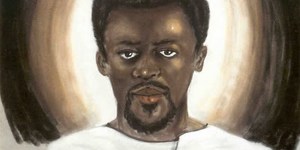
    An artist’s rendering of Jesus
  • If we want young men to take violence seriously, stop teaching boys to celebrate violent sports, media, and entertainment and instead teach them dignity and manners.
  • Do for your next door neighbor what you wish you could do for the entire world.
  • Have lunch at the house of the guy that everyone resents.
  • Pay the hospital bills of the injured person on the side of the road.
  • Stand as close as you can to people who are likely to have stones thrown at them.

Taking to social media with inflammatory rhetoric will not create a world of decency and respect.  Instead we have to act in such a way that we would be confident that it would be a better world if everyone else did the same thing we’re doing.  Or as Jesus put it, we are to do unto others as we would have them do to us.  That kind of protest will stop traffic.

Life Without God

AdamBefore we commit to something, if we’re wise, we weigh the consequences.  Before we take a job, we consider the pay, the hours, the benefits, the commute, the effects on our families, and the relative enjoyment and fulfillment we will find in it.  Sometimes we take one because we’re desperate, and anyone who has done so knows about how well that works.  When we date and marry, if our friends are wise, they ask us if our romantic interest is good for us, if they’re fun, if they fulfill us, if we can see ourselves with them over the long haul.  We’re often too enamored to ask these questions ourselves, but this is what the voice of wisdom would say.

It concerns me that there is another decision which the bulk of the population makes wholesale without wise consideration of the consequences, and that’s the decision to live life without God.  Whether by tacit negligence of explicit rejection, we choose to do life on our own terms without God.  I wonder how that decision might go if we weighed the consequences as we do with a profession or a partner.

No Origin

Without God, we come from nowhere.  We are not designed.  We have no purpose.  When we talk about living a meaningful life, we really can’t mean “meaningful” in any traditional sense, because without an origin, we aren’t made for a purpose.  We are, in stark terms, an accident, blindly wrought by inanimate forces of nature, a marionette of physics.  If we were sensible about this, we would never have reason to get out of the bed in the morning, because there is nothing for which we are made.

No Destination

Similarly, we’re not going anywhere.  From the dust we come and to the dust we return.  As a result, there’s obviously no goal.  Again, meaning must be crucified as a twisted prank of evolutionary forces.  The most basic of purposes – making the world better – is a stupid waste of time.  The world is going to perish in the eventual heat death of the universe, long after human life is gone, with no one left to remember it or appreciate it.  Self-awareness will have been a cruel mistake.  Raising our children is an arbitrary pastime.  Accomplishments are trophies thrown in the fire.  With nowhere to go, we have absolutely no reason to live.

No rules

Realize the tectonic implications for politics and ethics.  Any rules we have to govern human life are arbitrary constructs.  Might does make right, by sheer virtue of the fact that no one else can.  Values like civility or fairness or justice are tools of power for the manipulative to use to force a gullible (and religious) lower class into behaving and working to produce luxuries for the rulers.  Voltaire was right – if there is no God, he must be invented to keep the peasants in line.  Nietzsche was right – if there is no God, values are the whims of the strong.  If there is no God, the only real morality is anarchy, and complex political systems to reign that anarchy in are just stalling techniques to help the rich die in peace.

Without God, the obvious consequence is that we have no past, no future, and a horrible present.  This in no way proves that there is a God, it simply, and wisely, lays out the consequences of casually ignoring the possibility that He exists.