SDG

Watching the sun set over the ocean always feels like the closing curtain to a good play.  Moments like these feel like a sweetly passing sentiment, because we have become so used to God whispering his love that we take it for granted.  We don’t even hear it, a spouse’s “What was that?” to the other who has already left the room.  But the order of the universe is in fact a message from God.

The harmony of creation is a lullaby from a God who is reordering a broken world.  It’s his way of telling us there is still sense in things, even after tragedy.  It’s the strength of the arms that cradle us.  It’s his, “There, there.” Because there is fundamental order “out there,” maybe one day I can have it “in here.”

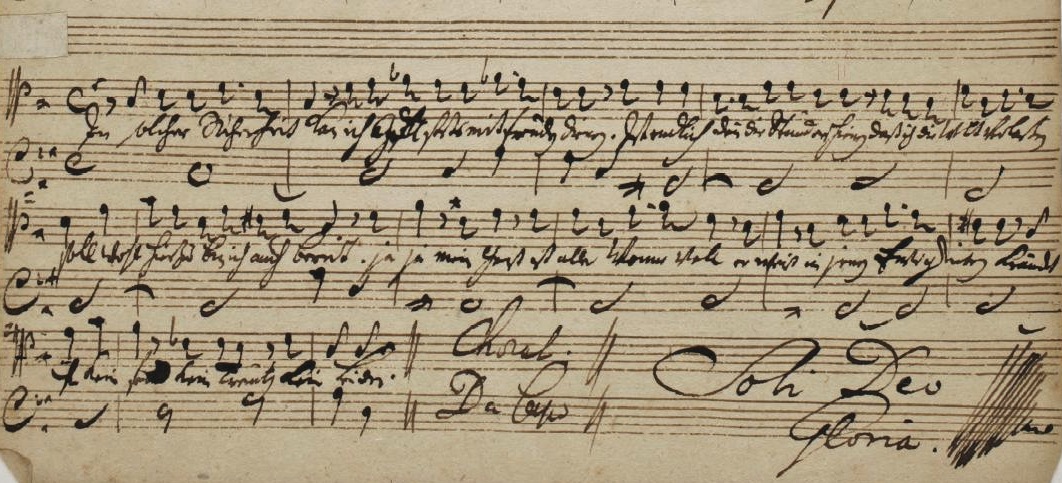
And thus you can hear the love of nature’s harmony in Bach’s Inventions.  He scratched at the top of his compositions, “SDG,” or Soli Deo Gloria: to God alone be the glory.  If he had not written it there, his music would say it by itself, because the fundamental order that beauty captures glorifies God.  SDG is written on the sunset.  The pulsing rhythm of sunrises and sunsets are a visual drumbeat.Image
Creation’s order plays on our natural love of harmony and structure.  That should be a clue to us as to where we come from.  The idea that order could just spring from a primal nothing should strike us as absurd.  Order has to have come from somewhere.  At least when a magician pulls a rabbit out of a hat, there was a hat.  For those who believe the universe just came to be, there is no hat, and no magician.  Science has changed its mind on this one.  Historically, the predominant view was not that the universe came to exist, but that it had always been.  For those who didn’t believe in a Creator, the idea of a moment of creation was too much of an affront.  In fact, Marcus Aurelius called it logically absurd.[1]  “Out of nothing, nothing comes.” Today, we know universally and conversationally about the Big Bang, or in other words, the magically appearing rabbit.  And this fact honestly makes atheists queasy.

Ludwig Wittgenstein described what this feels like. He said that he sometimes had a certain experience which could best be described by saying that “when I have it, I wonder at the existence of the world. I am then inclined to use such phrases as ‘How extraordinary that anything should exist!’ or ‘How extraordinary that the world should exist!’” [2]

And it is extraordinary.  Extraordinary that our hearts long for order.  Extraordinary that we feel like it should be more complete than it is.  And extraordinary that our deepest longings jibe with that which God has promised.  God is a fairly sloppy artist.  He’s left his fingerprints all over the work.

1 The Meditations of Emperor Marcus Aurelius, V.12.

2 Norman Malcolm, Ludwig Wittgenstein: A Memoir (London: Oxford University Press,1958), p. 70.

Is There Hope For Apologetics?

by Dan Stringer

reposted from The Common Loon

July 31, 2013

The Common Loon BooksChurchTheology 4 Comments

HardwiredI remember attending a debate in college between a Christian and an atheist.

Before it started, the room was abuzz with anticipation, like a stadium before kickoff. After the competitors were introduced to applause and scattered boos, they each proceeded to argue forcefully for their belief system, trading punch lines and other rhetorical jabs. Along the way, they interrupted, misquoted and belittled each other’s views. They called each other names and triumphantly scoffed at how misguided the other person was. In their concluding remarks, both sides claimed to have scored the most points, which was curious given the absence of a scoreboard.

I don’t recall anyone being officially declared the winner that night, or if anyone left the room with different beliefs than when they entered. I wonder if the real losers were members of the audience, or at least those of us who had hoped for better.

Over a decade later, I now find myself as a pastor, a vocation predicated on the existence of God. Yet I still have mixed feelings when the subject of apologetics arises. Perhaps I’ve seen it done poorly too many times. Or maybe I’m turned off by the defensive, almost desperate, salesmanship that belittles opposing viewpoints. Or it could be that I can’t stomach the dissonance between apologists’ typical form (rhetorical flourishes and deductive “proofs” designed to score points for God) and their content (the message of God’s love, grace and hope for the world).

Apparently, my friend Jim Miller, also a pastor, has a few mixed feelings about apologetics too. In the opening chapter of his new book Hardwired: Finding the God You Already Know (Abingdon), Jim writes:

Most people who believe in anything, religious or otherwise, did not get there by listening to a debate, and meaningful beliefs do not often rest on academic research. That isn’t to suggest faith and reason are unrelated. There are those who think that God gave reason to humanity the way a father gives a BB gun to his son, telling him, “You can play with that thing all you want. Just don’t point it at me.” To the contrary. In fact, the Scriptures say that God intends for people to come looking for him. He isn’t afraid of our reasoning.

If God isn’t afraid of our reasoning, perhaps he intends for us to search without fear of what we might find (Matthew 7:7-11). While I’m generally not a huge fan of apologetics, I look forward to reading the rest of Jim’s book because he understands that a rational, academic case for God’s presence can only take you so far, especially when everyone uses a different scoreboard. A philosophy buff with an eye for the accessible, Jim doesn’t blast his readers with data and argumentation, but instead helps us catch glimpses of God in our everyday assumptions.

So maybe it’s not a stretch to hope for a better, redeemed approach to apologetics. Rather than trying to dissolve the conversation with a litany of airtight rebuttals to all possible objections, we can set our sights on becoming a different kind of people, the kind of faith community with a capacity to offer helpful responses in the context of authentic relationships when the big questions hit.

Who knows? We might even keep the conversation going.

Death by Explanation

ImageScientists can describe to you the project of finding a “universal theory,” something that explains the whole of existence in its most basic terms.  This generally involves some form of reductionism, usually collapsing the three great sciences into one another.  Biology is to be explained by chemistry, and chemistry is to be explained by physics.  In other words, the activity of our hearts and minds are the firings of neurons and the swirling of chemicals.  Those chemicals are fundamentally the interactions of molecules, which are the interactions of atoms, which are the interactions of protons, neutrons, electrons.  If you slice with a thinner razor, you come to quarks and leptons and bosons.  The universal theory aims at getting to the center of these Russian dolls and explaining how the little one, and the forces that hold them together, governs everything else.

This is a real effort in the sciences.  Darwinism is the greatest reductionist theory in existence, an alternative to a Designer.  Next, scientists are looking for a source for the big bang, trying to come up with a viable alternative to a Creator.  This is a real effort in the sciences – and it really isn’t going to work.

Renee Descartes tried to do the same thing with the mental world.  He tried to break thought down into its smallest, most basic parts.  If he imagined that the world around him didn’t exist, imagined even that the parts of his body didn’t exist, that with which he ultimately left was “I think therefore I am.” The criticism of his theory has always been, “Hey, where did this ‘I’ come from?  What’s the ‘I’ that’s doing the thinking?” In other words, you can’t really separate thinking from the person who is doing it, so it’s hard to say what the tiniest little atom is in the sequence of mental events.  You could try saying, “Thinking happens,” but that doesn’t really explain the fact that thinking is self-conscious.  Our thoughts are part of a bigger story, a narrative, and no one thought can be separated out by itself from the others.  Thoughts can’t be broken into atoms.

The same thing is true in the physical sciences.  The problem with atomistic theory is that nothing in the real world can be dissected down to constituent parts that are actually separated from one another.  The atoms are holding hands.  Physics is a narrative.  The fact that some atoms make up the point where my pencil ends and others make up the point where the paper begins constitutes a story about the atoms that the individual atoms can’t tell on their own.

Ultimately, materialistic, atheistic scientific efforts will keep hacking away at life looking for its smallest unit.  But science is trying to grab hold of mercury.  What it’s trying to contain will always slip away.  Atoms will never by themselves tell the story of existence.  The whole narrative is bigger than the sum of its parts.

The scientific reduction of biology into chemistry and physics tells us as much about life as dissection tells us about what it feels like to fall in love.

The Ground

Image

I remember reading about a man badly injured in a car accident.  When asked about the vehicle that hit him, he said, “I didn’t see the truck, just the crash.”  Sometimes we’re so panicked about the crash, we miss what hit us.

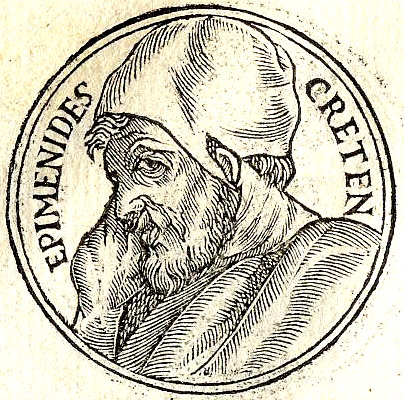
The Greek poet Epimenides saw things that most people miss.  He was hailed as a prophet, and legends about him supersede history – that he slept for 50 years, that he lived for 300, that before he died his body appeared tattooed, and that he saw visions.  However, what little we have of his poetry doesn’t suggest mystical visions so much as common sense.  I wonder if prophets are sometimes just people who saw what hit them.Image

He wrote a poem called the Cretica, The Cretan.  It was a poem about Zeus, king of the gods.  In it, the king of Crete tells Zeus that the Cretans have lied by building a tomb to Zeus.  However, King Minos knows that Zeus is eternal and needs no tomb, because “in you we live and move and have our being.”

Two things interest me about the poem.  One, he doesn’t charge them with a mistake; he charges them with lying.  Given the nature of the issue, I’m not sure who they could be lying to except themselves.  Two, his proof is not data to be analyzed, but existence on the whole.  In you we live, we are active, we exist.  Without you, someone has to explain life arising from inanimate matter, motion, and a universe that has somehow come to be.

Hasn’t it always been the case that when one claims that God is dead, whether a Roman centurion stationed outside of Jesus’ tomb or Friedrich Nietzsche stationed on the doorstep of the 20th century, we’re taking part in a grand self-deception that is corrected by reality itself?  God is the ground on which we stand, and I cannot deny him any more surely than I can stay in mid-jump.  Without God, there’s no reason why there should be a universe rather than not, and no explanation for how something came from nothing.  Without God, there is no explanation for the constant motion in which life is immersed, motion which pushes us, as Sartre said, inevitably towards moral crisis and commitment.  And without God, there is no explanation for how inanimate matter produced consciousness and mental properties, as even atheist philosopher Thomas Nagel has admitted.

The Apostle Paul quotes Epimenides (Acts 17:28) when he engaged the Athenian philosophers on Mars Hill.  He’s proof-texting from their own library.  It’s as if to say, “You already know God is there.  Your own poets have said so.  Your own prophet would call you a liar for denying it.”

I think the charge of lying may be harsh, though technically correct.  I might use a different word for it.  It’s a coping mechanism.  The reality is that crashes are startling and leave us resentful of a fragile world in which they happen.  Denying the possibility of a good, overseeing father figure may be a way of voicing resentment.  It’s fear boiling over into rage.  But at the end of the deny, it’s still just a denial of reality.  Without God, there’s no one to be mad at.

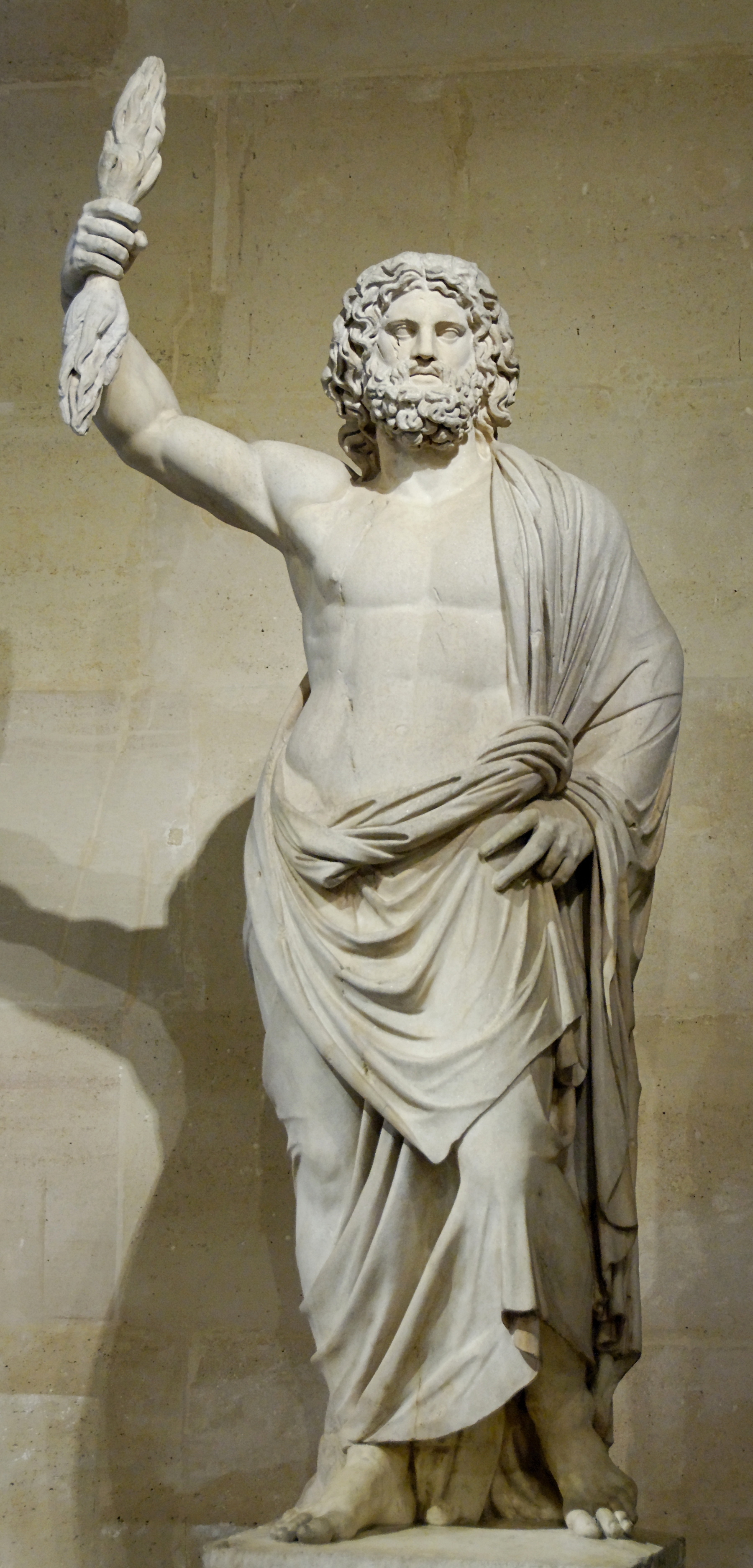
What about Zeus?

A friend of mine is a pastor-in-the-making who is interning at a church and exploring all the questions of ministry that pastors-in-the-making get.  Recently he told me that someone had suggested that ancient cultures had invented goImageds, and Christianity was just one more invention.  That seems to me a shallow and unnuanced take, and I think reality is a little more complex.  It seems that if God had created us for himself, we would naturally be inclined to seek him out. After all, all creation points towards him (Psalm 19), and his existence is so clear that we are “without excuse” for not believing (Romans 1:20).  He is actually not far from any one of us (Acts 17:27), and he rewards our seeking (Matthew 7:7).  So given that we’ve been built with a GPS that points us back to him, it seems that a host of ancient gods would not be disproof of Christianity, but rather proof all the more.  If we’re made for God, it makes sense that we would reach out for him and try to grasp him, and where we can’t find him, we would make up substitutes.  The ancient pantheons are not grounds for dismissal of Christianity.  They’re only the groundwork for true revelation.  The fact that we guessed repeatedly and sometimes close doesn’t mean that Christianity’s similarities to other religions prove it false, only that Christianity in fact satisfies our deepest longings and proves to be the the bullseye around which we had been misfiring.  Ancient religions were simply set-up to the real thing and proof that we were hardwired for the God who would soon reveal himself to us.

These are the kind of speculations captured in Hardwired: Finding the God You Already Know.

Why Bother Defending an Omnipotent Being?

ImageThere are those who wholly question the enterprise of Christian apologetics.  The assert that God will call those whom he choses, and apologetics is just a distraction to the work of the Holy Spirit and the revelation of God.  This was Karl Barth’s position.

The idea is prima facie nonsense.  When a missionary travels to another country to proclaim the gospel, she learns the language of the people so as to communicate in terms that they understand.  Apologetics is simply the language the secular world uses to talk about God.  To say we shouldn’t practice a rational defense of the Christian faith is like saying the missionary need not study language, because the Holy Spirit can do whatever it wants.

When I was a junior in high school, a church youth group in which I was participating took me to a weekend retreat in hopes of setting up camp in my heart.  This was in Southeast Texas, and the only people who ran Christian camps there were Baptists.  I remember listening to a firey preacher say quite a bit about hellfire, and I spent a good deal of time after his lectures asking him questions.  Admittedly, I had not read the Bible, and he had.  The Jesus I wanted to talk about was a projection of the niceties I most enjoyed.  He was frustrated with me.  I’m sure I was not particularly respectful or informed or interesting to him.  And after what was probably a lot of patience, he said to me, “Sometimes you have to stop doubting and just believe.” Of course this was a wasted answer on a thinking person.  It was an act of the missionary saying, “I’m tired of learning your language.”

Compassion requires translation.  We must be about the work of addressing hard questions with meaningful answers.  And the cause of Christian apologetics will always be essential.

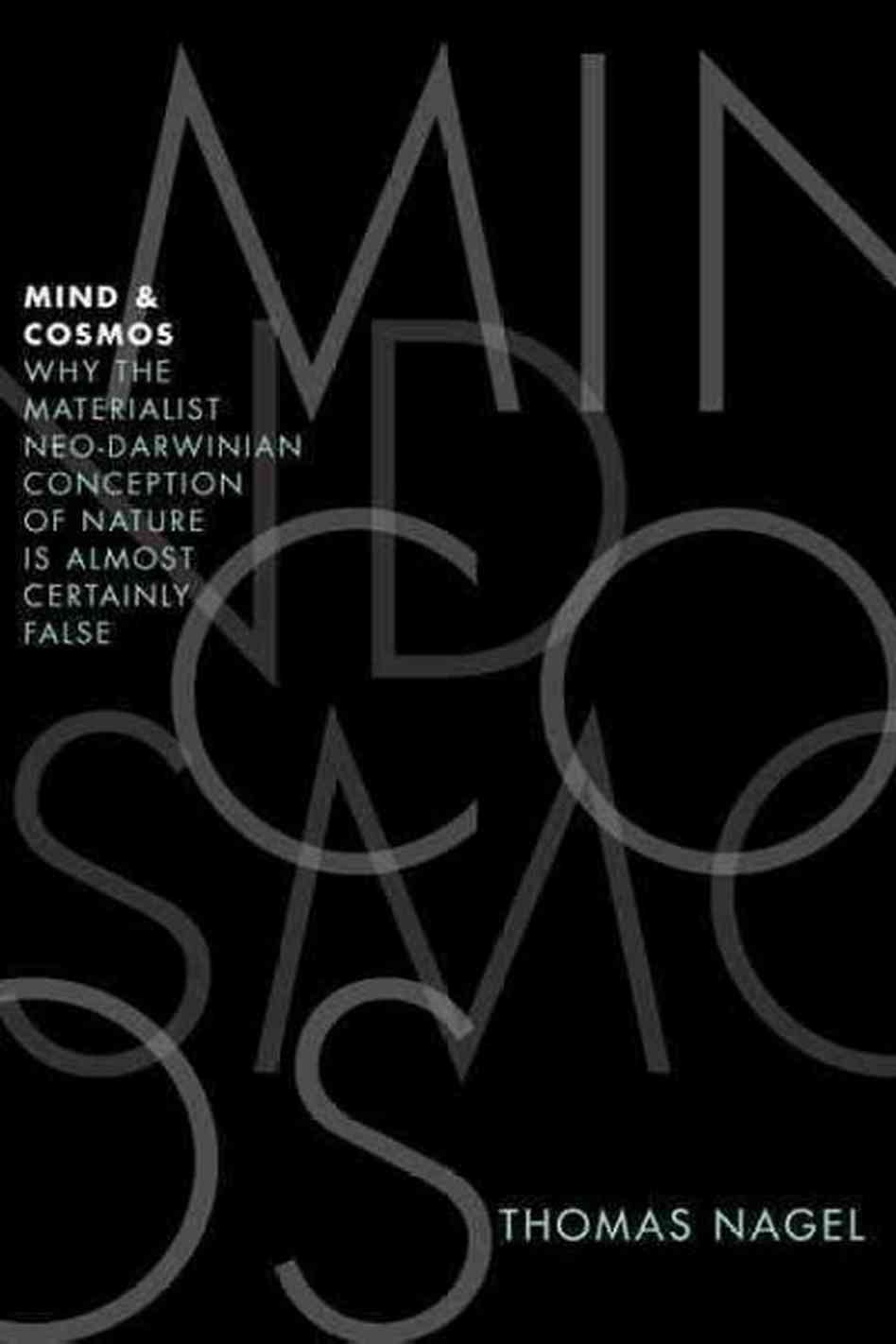
Book Review: Mind and Cosmos, Thomas Nagel

ImageYou kind of wonder about the book that could provoke Daniel Dennett to say, “it’s cute, it’s clever, and not worth a damn” and incite the betrayal of Steven Pinker, who tweeted of it “the shoddy reasoning of a once-great thinker.” Every page is filled with jaw-dropping concessions to the foundations of theism, though even on the last page, Nagel isn’t a convert.

Mind and Cosmos (Oxford, 2012) is a book in which an NYU philosophy professor seeks to undermine materialism, a bedrock of the modern scientific establishment.  He almost patronizingly names that materialism and neo-Darwinist theory defy common sense and are simply unlikely.  It reads like a kid who has been eating candy all night and is finally sick and considering vegetables.  This is the closest an atheist will ever come to undermining his own worldview before prayer.  It’s the last glimpse of the stars before the sun rises.

Nagel confesses, “…for a long time I have found the materialist account of how we and our fellow organisms came to exist hard to believe, including the standard version of how the evolutionary process works.  The more details we learn about the chemical basis of life and the intricacy of the genetic code, the more unbelievable the standard historical account becomes.  …it seems to me that, as it is usually presented, the current orthodoxy about the cosmic order is the product of governing assumptions that are unsupported, and that it flies in the face of common sense.”

He then goes groping for a non-theistic explanation for consciousness and morality, which he insists cannot be products of matter.  Perhaps there are atomic particles that are strictly mental, which we simply haven’t developed the apparatus to trace.  Perhaps the laws of nature are somehow innately teleological for reasons that we cannot explain.  (At this point, the gentle whisper of the choir begins to rise behind him.)

And Nagel admits to reading not only established Christian philosophers (“I agree with Alvin Plantinga…”) but to writers on Intelligent Design, heretofore the subject of late night TV mockery.

He spends time dabbling in the “constitutive question,” of what consciousness is made of, and the “historical question,” of how it came to be.  But in the end he simply admits to a “gaping lack” of an explanation.  Then he goes on to the problem of cognition, by which he means the kind of objectivity that reason depends upon.  He calls this problem simply “intractable.” And finally he covers issues of value and morality.  Here he admits that on a Darwinist rubric, impressions of value “are groundless.”

He has basically made many of the intellectual concessions necessary to establish that theism is more probable than atheism.

Feedback has been unfriendly.  “He is questioning a certain kind of orthodoxy, and they are responding in the way the orthodox respond,” said philosopher Alva Noe of Berkeley.  But I have to say a word of thanks, that he would be intellectually honest enough to own up to the things that atheists aren’t supposed to say.

Euthyphro Redux

Socrates: Why the long face, Euthyphro?

Euthyphro: Our previous conversation has made me come to realize there can be no actual virtue, Socrates, nor a god.

Socrates: Gads!  Why not, friend?

Euthyphro: Because if virtue is good because the gods command it, it is merely their arbitrary will.  And if they command it because it is objectively good, then the gods themselves are subject to something greater than themselves.  Thus I conclude that there is no value, and probably no gods anyway.

Socrates: You’ve clearly left port without a sail, sad companion.  With what will you replace the gods and value then?

Euthyphro: With Nature, Socrates, and with Reason.  Nature has brought us into being over the long course of time, and Reason is the pinnacle of our being.

Socrates: That’s a thinker.  I wonder, though, if I might ask you a question about that?

Euthyphro: I’d kind of prefer that you not.

Socrates:  Is reason objectively accurate because it has been created by nature to be so, or did nature create it to be so because it’s objectively accurate?  If nature created it to be so because it’s objectively accurate, then something other than nature brought its objectivity into being.  If it is accurate because it is created by nature, then nature’s dictation of it is merely arbitrary, the bouncing around of particles, rendering it not actually objective.  Yet obviously reason works objectively, or else we couldn’t have this conversation.  From whence then, comes reason?

Euthyphro: You know I hate you, don’t you, Socrates?


“Therefore any evolutionary account of the place of reason presupposes reason’s validity and cannot confirm it without circularity.” – Thomas Nagel, Mind and Cosmos, p. 81.

Amoral Atheism

I’ve been discussing the moral argument for the existence of God lately which goes simply:

If God does not exist, objective morals do not exist.

Objective morals do exist.

Therefore, God exists.

A quick and standard rejoinder has been, “So you’re saying atheists can’t be moral?” Now on its face, the question is a straw man, and a poorly phrased one at that.  What the question should be is, “Does the moral argument imply that atheists cannot behave in socially well-adapted way?” Or in other words, “Can’t atheists be nice folks?” And of course the answer to that (irrelevant) question is “no.”

But it raises another question that is not addressed by the moral argument.  That question is, “Can atheists rationally commit to binding behavioral obligations that they are not free to violate without hypocrisy or deceit?” In other words, is there anything that rationally makes atheists be nice folks.  And the answer to that is a solid “no.”

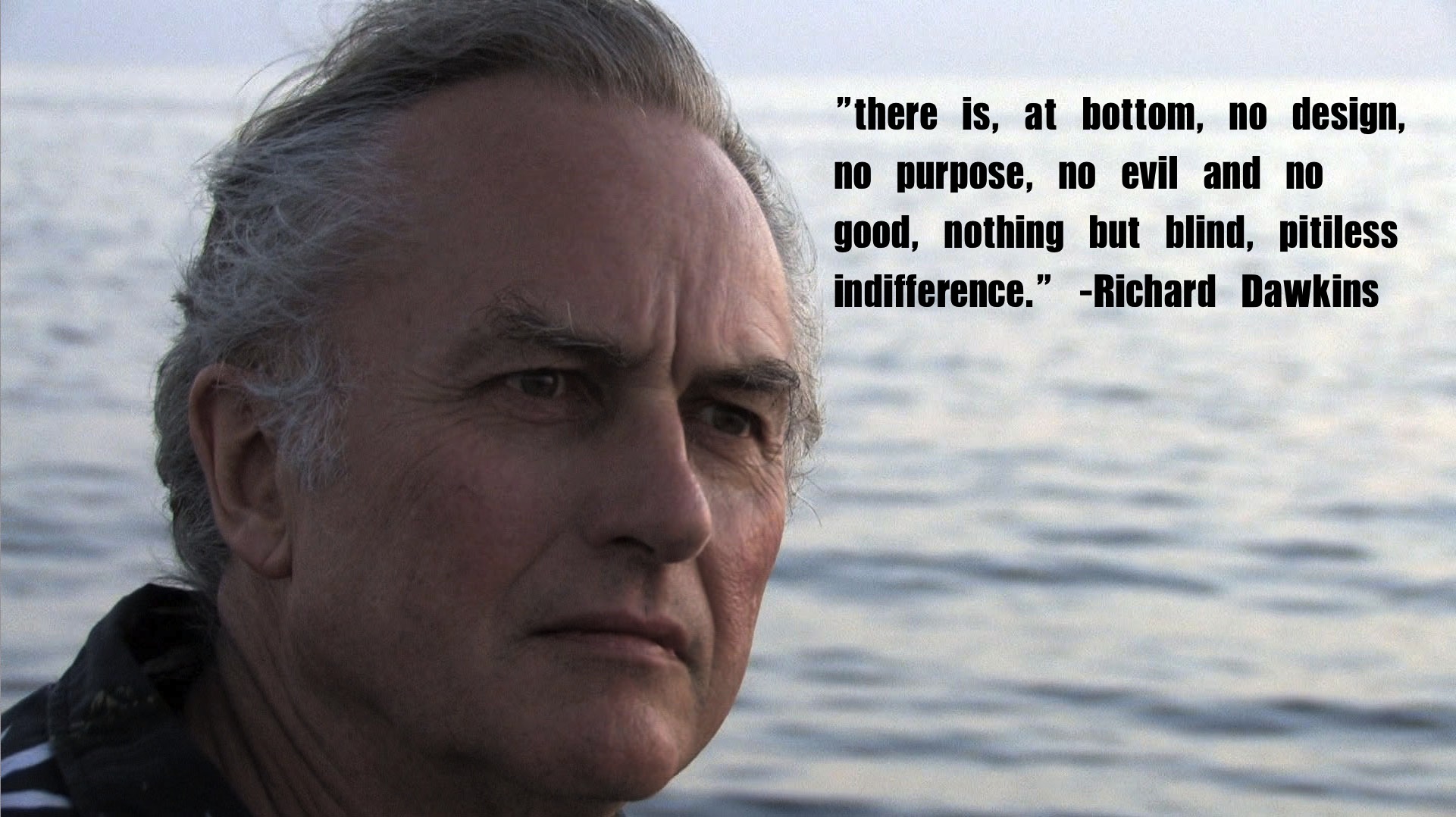
ImageWithout God, the universe is a mysterious accident.  Life is an accident.  The fact that we can contemplate our existence and wonder about our purpose is a horrible disfigurement of human nature brought on by runaway genetic mutation.  Thinking about purpose in a world that has none can only lead to despair.  As a result, our deaths are meaningless conclusions to the senseless banging together of the particles that comprised our bodies.  If we die young, it is neither right nor wrong.  If our lives accomplish nothing, it is neither right nor wrong.  If we hurt others or are hurt ourselves, there is nothing fundamentally right or wrong about the hurting.  Wanting to improve humanity is a silly misfiring of genetic inclinations to preserve ourselves, all of which will be rendered utterly stupid when the universe eventually expands to the point of its inevitable heat death.

So must the atheist be nice?  By no means!  And it is not wrong for him to be mean, because in the atheist conception, there is no real right or wrong.  There is only impulse, social contract, and group think.

These questions would come a lot more clear if we would start defining morality as a logically obligatory set of behavior-governing principles, at which point we could say definitively that atheists cannot be moral.  They can only be nice.  And their reasons for doing so may as well likewise die an early heat death.

Can atheists be moral?  Not by this definition.  They can go along with the group will of the day, constantly open to the option of abandoning public consensus for the sake of personal gain or pleasure.  And the most casual study of human behavior will show how likely that possibility is.

Atheists v. Evidence

ImageIn recent posts on arguments for theism, I’ve been both fascinated and befuddled by responses from atheist critics.  The particular approach that I’ve taken is to show that rational and moral adults act as though God exists even while they may ironically deny his existence.  I have yet to receive any meaningful rejoinders.  But there is one response that I have received consistently, which is, in so many words, “You haven’t offered any evidence for God.”

Now what’s befuddling about this is that, in fact, I have.  The moral argument, for instance, is actually deductive evidence for the existence of God.  The argument goes:

If there is no God, objective moral values don’t exist.

Objective moral values do exist.

Therefore God exists.

What I’ve said is that everyone, including atheists, generally subscribe to the first premise, and all but the mentally ill subscribe to the second.  In fact, atheists usually complain about God on the grounds of moral principles that they believe hold objectively to all people at all times, including God.  So in fact, I hardly need to prove the existence of God to an atheist – everyone already lives as though God is there.

What’s befuddling is how many atheists over-confidently assert that I haven’t offered any evidence.  What they mean is “empirical evidence,” or evidence that can be tested by the senses.  What I’ve offered is rational or philosophical evidence.  But what I’ve offered actually does qualify as evidence.  Insisting on empirical evidence is in fact self-refuting, because there is no empirical evidence to prove that things can only be believed on the basis of empirical evidence.  This was the now well-documented failure of verificationism and logical positivism, which have lost their followership.

So I believe I’ve offered a solid if not irrefutable proof of the existence of God.  The onus is on the atheist to demonstrate how on earth he could come up with a moral critique of God on the basis of a material world that generates no objective moral values.